All posts by utdblogger

When People Aren’t Afraid to Walk in the Street With Cars

“Shared spaces” are streets where driving is allowed but walking and biking take priority. They are designed without curbs, signage, and other typical markers that separate cars from people on foot. The design cues are subtler. Everyone mixes together in the same space, and drivers travel slowly enough that they can make eye contact with pedestrians.

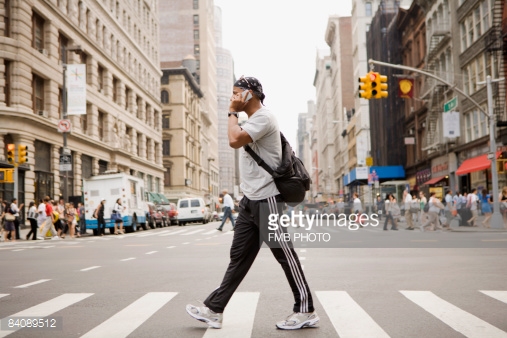
Two businesspeople outdoors walking in office town : Stock Photo

Can you have an “accidental” shared space — a street with curbs where people are still comfortable walking in the road? Richard Masoner at Network blog Cyclelicious says Pacific Avenue in downtown Santa Cruz functions as a shared space on weekends even though it wasn’t planned as one:

Most of those driving — even tourists with out-of-state license plates — take care to watch for people meandering into the street from arbitrary locations.

This kind of slow traffic naturally improves safety for people on bikes. I’ve talked to people who strongly dislike riding with traffic, but feel perfectly fine biking through downtown.

I’m not smart enough to know if it’s culture, design, or what that influences people to drive more carefully here. My crazy hypothesis: we have several people with a tolerance for high risk behavior who are willing to violate social norms and jump into traffic willy nilly.

I can’t recommend this as public policy — even in Santa Cruz, such individuals who dash across busy intersections against a red light are hit by cars — but I think we have a critical mass of people like this who embolden others to claim and own our public spaces.

If pedestrians feel comfortable taking over the street, it sounds like planners and the community did something right.

Elsewhere on the Network today: Greater Greater Washington lambasts the half-baked plan for cutting late night DC Metro service. The City Fix reports on new financing techniques that could help support walkable urban development. And 1000 Friends of Wisconsin shares stories from a recent transportation equity summit about how the state’s lousy support for transit affects people’s lives.

Uber Sued By Chicago Group Claiming Lack Of Wheelchair Accessibility

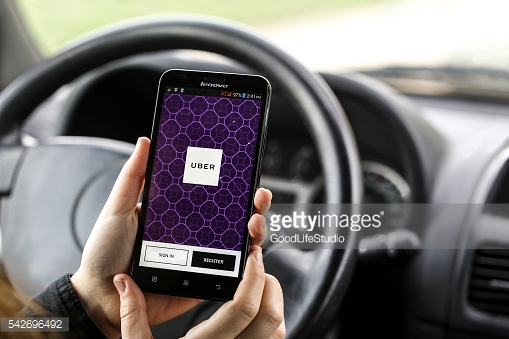
A local advocacy group is suing Uber, saying the ride-hailing service is “unusable” for people who use motorized wheelchairs.

The suit, filed by Access Living of Metropolitan Chicago, claims that Uber doesn’t have nearly enough wheelchair-accessible cars in Chicago.

For wheelchair-bound customers, Ubers offers a service called UberWAV, but customers who signed on to the suit said the cars are rarely available.

Between September 2011 and August 2015, Uber provided just 14 rides to motorized wheelchair users who require special cars, according to Access Living. Uber provided over 1.9 million rides in Chicago in June of 2015, the suit alleges.

“Transportation access has always been a central issue of civil rights for people with disabilities,” Steven P. Blonder, lawyer for Access Living, said in a statement. “As a growing player in our transportation system, Uber is responsible for delivering its part of that link.”

An Uber representative sent a statement Thursday, saying “We take this issue seriously and are committed to increasing mobility and freedom for all riders and drivers, including those members of our communities who are disabled. There is always more to be done and we will continue working hard to expand access to affordable, reliable transportation options for all Chicagoans.”

The City Council passed an ordinance that further regulated ride-hailing services, but an amendment to require equal wheelchair-accessible cars was scrapped, the group said.

A meeting with Uber reps following the passage of the ordinance did not end with the company agreeing to add more cars to its UberWAV fleet, Living Access said.

Marca Bristo, Access Living CEO, said the group had to file suit.

“People with disabilities have fought for generations to gain rights to equal services, ranging from mainline transit to taxis,” Bristo said in a statement. “The suit continues that struggle to enable individuals with disabilities to participate as full members of society.”

Justin Cooper, a Lakeview resident who uses a wheelchair, said in a statement that UberWAV is not reliable enough for him to use.

“My wheelchair cannot transfer into a regular Uber vehicle, and even if I were lucky enough to find a wheelchair-accessible vehicle operating, I would have to wait for that vehicle to cross the city to reach me. No one would use Uber if the entire service worked this way,” Cooper said.

Taxis reversed: Appeals court rules in favor of Uber

A federal appeals court on Friday ruled that Uber drivers and traditional taxis can continue to operate under different sets of rules in Chicago, throwing out a lawsuit by cab companies who say ride-hailing services are driving them out of business.

The difference in the business models between cab companies and the services — including Uber and Lyft — is great enough that they don’t have to follow the same requirements, wrote U.S. Circuit Judge Richard Posner for a three-judge panel of the U.S. 7th Circuit Court. “Here’s an analogy,” the judge wrote, “Most cities and towns require dogs but not cats to be licensed.”

The ruling validates a 2014 City Council ordinance that let Uber and Lyft operate in the city without taxi medallions or other standards set for cab companies.

Treating Uber drivers like cabbies would effectively protect the taxi business from competition fueled by new technology, Posner wrote.

The ruling reverses U.S. District Judge Sharon Johnson Coleman, who earlier his year ruled that a lawsuit filed by the cab industry could move forward.

“Indeed, when new technologies, or new business methods, appear, a common result is the decline or even the disappearance of the old,” Posner wrote. “Were the old deemed to have a constitutional right to preclude the entry of the new into the markets of the old, economic progress might grind to a halt.

“Instead of taxis we might have horse and buggies; instead of the telephone, the telegraph; instead of computers, slide rules. Obsolescence would equal entitlement.”

Edward Feldman, attorney for cab industry group Illinois Transportation Trade Association, said Friday he disappointed with the ruling and that the group is considering a further appeal.

“We don’t find those analogies persuasive,” Feldman said.

City spokesman Bill McCaffrey lauded Posner’s “sharply worded” opinion.

“We are extremely pleased with the court’s ruling, which confirms what we have maintained from the outset: the taxi industry’s legal challenges to the City’s ride share ordinance are completely baseless,” McCaffrey said.

Floating Trail System Could Help Create 27-Mile Chicago River Path By 2030

The city’s transportation department is already preparing to build atrail that soars above and over the Chicago River, so why not a path that floats on the water?

That’s one of the solutions in a “toolbox of different design treatments” proposed by the Active Transportation Alliance’s just-released River Trail Action Plan, which envisions the development of a continuous 27-mile riverfront trail by 2030.

The action plan builds on momentum created by the wildly popular 606 Trail, as well as the city’s “Our Great Rivers” plan, which demonstrated pent-up demand for off-street trails.

“It’s time to talk about next steps,” said Jim Merrell, advocacy director for Active Trans.

The action plan identified more than 13 miles of existing patchwork riverfront trail (some miles are duplicative, on both banks of the river), nearly two miles of trail under construction, seven miles of near-term potential and dozens of “opportunity areas.”

“It’s a matter of connecting the dots,” Merrell said.

Ron Burke, Active Trans executive director, called creation of such a trail “game-changing.”

It would be “so much more than the lakefront,” he said, citing the nearly one million Chicagoans who live within a mile of the river.

“This is what Chicagoans want,” said Sarah Cardona, project manager with the Metropolitan Planning Council, which oversaw the “Our Great Rivers” vision.

In addition to spurring economic development and creating opportunities for recreation and transportation, a river trail would “allow us to connect to one another” across neighborhoods, Cardona said.

Though comparisons to the city’s beloved lakefront trail are inevitable, activists are quick to note that a river trail would look much different in the absence of free and open space.

The conventional style of path that exists along the North Branch in River and Legion parks would be impossible to duplicate downtown, for example.

“Let’s be creative about getting this done,” said Merrell.

That might mean: partnering with building owners to gain access to private paths that already exist along the water; coordinating with developers to ensure trail segments are part of their site plans; and employing innovative solutions like on-street greenways and floating trail systems — used in Portland and Philadelphia — in areas where no land is available for a path.

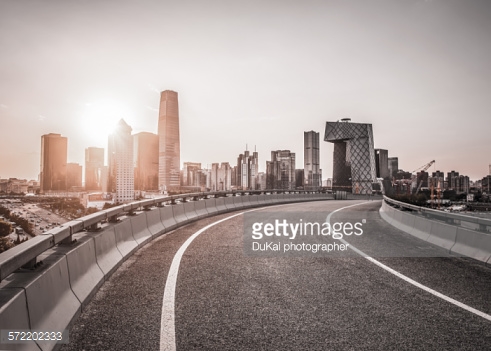
Bridge Over River Against Cityscape : Foto de stock

“It’s going to take a heck of a lot of community engagement and involvement,” Merrell said.

The goal of the action plan is to jump start the conversation, particularly in light of the rapid development of crucial riverfront areas in the South Loop.

“We need to get the vision set now,” said Burke. “The first step is to secure a level of buy-in,” with design and engineering to follow, he said.

“For the longest time, Chicago has turned its back on the Chicago River. The time has come to make this happen. It’s due.”

This New Rooftop Bar At State And Wacker Has Stunning City And River Views

The newest rooftop bar coming Downtown is Raised, a third-floor hotel haunt overlooking the Chicago River.

The bar will open May 13 at the Renaissance Chicago Downtown Hotel at 1 W. Wacker Drive, or the southwest corner of State and Wacker.

Once unused meeting space, the new bar is going for a “conservatory” look with lots of reclaimed wood. It will sell wine on tap, among other things.

The bar’s name isn’t just a nod to its rooftop, but also being raised in Chicago, raising a glass and the raising of nearby bridges, said Colleen Quinlan, a restaurant sales rep at the hotel.

Raised is the latest in a herd of new rooftops getting built on Downtown hotels and office buildings. But unlike many of its peers, Raised is lower to the street, giving guests a closer look at Wacker Drive and the river just beyond. The menu has yet to be determined, but the hotel said it will focus on small plates.

The bar’s inside will seat 107 and the outdoor deck will seat 103, the hotel said. Once open, Raised will be open from 4 p.m. to midnight outdoors and approximately 2 a.m. inside Monday through Saturday. The restaurant also plans to serve Sunday brunch.

The rooftop bar is part of a $32 million renovation of the hotel including new rooms and lobby. The bar will also feature “Urban Blue,” a room for 70 that can be reserved for weddings and other events.

Taking Chicago passengers for a ride

Sometimes seeking a commonsense response from government can be as satisfying as waiting for a taxi in the rain. So we’re hopeful that negotiations involving Uber, taxi drivers and Chicago’s City Hall end up in the correct spot: in favor of competition, not stifling regulation.

For weeks, the City Council has been moving toward an ordinance that would slap Uber and other app-based ride firms with many of the same rules that apply to licensed cabs. That would include requiring ride-share drivers to spend hundreds of dollars on chauffeur classes and other fees, be fingerprinted, get a drug test and a physical. As of Monday, all sides were working on a compromise that could strip away the worst of the requirements before a scheduled vote Wednesday.

There is no public outcry in favor of tightening restrictions on Uber drivers. Chicagoans have come to appreciate using their smartphones to hail a ride as an alternative to taxis. A lot of part-time workers, from college students to soccer moms, benefit from turning their vehicles into income-generators.

The constituency in Chicago that wants to squash Uber is the entrenched and highly regulated taxi industry, which is losing customers to the upstarts. The cab companies’ allies in the City Council have been pushing for a crackdown. It’s about “consumer protection,” said Ald. Anthony Beale, who’s leading the charge. Well, it is about “protection.” But not for consumers — for cabbies and their bosses.

Technology plays a role in building the new and tearing down the old. Ride-hailing companies, which use a smartphone app to connect people needing a ride and car owners willing to provide a lift, are an extraordinary example. Uber was founded in San Francisco in 2009. Last time we looked it was worth $68 billion.

The system works because passengers are confident Uber drivers will get them where they want to go. The company does basic background checks and car inspections. The smartphone app identifies the driver by name and tracks the ride in progress. At the end of each ride, drivers and passengers rate each other, providing another form of safety check. Payment is done automatically via credit card.

Some customers may not be comfortable with ride-sharing, which is why taxis need to exist too. There’s nothing as easy as stepping onto the street and immediately seeing a cab to hail. Uber rides are often cheaper than taxis, but can also be much higher because the company can adjust pricing to match demand. Taxi rates are set by the city. On the other hand, Uber drivers serve neighborhoods on the West and South sides where it’s hard to find a taxi, even though cabs are required to serve those communities.

This tension between the two sides is intense. The taxi industry wants Uber and the others to follow all the same rules, since they are providing the same basic service. But Uber’s business model is based on the fact that drivers generally are part-timers who decide when to look for fares. Someone wanting to try out the business or drive for 10 hours every other week won’t jump through the hoops required to get a taxi driver license. Uber and Lyft suspended service in Austin, Texas, in protest of more regulations. Other competitors have stepped in there, but the results aren’t clear.

Chicago’s cabbies have a legitimate beef. Under the old regulated system, investors paid big bucks for a strictly limited number of taxi medallions. Can you say, monopoly? Drivers got licensed because they expected busy shifts. Now business is terrible. The industry is suing the city, arguing that ride-share firms have an unfair advantage. Beale, whose heavy-handed version of the ordinance passed the Transportation Committee on Friday, says his aim is to level the playing field. His plan, though, would have made things equally bad for both taxis and Uber.

The goal for aldermen should be to help both thrive, because that’s what’s best for consumers.

Taxis need to do a better job of competing — Uber already has forced taxis to raise their game, but there’s still room for improvement — but they do need some help. Instead of imposing new rules on the apps firms, the city should look for ways to reduce regulations on taxis. The answer to a competitive problem is not for government to heap rules on a new industry. It never is.

Chicago May be Named The Best Bike City, but Perfect It Is Not

Bicycling magazine today declared Chicago the best city in America in which to pedal your two-wheeled vehicle. It’s largely a testament to Mayor Rahm Emanuel’s decision to build a network of 100-plus miles of protected bike lanes and push hard to create and expand the Divvy bike-share program.

Congrats all around. Some improvement indeed has occurred. But bike nirvana has not arrived.

Consider this: Four bikers have been killed by autos so far this year, according to Streetsblog Chicago, including what appears to be the nation’s first death of a rider on a relatively slow-moving bike-share bike. Dozens and dozens of nonfatal injuries have occurred, including a few among my circle of friends and acquaintances.

I’ve managed to avoid injury in the past 12 months, including this morning’s ride in from Lakeview. But it’s a rare ride when I don’t have to swerve to avoid a pothole, come close to being clocked by some motorist throwing open their door without looking or—truth be told—mumble under my breath at a fellow biker emulating a master of the universe by breezing across multiple lanes of traffic, blowing inconvenient red lights and whisking past startled pedestrians.

I will say that things are better, in part because of the protected bike lanes and in part because drivers now are more familiar with the growing number of bikers. On occasion, I’ll actually see three or four bikers waiting for a red light to change, even when no traffic is coming. That amazes me, because the first rule of any dedicated biker is to never stop, ever, because stopping means you have to put out the energy to start again.

Still, the typical Chicago motorist never is going to figure out that you have to look in the mirror before throwing open the door. Not gonna happen. So, like it or not, I have to ride at least a yard away from any parked car. Drivers don’t like it. But being doored is no fun—trust me.

Meanwhile, a subset of bikers really has got to leave aside the concept that the morning commute is the Tour de Chicago, a way to work up the heart rate and skip hitting the gym that night. Some basic concepts—you don’t pass with 2 inches of clearance; you don’t pass a line of other bikes waiting for a red light to change because you have to be first—routinely are ignored by such folks.

If you want to race, go to the country, pal. Busy city streets are used by too many people for too many things.

And City Hall?

Continuing to roll out protected bike lanes is a good idea, though I understand it means less pavement for cars. Being a little more sensible in placement is a good idea, too. One bike lane I can think of goes right in front of a hotel that considers the space to be its private loading zone.

And the potholes. Let’s start with North Clark Street.

My bottom line: Yes, biking in Chicago has gotten a little better. However, you still have to have full awareness, and sometimes that’s not even enough.

So, bikers, slow down a tad—even (gads) for obnoxious pedestrians. Drivers, think and look before you move. Pedestrians, quit texting as you walk into traffic.

U.S. wants to force lower speeds on truck and bus drivers

The U.S. is seeking to forcibly limit how fast trucks, buses and other large vehicles can travel on the nation’s highways.

A new proposal today would impose a nationwide limit by electronically capping speeds with a device on newly made U.S. vehicles that weigh more than 26,000 pounds. Regulators are considering a cap of 60, 65 or 68 miles per hour, though that could change.

Whatever the speed limit, drivers would be physically prevented from exceeding it.

The government said capping speeds for large vehicles will reduce the 1,115 fatal crashes involving heavy trucks that occur each year and save $1 billion in fuel costs.

The proposal from the National Highway Traffic Safety Administration and Federal Motor Carrier Safety Administration is subject to public comment before becoming final.

While the news is being welcomed by safety advocates and non-professional drivers, many truckers say that such changes could lead to dangerous scenarios where they are traveling at much lower speeds than everyone else.

The rule has been ensnared in a regulatory maze in the decade since the nonprofit group Roadsafe America issued its first petition in 2006. The group was founded by Atlanta financial adviser Scott Owings and his wife Susan, whose son Cullum was killed by a speeding tractor-trailer during a trip back to school in Virginia after Thanksgiving in 2002. The nonprofit was later joined by the American Trucking Associations, the nation’s largest trucking industry group.

Owings said he’s happy that speed-limiting technology may be in place soon, but frustrated by how long it took.

“This glacial process, if you can call it a process, is not effective,” Owings said before the latest proposal arrived. “It’s easy to see why so many citizens are angry about the ineffectiveness of government.”

The government agencies involved will take public comment for 60 days, then determine the final limit and decide if the regulation should be put in place.

The agencies said the proposal is based on available safety data and the additional benefit of better fuel economy. The cost would be minimal because all of the 3.6 million big rigs on U.S. roads have speed-limiting devices installed already, but some don’t have the limits set, according to agency documents.

But Norita Taylor, spokeswoman for the 157,000-member Owner Operator Independent Drivers Association, said her group has opposed the speed limiters because they create dangerous interactions between vehicles as faster cars slow down for trucks. “Differentials in speed increase interactions between vehicles, which increases the likelihood of crashes,” Taylor said.

Yet there is another compelling reason to limit truck speeds. An investigation last year by The Associated Press found that 14 states have speed limits for big trucks that are equal to or higher than their tires were designed to handle. Most truck tires aren’t designed to go faster than 75 mph, and tire manufacturers say traveling faster than that can cause tires to fail and blow out, creating safety issues.

Most of the states with the higher speed limits are west of the Mississippi River. Of the 14, five have speed limits of 80 mph or more and allow trucks to exceed the capability of their tires. NHTSA has said the speed limiters should take care of the discrepancy between state speed limits and truck tire capabilities.

Most of the states with speed limits of 80 or above either didn’t know about the truck tire speed ratings or didn’t consider them. States set their own speed limits, having been given sole authority to do so by Congress in the mid-1990s.

Chicago disability rights group sues Uber over wheelchair access

Chicago disability rights group has sued the mobile ride-hailing service Uber for allegedly violating U.S. laws mandating wheelchair accessibility.

The suit was filed Thursday in Chicago federal court on behalf of Access Living of Metropolitan Chicago and several individuals. It seeks an order requiring that Uber comply with the Americans with Disabilities Act and provide more wheelchair-accessible vehicles.

The filing notes Uber offers a service for wheelchair-bound customers called UberWAV. But it says Uber’s mobile map often shows no such vehicles available in Chicago.

The suit says Uber provided nearly 2 million rides in Chicago in June last year. But it says Uber gave just 14 rides to motorized wheelchair users from 2011 to 2015.

A Chicago spokeswoman for San Francisco-based Uber Technologies, Inc., didn’t have an immediate comment.

Chicago is now a ‘knowledge capital,’ but is the title earned?

A new study from the Brookings Institution classifies Chicago as one of 19 global “knowledge capitals.” Cool, right? Well, yes and no.

It’s great to see Chicago recognized as a player in research and innovation alongside entrepreneurial hotbeds like Boston and Silicon Valley. On the other hand, the report also confirms that Chicago still lags when it comes to converting ideas into economic growth.

Brookings provides a fresh angle on the 123 largest metropolitan economies in the world, illuminating their distinct roles in an increasingly specialized global economy. The studydivides cities into seven categories based on how they compete economically. For example, “global giants” such as New York, Los Angeles, London and Tokyo, some with $1 trillion-plus GDPs, dominate global trade and investment flows; “Asian anchors” like Seoul, Shanghai and Singapore are the economic command centers for a continent on the rise; and “American middleweights” such as Kansas City and Columbus circle the fringes of international trade, looking for an opening.

Better to be a knowledge capital than a middleweight. Chicago’s category includes cities with high levels of education, research activity, venture investment and global connectedness.

Study co-author Joseph Parilla says Chicago qualifies as a knowledge capital largely on the strength of world-class research universities, patent output, venture capital levels and strong international transportation connections, aka O’Hare International Airport.

These assets are familiar to anyone who knows Chicago’s economy. As my colleague John Pletz reported in the latest issue of Crain’s, Chicago companies churn out innovations in everything from tennis rackets and medical technology to software and food-processing equipment.

And it’s a good thing, too, because Chicago long ago lost its edge as a manufacturing center. “It can’t compete on costs” with low-wage Asian cities, says Parilla. “Chicago has been forced into its specialization as a knowledge capital because that’s what it can do better than the rest of the world.”

NEEDS IMPROVEMENT

Trouble is, Chicago doesn’t do it better than the other 18 knowledge capitals. And that’s who we’re competing against in a specialized world economy. Chicago places in the bottom half of the group on all but four of 15 indicators tracked by Brookings. We rank first in population, GDP and air travel, and ninth in university research.

Most disappointing is the absence of any apparent link between innovation and economic growth in Chicago. While other knowledge capitals such as Dallas, Seattle and San Diego posted average annual GDP growth of more than 2 percent between 2000 and 2015, Chicago finished dead last at 0.8 percent. Similarly, our per capita GDP of $60,988 ranked 16th out of 19 knowledge capitals. Our unemployment rate of 5.4 percent is far above the group average of 4.5 percent.

In part, this reflects a fundamental difference between Chicago and other innovation-driven cities. Unlike San Jose, Denver and Dallas, Chicago had a prior life as a 20th century manufacturing behemoth. Our industrial heyday left us with a huge population base, too much of it ill-equipped for knowledge economy work.

Chicago won’t fulfill its potential as a knowledge capital until it retools its legacy economy for the 21st century. This requires a systematic effort on several fronts.

It starts with better training and education for a workforce that needs new skills. High schools and community colleges should work more closely with employers to develop curricula that match the requirements of a knowledge-based economy. Mayor Rahm Emanuel’s “College to Careers” program connecting companies and City Colleges is a good example of the kind of coordination we need.

Another key is focusing on areas where Chicago has a potential advantage over other knowledge capitals, such as the cutting-edge production techniques under development at UI Labs’ digital manufacturing center on Goose Island. That collaboration among universities, big companies and small businesses could serve as a model for extending the value chain of innovation across Chicago.

Tax policy also has a role to play in fostering innovation. As Crain’s editorial board argued in the current issue, reinstating Illinois’ research and development tax credit would encourage companies in a wide range of industries to invest in innovation here.

And of course, we should maintain our lead over other knowledge capitals in transportation. That means making every investment necessary to preserve O’Hare’s status as a top global aviation hub.

Over time, these efforts will develop the muscles Chicago needs to compete with its new rivals. We may never topple Silicon Valley. But if we learn to punch our weight as a knowledge capital, we won’t become just another middleweight.