All posts by utdblogger

Milwaukee Avenue Street Resurfacing Underway in Norwood Park : IDOT

Milwaukee Avenue Street Resurfacing Underway In Norwood Park: IDOT – Norwood Park – DNAinfo Chicago

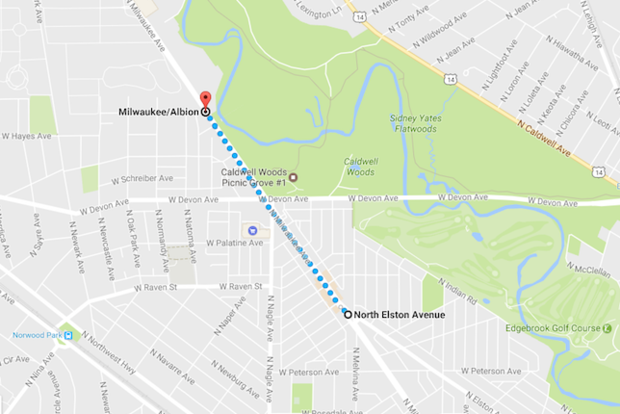
Workers on Monday kicked off a roughly three-month street resurfacing project targeting the 0.7-mile stretch of Milwaukee Avenue between Albion Avenue and Elston Avenue in Norwood Park, state transportation officials announced.

While work is underway, drivers should expect “temporary daytime lane closures” during “non-peak travel times,” with a narrower supply of on-street parking spots, according to the announcement released Monday.

In addition to re-paving Milwaukee, workers will repair “existing curb and drainage structures” and update pedestrian crossings to ensure that they’re accessible to people with disabilities.

The project is set to be finished this summer, officials said.

City Releasing Plan To Protect Pedestrians Amid Surge In Fatal Crashes

The city is expected to release a plan this month detailing how to better protect pedestrians, unveiled amid a nationwide surge in deadly crashes between pedestrians and cars.

A report from the Governors Highway Safety Association estimates pedestrian deaths rose 11 percent around the country between 2015 and 2016. Chicago itself saw 44 pedestrians killed in 2016, higher than the average of 38 annual deaths since 2010, and crashes have affected thousands of people walking, riding a bike or driving, according to a February report from the Mayor’s Pedestrian Advisory Council.

The city hopes to end crashes that cause death or serious injury by 2026 with its Vision Zero campaign. Various city departments and advocacy groups have been working together to create a three-year action plan in line with Vision Zero’s goals, said Kyle Whitehead, the government relations director at the Active Transportation Alliance, a bicyclist advocacy group that has worked with the city on the action plan.

We’re definitely concerned about [pedestrian fatalities],” Whitehead said. “When you’re looking at statistics like this, we always want to be careful to [not] read too much into a single change or fluctuation from year to year. What we try to pay attention more to is longer-term trends, and when you look longer-term our numbers have been going down in Chicago.

“We think every one of those crashes is preventable and every loss of life is tragic. We as advocates continue to work until those numbers are reduced to zero.”

Active Trans has pushed the city to reduce speed on streets, especially large “arterial” roads like North Avenue, Irving Park Road or 79th Street, as a lifesaving measure, Whitehead said. The group doesn’t have a “specific ask” on what the speed limits on those major roadways should be, but Whitehead said it wants to city to significantly reduce speed limits “across the board.”

Active Trans has also pushed for lanes to be removed or narrowed — which can be done by adding a bike lane or a pedestrian “refuge island” — so drivers have less space, which causes them to “naturally drive slower,” Whitehead said.

“Those are the types of projects that we would really like the city to pursue on some of these corridors,” Whitehead said.

Chicagoans should also be encouraged to use alternate means of transportation, like walking or riding a bike, instead of driving, to help prevent fatal crashes, Whitehead said.

“When more people are using those modes, not only is our city more healthy and sustainable, it’s also safer,” Whitehead said. “Within the city, if we can get more people walking and biking, you’re going to see fewer of these crashes, and we could have fewer people driving.”

A Department of Transportation spokeswoman said more information about what the city has done and what it intends to do is expected to be released this month, but details were not immediately available.

Kelly Bauer dnainfo

Rental Bikes Are Back At Dan Ryan Woods And North Branch Bike Trail

Rental Bikes Are Back At Dan Ryan Woods And North Branch Bike Trail – Beverly – DNAinfo Chicago

Rental bikes have returned to Beverly’s Dan Ryan Woods and the North Branch Bike Trail in Forest Glen, according to officials with the Forest Preserves of Cook County.

The bike rental stations work similar to the unmanned Divvy rental locations throughout the city. Users can rent a bike hourly, daily or with a season pass through a vendor called Smoove.

The company supplies bikes to the Forest Preserve via Bike and Roll Chicago. It costs $7 per hour, $28 per day (4 hours) or $60 for a year-long membership. Members receive the the first hour of each rental for free — then regular rates apply.

Rental Bikes Are Back At Dan Ryan Woods And North Branch Bike Trail – Beverly – DNAinfo Chicago

The bike rental season began Saturday and runs through Oct. 31. The station at the Dan Ryan Woods at 87th Street and Western Avenue regularly has 4 or 5 bikes, said Stacina Stagner, a spokeswoman for the Forest Preserves.

In fact, the station at the Dan Ryan Woods experienced a glitch in system just ahead of activation. It should up and running by Friday, she said.

The 257-acre Dan Ryan Woods offers access to the Major Taylor Bike Trail. The trail, named for an African-American bicycle racer and civil rights advocate, starts at the eastern edge of the farthest north parking lot of the Dan Ryan Woods.

Rental Bikes Are Back At Dan Ryan Woods And North Branch Bike Trail – Beverly – DNAinfo Chicago

The paved trail runs along the edge of the preserve for about 1½ miles to 91st Street. The trail continues southeast for another 5½ miles and is routed on city streets from 95th to 105th streets. It eventually connects to Whistler Woods near the Little Calumet River.

Meanwhile, the North Branch Bike Trail boasts approximately 20 miles of paved trails beginning at Caldwell and Devon avenues in Chicago and continues into Lake County. It winds along the north branch of the Chicago River and the Skokie Lagoons.

As part of the three year agreement with Bike and Roll, the Forest Preserves will receive an annual fee of $1,500 for each bike rental location as well as five percent of gross sales, according to a previous statement from the Forest Preserves.

“Our goal is to attract more users and provide a fun experience for them once they arrive,” said Arnold Randall, general superintendent of the forest preserves. “Bike rentals are a great way for people to explore nature and engage in physical activity.”

Rental Bikes Are Back At Dan Ryan Woods And North Branch Bike Trail – Beverly – DNAinfo Chicago

By Howard Ludwig dnainfo

Closed City Vehicle Testing Facilities Would Reopen Under New Legislation

A bill introduced by a Far Northwest Side state senator could reopen two emissions testing facilities in Chicago, one near Lincoln Park and the other in Dunning, closed in November as part of an effort to save the state money.

State Sen. John Mulroe (D-Jefferson Park) said it made no sense to change a program designed to reduce emissions and force individuals to drive long distances.

The two Chicago emissions facilities closed Nov. 1 as part of an effort by the Illinois Environmental Protection Agency to “streamline” the way the state monitors emissions from older cars and save taxpayers $8 million, officials said.

“By closing emissions testing facilities in Chicago, the Illinois Environmental Protection Agency has created an undue burden on Chicago residents to meet the emission testing requirement” Mulroe said in a statement. “Getting a vehicle’s emissions tested can already be a time-consuming task in and of itself. We should not add to that by forcing Chicagoans to driver further to fulfill this obligation.”

Chicago drivers from the North Side now have to travel to the testing facility near McCormick Boulevard and Touhy Avenue in Skokie.

The closure of the facility at 6959 W. Forest Preserve Drive left a gaping hole in service near Harlem Avenue and Irving Park Road in Dunning on the city’s northwestern tip.

A spokeswoman for the Illinois Environmental Protection Agency did not respond Thursday to a request for comment.

State law requires a testing facility to be located no more than 12 miles from a registered Illinois vehicle.

Mulroe’s bill would reduce that distance to five miles.

Cars manufactured in 1996 or later must have its emissions tested after it is four years old.

Heather Cherone dnainfo

DUI Crackdown Coming To Far Southwest Side This Weekend

Chicago Police in the Morgan Park District will be on the lookout for drunken drivers this weekend.

The district will conduct a “DUI Saturation Patrol” from 7 p.m. Friday until 3 a.m. Saturday, police said.

Officers will saturate Beverly, Morgan Park, Mount Greenwood and Washington Heights looking for impaired drivers, speeders, those not wearing seatbelts and other scofflaws.

Taller Buildings — But No Major Park — Pushed In North Branch Guidelines

The Department of Planning and Development set tentative guidelines for future development along the North Branch Industrial Corridor over the weekend, but again declined to set aside any public land for a major new park as part of the corridor’s ongoing modernization plan.

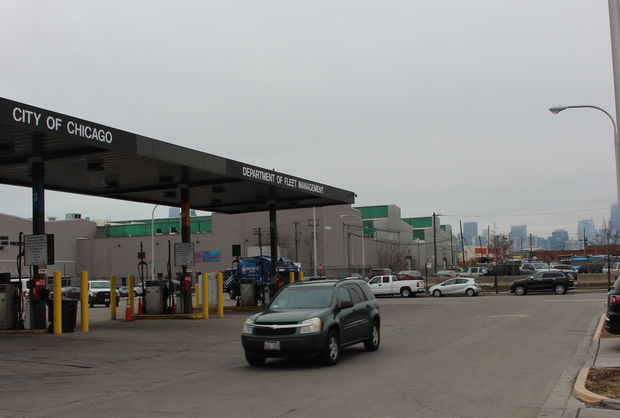
According to Ald. Brian Hopkins (2nd), the city has ruled out any notion of converting the Fleet Management lot at 1685 N. Throop St. into a park, even though it’s the only major piece of city-owned property in the 760 acres of the corridor, running on a diagonal over 3.7 miles between the Damen Avenue bridge to the northwest and Kinzie Avenue to the southeast.

Ald. Michele Smith (43rd) has said the city needs to create a major new park to serve residents from Lincoln Park to Wicker Park, and has seized on the North Branch Industrial Corridor Modernization Plan as a way of addressing that issue.

“The city has given us a flat-out ‘no’ to our request to put a park on the site of the old fleet center,” Hopkins said Monday.

“It’s the only opportunity we have for a large parcel of publicly owned land,” he added. “The Mayor’s Office and the Planning Department have said unequivocally that they’re not willing to move the fleet center unless the transaction itself can be self-supporting.”

The lot is being offered for development, contingent on the developer also building a replacement Fleet Management lot in Englewood. That would most likely dictate a highly commercial development on the old Throop lot, although Hopkins added, “If there’s anything left over from that transaction, it needs to go to the community benefit.”

That said, Hopkins added that he was pleased with new guidelines the Department of Planning and Development delivered online late Friday setting goals for the creation of public open spaces, even as he said they needed “more specificity.”

Hopkins said, “There’s some things in there that clearly show a response to the community’s request for more open and recreational space” and that he sensed “movement” on the part of city planners, although he quickly added, “It doesn’t go far enough.”

He specifically cited a proposal at the end of the guidelines stating the principle to “create publicly accessible open spaces within planned developments for recreational activities,” a concept that had been pushed at public meetings, but which Hopkins said was new being put down on paper as a set guideline.

“That’s something that we’ve added listening to the public at our meetings,” said Eleanor Gorski, deputy commissioner in Planning and Development, although she also pointed out how it was mentioned in the plan framework released to the public the week before.

The guidelines make it clear that building developments along the North Branch of the Chicago River would be allowed to grow higher if they set aside more open space on the ground level.

“Buildings should frame public open spaces and add vitality to the public realm,” the guidelines state. They set a goal to create “publicly available open spaces within planned developments.”

That figures to have a key impact on the Sterling Bay development at the old Finkl Steel site, as well as other projects to come in the decades ahead. “That is what we’re encouraging,” Gorski said.

“That wasn’t originally in there,” Hopkins said. “That was added because of pressure from the community.”

The guidelines set three basic goals: to maintain the North Branch Industrial corridor as an “economic engine,” especially in the growing information and technology industries, including mixed-use residential areas to house employees; to provide better transportation into and out of the corridor, including pedestrian bridges, bike lanes and perhaps light rail; and to “build upon the North Branch Industrial Corridor’s unique natural and built environment,” including a riverwalk on both sides of the North Branch, as well as preserving iconic “character buildings” like the Morton Salt sheds and the Prairie Materials silos.

Transportation improvements, including the renovation of several bridges, got much of the attention during the nine public meetings that have been held by the department on the corridor thus far, and they were widely covered in the guidelines released on Friday as well, although not in the detail Hopkins might have liked.

“This document is light on specifics when it comes to parks and infrastructure,” he said.

The Department of Planning and Development scheduled a final public meeting from 8 a.m.-1 p.m. April 7 at City Hall, in Room 1003-A, ahead of delivery of its final draft, to be presented to the Plan Commission April 20.

Community activist Allan Mellis, however, said that schedule was rushed, calling the April 7 event “not a public meeting but rather a drop-in.” He pointed out that, with the department accepting public input online through April 18, “they should delay [the] Plan Commission hearing to be able to incorporate community comments.”

Gorski said they were sticking to that schedule, “pending how many comments we get or any changes we have to make.”

by Ted Cox-dnainfo

West Loop Morning Parking Could Be Banned Soon For Outsiders

A new morning parking ban that aims to solve the West Loop’s parking woes could be implemented as soon as this summer, an influential West Loop alderman said Monday.

Aimed at discouraging suburban “day-trippers” from parking in the area and heading to work Downtown, 27th Ward Ald. Walter Burnett Jr. hopes a ban that would prohibit street parking from 7 to 9 a.m. weekdays — but make an exception for West Loop residents — can be approved by the City Council soon.

If all goes well, new parking signs could be installed by summer, Burnett told DNAinfo Monday.

Unlike a previous pilot program that banned parking from 1:30 to 3:30 p.m. on weekdays, residents would be able to obtain a permit to park on streets from 7 to 9 a.m. weekdays. The proposed ordinance aims to improve parking in an area bound by West Van Buren Street on the south, West Washington Street on the north, Green Street on the east and Ashland Avenue on the west.

Under the draft ordinance, signs prohibiting parking from 7 to 9 a.m. on weekdays would be installed on more than 20 blocks, including:

Northeast area

1-150 N. Morgan St., two blocks on the east side of the street between Randolph and Madison

100-150 N. Sangamon St., one block on the east side of the street between Randolph and Washington

1-100 N. Sangamon St., half-block on the west side of the street between Washington and Madison

1-150 N. Peoria St., two blocks on the east side of the street between Randolph and Madison

Central area

1-100 N. Elizabeth St., half-block on east side of the street between Washington and Madison

1-100 N. Racine Ave., half-block on west side of the street between Washington and Madison

1-100 S. Racine Ave., one block on east side of the street between Madison and Monroe

1-100 S. Throop St., one block on east side of the street between Madison and Monroe

1-100 S. Aberdeen St., one block on the east side of the street between Madison and Monroe

1300-1400 W. Monroe St., half-block on north side of the street between Loomis and Throop

Southeast area

300-400 S. Aberdeen St., one block on the east side of the street between Jackson and Van Buren

300-400 S. Morgan St., one block on the east side of the street between Jackson and Van Buren

300-400 S. Sangamon St., one block on the east side of the street between Jackson and Van Buren

400-426 S. Sangamon St., half-block on the east side of the street south of Van Buren

1000-1100 S. Tilden St., majority of block on north side of the street between Aberdeen and Morgan

Southwest area 

200-300 S. Laflin St., one block on west side of the street between Adams and Jackson

300-400 S. Laflin St., one block on east side of the street between Jackson and Van Buren

200-300 S. Loomis St., one block on east side of the street between Adams and Jackson

300-400 S. Loomis St., one block on the west side of the street between Jackson and Van Buren

200-400 S. Throop St., one block on the west side of the street between Adams and Van Buren

The ordinance, co-sponsored by West Loop aldermen Danny Solis (25th) and Jason Ervin (28th), was introduced to the city’s Committee on Pedestrian and Traffic Safety on January 21, 2015 — more than two years ago — but has been stuck in committee since.

With development booming and construction crews taking over large parts of the West Loop, aldermen now aim to pass the ordinance soon so the more than 100 new signs can be installed this summer, Burnett said, giving West Loop residents much-needed parking relief.

RELATED: McDonald’s Bringing 2,000 Jobs, ‘Iconic’ Brand Back To Chicago With New HQ

Because the area is ever-evolving, Burnett said some changes could be made regarding the specific streets that get signs before the plan is approved. Neighbors were requesting changes at a development meeting hosted by the West Loop Community Organization and Solis last week.

“We are trying to get this done before the interest and the concerns of the area change,” Burnett said.

Failed midday parking ban

The new morning parking ban comes after a midday parking ban in the West Loop was abandoned after neighborhood groups pushed to end the pilot program in 2014.

From July through December in 2013, drivers were prohibited from parking along select neighborhood streets from 1:30 to 3:30 p.m. on weekdays.

At the time, Armando Chacon, president of the West Central Association, said the restrictions were “not received overly well” and made “the parking situation even worse.”

Although the ban was able to reduce day-trippers, local residents didn’t like it because there was no exception for them, Chacon said. Businesses didn’t like it because customers couldn’t park on the street during the middle of the day.

dnainfo / By Stephanie Lulay
Water Taxis Return To Chicago River As Spring Arrives

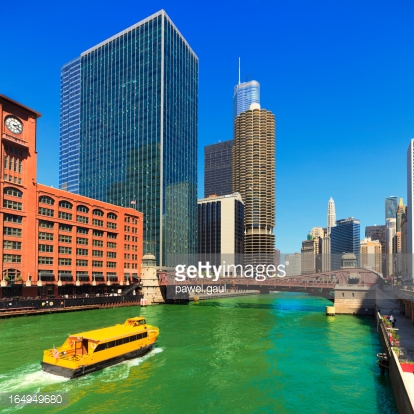
It’s a sure sign of spring: water taxis are back on the Chicago River.

The distinctive yellow boats made their seasonal debut Monday at four stops Downtown. Stops along the north and south branches of the river will open later this spring, Andrew Sargis, chief of operations for Chicago Water Taxi, says.

One-way tickets cost $5, while all-day passes are $9. Ten-ride ($20) and 31-day ($60) passes are also available on the water taxi website.

For now the boats are stopping at the Wrigley Building, the north bank of the river at LaSalle Street, the south bank of the river at Clark Street and the northwest corner of the Madison Street Bridge.

The full route includes stops at Ping Tom Memorial Park in Chinatown, Chicago Avenue at the river, and where North and Sheffield avenues intersect near the northern tip of Goose Island.

New Loop ‘L’ Stop Construction To Shut Down Wabash Avenue Traffic

Construction of the new “L” stop coming to Wabash Avenue and Washington Street will shut down a Loop intersection and disrupt Downtown trains this weekend.

The intersection of Wabash and Washington will be closed to motorists from 9 p.m. Friday-6 a.m. Monday, the city’s Department of Transportation said.

Downtown “L” trains will also be rerouted.

• Orange and Brown Line trains will merge into one route between Kimball and Midway via the LaSalle/Van Buren stop.

• Green Line trains will operate between Harlem and 63rd via Wells and Van Buren.

• Pink Line trains will run between 54th/Cermak and Polk, then to the Racine Blue Line stop for connecting service to and from Downtown.

• Riders can transfer between elevated trains and Blue and Red line subways using the Harold Washington Library and Jackson stations.

The new stop at Washington and Wabash will “probably” open later this spring, transportation department spokesman Michael Claffey said.

Smack Dab Bakery Opening New Rogers Park, Lakeview Locations This Weekend

After slinging homemade doughnuts and coffee as a pop-up in Rogers Park’s Red Line Tap since 2015, Smack Dab Chicago bakery is taking the training wheels off in a big way this weekend: unveiling two brand new locations in two North Side neighborhoods.

Its inaugural standalone shop will be at 6730 N. Clark St. in Rogers Park, while another mini-stop will find its new home inside the Wellington “L” station in Lakeview.

Last year Smack Dab won a $10,000 prize for the company’s commitment to the neighborhood, in particular its support of local organizations and social causes.

From 1-4 p.m. Sunday, Smack Dab will hold an open house at its Clark Street location. The kid-friendly celebration is set to include samplings of foods like fresh hushpuppies, macaroni and cheese and Jambalaya, drinks, live music and more.

There is no cost to attend, however a $10 suggested donation for adults will go toward staff and the day’s entertainment.

At 6 a.m. Monday, Smack Dab will begin serving food and drink seven days a week from its to-go counter inside the Wellington “L” station.

That location will offer fresh small batches of doughnuts each day, Smack Dab’s signature biscuit sandwiches, muffins and coffee from HalfWit Coffee Roasters.

The Wellington location will be the primary retail shop until later this Spring, when the Clark Street location is fully open.