Category Archives: News

Taxis reversed: Appeals court rules in favor of Uber

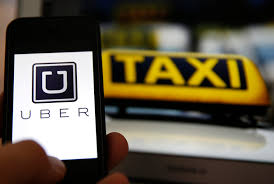
A federal appeals court on Friday ruled that Uber drivers and traditional taxis can continue to operate under different sets of rules in Chicago, throwing out a lawsuit by cab companies who say ride-hailing services are driving them out of business.

The difference in the business models between cab companies and the services — including Uber and Lyft — is great enough that they don’t have to follow the same requirements, wrote U.S. Circuit Judge Richard Posner for a three-judge panel of the U.S. 7th Circuit Court. “Here’s an analogy,” the judge wrote, “Most cities and towns require dogs but not cats to be licensed.”

The ruling validates a 2014 City Council ordinance that let Uber and Lyft operate in the city without taxi medallions or other standards set for cab companies.

Treating Uber drivers like cabbies would effectively protect the taxi business from competition fueled by new technology, Posner wrote.

The ruling reverses U.S. District Judge Sharon Johnson Coleman, who earlier his year ruled that a lawsuit filed by the cab industry could move forward.

“Indeed, when new technologies, or new business methods, appear, a common result is the decline or even the disappearance of the old,” Posner wrote. “Were the old deemed to have a constitutional right to preclude the entry of the new into the markets of the old, economic progress might grind to a halt.

“Instead of taxis we might have horse and buggies; instead of the telephone, the telegraph; instead of computers, slide rules. Obsolescence would equal entitlement.”

Edward Feldman, attorney for cab industry group Illinois Transportation Trade Association, said Friday he disappointed with the ruling and that the group is considering a further appeal.

“We don’t find those analogies persuasive,” Feldman said.

City spokesman Bill McCaffrey lauded Posner’s “sharply worded” opinion.

“We are extremely pleased with the court’s ruling, which confirms what we have maintained from the outset: the taxi industry’s legal challenges to the City’s ride share ordinance are completely baseless,” McCaffrey said.

This New Rooftop Bar At State And Wacker Has Stunning City And River Views

The newest rooftop bar coming Downtown is Raised, a third-floor hotel haunt overlooking the Chicago River.

The bar will open May 13 at the Renaissance Chicago Downtown Hotel at 1 W. Wacker Drive, or the southwest corner of State and Wacker.

Once unused meeting space, the new bar is going for a “conservatory” look with lots of reclaimed wood. It will sell wine on tap, among other things.

The bar’s name isn’t just a nod to its rooftop, but also being raised in Chicago, raising a glass and the raising of nearby bridges, said Colleen Quinlan, a restaurant sales rep at the hotel.

Raised is the latest in a herd of new rooftops getting built on Downtown hotels and office buildings. But unlike many of its peers, Raised is lower to the street, giving guests a closer look at Wacker Drive and the river just beyond. The menu has yet to be determined, but the hotel said it will focus on small plates.

The bar’s inside will seat 107 and the outdoor deck will seat 103, the hotel said. Once open, Raised will be open from 4 p.m. to midnight outdoors and approximately 2 a.m. inside Monday through Saturday. The restaurant also plans to serve Sunday brunch.

The rooftop bar is part of a $32 million renovation of the hotel including new rooms and lobby. The bar will also feature “Urban Blue,” a room for 70 that can be reserved for weddings and other events.

Chicago May be Named The Best Bike City, but Perfect It Is Not

Bicycling magazine today declared Chicago the best city in America in which to pedal your two-wheeled vehicle. It’s largely a testament to Mayor Rahm Emanuel’s decision to build a network of 100-plus miles of protected bike lanes and push hard to create and expand the Divvy bike-share program.

Congrats all around. Some improvement indeed has occurred. But bike nirvana has not arrived.

Consider this: Four bikers have been killed by autos so far this year, according to Streetsblog Chicago, including what appears to be the nation’s first death of a rider on a relatively slow-moving bike-share bike. Dozens and dozens of nonfatal injuries have occurred, including a few among my circle of friends and acquaintances.

I’ve managed to avoid injury in the past 12 months, including this morning’s ride in from Lakeview. But it’s a rare ride when I don’t have to swerve to avoid a pothole, come close to being clocked by some motorist throwing open their door without looking or—truth be told—mumble under my breath at a fellow biker emulating a master of the universe by breezing across multiple lanes of traffic, blowing inconvenient red lights and whisking past startled pedestrians.

I will say that things are better, in part because of the protected bike lanes and in part because drivers now are more familiar with the growing number of bikers. On occasion, I’ll actually see three or four bikers waiting for a red light to change, even when no traffic is coming. That amazes me, because the first rule of any dedicated biker is to never stop, ever, because stopping means you have to put out the energy to start again.

Still, the typical Chicago motorist never is going to figure out that you have to look in the mirror before throwing open the door. Not gonna happen. So, like it or not, I have to ride at least a yard away from any parked car. Drivers don’t like it. But being doored is no fun—trust me.

Meanwhile, a subset of bikers really has got to leave aside the concept that the morning commute is the Tour de Chicago, a way to work up the heart rate and skip hitting the gym that night. Some basic concepts—you don’t pass with 2 inches of clearance; you don’t pass a line of other bikes waiting for a red light to change because you have to be first—routinely are ignored by such folks.

If you want to race, go to the country, pal. Busy city streets are used by too many people for too many things.

And City Hall?

Continuing to roll out protected bike lanes is a good idea, though I understand it means less pavement for cars. Being a little more sensible in placement is a good idea, too. One bike lane I can think of goes right in front of a hotel that considers the space to be its private loading zone.

And the potholes. Let’s start with North Clark Street.

My bottom line: Yes, biking in Chicago has gotten a little better. However, you still have to have full awareness, and sometimes that’s not even enough.

So, bikers, slow down a tad—even (gads) for obnoxious pedestrians. Drivers, think and look before you move. Pedestrians, quit texting as you walk into traffic.

U.S. wants to force lower speeds on truck and bus drivers

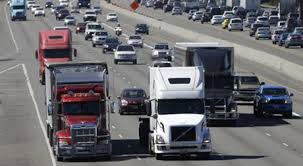
The U.S. is seeking to forcibly limit how fast trucks, buses and other large vehicles can travel on the nation’s highways.

A new proposal today would impose a nationwide limit by electronically capping speeds with a device on newly made U.S. vehicles that weigh more than 26,000 pounds. Regulators are considering a cap of 60, 65 or 68 miles per hour, though that could change.

Whatever the speed limit, drivers would be physically prevented from exceeding it.

The government said capping speeds for large vehicles will reduce the 1,115 fatal crashes involving heavy trucks that occur each year and save $1 billion in fuel costs.

The proposal from the National Highway Traffic Safety Administration and Federal Motor Carrier Safety Administration is subject to public comment before becoming final.

While the news is being welcomed by safety advocates and non-professional drivers, many truckers say that such changes could lead to dangerous scenarios where they are traveling at much lower speeds than everyone else.

The rule has been ensnared in a regulatory maze in the decade since the nonprofit group Roadsafe America issued its first petition in 2006. The group was founded by Atlanta financial adviser Scott Owings and his wife Susan, whose son Cullum was killed by a speeding tractor-trailer during a trip back to school in Virginia after Thanksgiving in 2002. The nonprofit was later joined by the American Trucking Associations, the nation’s largest trucking industry group.

Owings said he’s happy that speed-limiting technology may be in place soon, but frustrated by how long it took.

“This glacial process, if you can call it a process, is not effective,” Owings said before the latest proposal arrived. “It’s easy to see why so many citizens are angry about the ineffectiveness of government.”

The government agencies involved will take public comment for 60 days, then determine the final limit and decide if the regulation should be put in place.

The agencies said the proposal is based on available safety data and the additional benefit of better fuel economy. The cost would be minimal because all of the 3.6 million big rigs on U.S. roads have speed-limiting devices installed already, but some don’t have the limits set, according to agency documents.

But Norita Taylor, spokeswoman for the 157,000-member Owner Operator Independent Drivers Association, said her group has opposed the speed limiters because they create dangerous interactions between vehicles as faster cars slow down for trucks. “Differentials in speed increase interactions between vehicles, which increases the likelihood of crashes,” Taylor said.

Yet there is another compelling reason to limit truck speeds. An investigation last year by The Associated Press found that 14 states have speed limits for big trucks that are equal to or higher than their tires were designed to handle. Most truck tires aren’t designed to go faster than 75 mph, and tire manufacturers say traveling faster than that can cause tires to fail and blow out, creating safety issues.

Most of the states with the higher speed limits are west of the Mississippi River. Of the 14, five have speed limits of 80 mph or more and allow trucks to exceed the capability of their tires. NHTSA has said the speed limiters should take care of the discrepancy between state speed limits and truck tire capabilities.

Most of the states with speed limits of 80 or above either didn’t know about the truck tire speed ratings or didn’t consider them. States set their own speed limits, having been given sole authority to do so by Congress in the mid-1990s.

Chicago disability rights group sues Uber over wheelchair access

Chicago disability rights group has sued the mobile ride-hailing service Uber for allegedly violating U.S. laws mandating wheelchair accessibility.

The suit was filed Thursday in Chicago federal court on behalf of Access Living of Metropolitan Chicago and several individuals. It seeks an order requiring that Uber comply with the Americans with Disabilities Act and provide more wheelchair-accessible vehicles.

The filing notes Uber offers a service for wheelchair-bound customers called UberWAV. But it says Uber’s mobile map often shows no such vehicles available in Chicago.

The suit says Uber provided nearly 2 million rides in Chicago in June last year. But it says Uber gave just 14 rides to motorized wheelchair users from 2011 to 2015.

A Chicago spokeswoman for San Francisco-based Uber Technologies, Inc., didn’t have an immediate comment.

Aldermen winning in taxi war with ride-booking companies

The renewed City Council fight over whether to require ride-booking companies like Uber and Lyft to use only drivers with a chauffeur’s license is sparking a campaign cash windfall for Chicago aldermen and some of their pet causes.

Most obvious is the giving by the Illinois Transportation Trade Association PAC, which represents traditional taxi companies, but both sides are opening their wallets.

Since a measure by Ald. Anthony Beale, 9th, and other members of the City Council’s progressive caucus to require such a license, was introduced last month, ITTA has donated at least $23,000 to a total of 18 aldermen. Most got $1,000 each, but Beale received $5,000.

Beale was also a big beneficiary of money from ITTA in recent years, receiving $15,000 in 2014 and 2015, with a three-year total of at least $20,000, according to state financial disclosure reports.

In a phone interview late last week, Beale said he’s always been an ally of cab drivers and there is “no connection” between the donations and his sponsorship. “I haven’t cashed the ($5,000) check,” Beale added, saying he won’t decide whether to do so until later.

Beyond that, the progressive caucus, which has allied itself politically with a union representing cab drivers, has itself been a big winner .

The group got $10,000 in October and another $1,000 right after Beale submitted his plan. It also received $10,000 late last year from the union.

“A lot of outfits that come before the City Council make contributions,” said Ald. Ricardo Munoz, 22nd, who is listed in state records as caucus chairman. “We listen to the arguments and try to be as fair as possible.”

I can find no sign that Uber and Lyft, the other major company in the field, have made similar contributions recently, though Lyft did donate $5,000 to Mayor Rahm Emanuel’s re-electionfund in March 2015.

But in response to a question, Uber spokeswoman Brooke Anderson said the company did donate “several thousand dollars” to the City Council Latino caucus’ scholarship gala in November.

“We do not make political contributions to anyone as a matter of policy,” and the caucus event was for charity, Anderson said.

Other sources said they believe the donation was $10,000.

Also, lobbyists working for Uber and Lyft have been active donors to aldermen.

For instance, Nicolay & Dart, which Anderson said was officially retained by Uber last week, donated $1,000 each to progressive caucus members Scott Waguespack, 32nd, and Roderick Sawyer, 6th, in April.

The lobbying firm has donated several thousands more to other aldermen and their political organizations since last fall, when it was representing Lyft. But Nicolay & Dart has numerous clients, not just ride-hailing companies.

Uber’s main lobbyist is Mike Kasper, Anderson said. He’s the election lawyer who helped Rahm Emanuel fight off a residency challenge when he first ran for mayor in 2011.

The Beale bill is the second attempt by aldermen to toughen rules on the ridesharing companies. Last year, the council decided against requiring Uber and its competitors to mandate chauffeur’s licenses for drivers. The new Beale proposal would also require more intensive background checks for drivers.

The companies said the rules are onerous, unnecessary and potentially devastating to their business. Taxi companies said the rules would even the playing field and protect riders.

Chicago taxi group asks appellate court to even playing field with Uber

CHICAGO — An attorney for Chicago’s taxi industry on Monday argued to a federal appeals court panel that the city of Chicago has unconstitutionally enforced two sets of rules for the taxi and ridesharing industries, making it impossible for cabbies to compete with Uber and Lyft drivers.

The argument in front of the 7th Circuit Court of Appeals marked the latest effort by the city’s taxi industry to stem the financial tumult caused by the emergence of rideshare companies that some in the Windy City says is inching the legacy cab industry to the precipice of collapse.

Meanwhile, an attorney for three Chicago-area ridesharing drivers urged the appellate court to affirm an Illinois federal judge’s April decision to reject a preliminary injunction requested by city’s taxi industry that would have forced Uber and Lyft drivers to face the same regulations as taxi drivers—including the requirement they be fingerprinted, obtain a chauffeur’s license, and undergo the same vehicular safety inspections as taxi drivers.

The argument in front of the 7th Circuit Court of Appeals marked the latest effort by the city’s taxi industry to stem the financial tumult caused by the emergence of rideshare companies that some in the Windy City says is inching the legacy cab industry to the precipice of collapse.

Meanwhile, an attorney for three Chicago-area ridesharing drivers urged the appellate court to affirm an Illinois federal judge’s April decision to reject a preliminary injunction requested by city’s taxi industry that would have forced Uber and Lyft drivers to face the same regulations as taxi drivers—including the requirement they be fingerprinted, obtain a chauffeur’s license, and undergo the same vehicular safety inspections as taxi drivers.

Chicago’s city council in June passed an ordinance that would require ridesharing drivers to get a special license, one that is easier to obtain than the chauffeur’s license required for taxi and livery drivers.

The ordinance, which was pushed by Chicago Mayor Rahm Emanuel, was far weaker than what some members of Chicago’s city council were advocating for, including requiring rideshare drivers to acquire a chauffeur’s license and be fingerprinted.

Instead, the recently passed ordinance requires rideshare drivers in Chicago to complete online training. The city also decided to further study the possibility of fingerprinting for rideshare drivers in the future.

In contrast, Chicago taxi drivers are required to take a class in-person that costs more than $300 and also be fingerprinted to obtain a chauffer’s license.

The weaker ordinance came as Uber and Lyft threatened to leave Chicago if more onerous regulations were passed in the city. The companies did just that in Austin after voters there rejected a proposal by the companies to self-regulate their drivers and mandated that drivers undergo fingerprint background checks and have emblems on their cars.

“What’s the rationale for having fingerprinting for one and not the other?” said Shakman, who represent the Illinois Transportation Trade Association, which includes dozens of licensed cab companies.  “What’s the rationale for requiring a chauffeur’s license for one and not the other?”

The taxi industry also complains that the lack of regulation of ridesharing by Chicago and other cities has lead to owners of medallions—the city issued permit that owners of taxis must obtain to operate—seeing the value of their property diminish.

In 2013, the price of taxi medallions in Chicago peaked at $357,000. In April, a medallion was transferred between owners for $60,000. Taxi medallion owners in other cities have also seen the value of medallions plummet.

“It’s fundamentally unfair to the people who have played by the city’s rules since 1937,” said Shakman, referring to the inception of Chicago’s medallion system.

Judge Richard Posner, a member of the three member appeals panel, countered that it was absurd to assert that there aren’t fundamental differences between rideshare services and the taxi industry, which justifies different types of regulations.

At one point, Posner suggested that what is happening to the taxi industry was similar to what happened when to the “horse-and-buggy.”

“This is what competition does,” Posner said. “It wipes out industry.”

In a related case, the 7th Circuit also on Monday heard an appeal from the Joe Sanfelippo Cabs Inc., which had unsuccessfully sued the city of Milwaukee over its decision in 2014 to lift the cap it had placed on the number taxis that it would permit to operate in the city.

Sanfelippo and other legacy cab companies filed suit against Milwaukee that ending the cap devalued the taxi permit holders’ property without compensation. Milwaukee taxi permit holders had been able to sell the permits for up to $100,000 on the secondary market prior to the cap being lifted.

Anthony Sanders, a Libertarian public-interest attorney involved in the Milwaukee and Chicago lawsuits, said the two cases will play a critical role in determining how cities will approach regulation of the taxi and rideshare industries in the future.

“Deregulation is not a taking (of property),” said Sanders, with the Arlington, Va.,Institute for Justice. “There are serious questions about shackling taxi cabs to regulation, but the solution is not to shackle them on drivers like my clients. The solution deregulation of the taxi cabs.”

The appellate judges did not say when they would return with their decisions on the two cases.
 

Why Hiring a Chicago Cab is Better than Riding the L

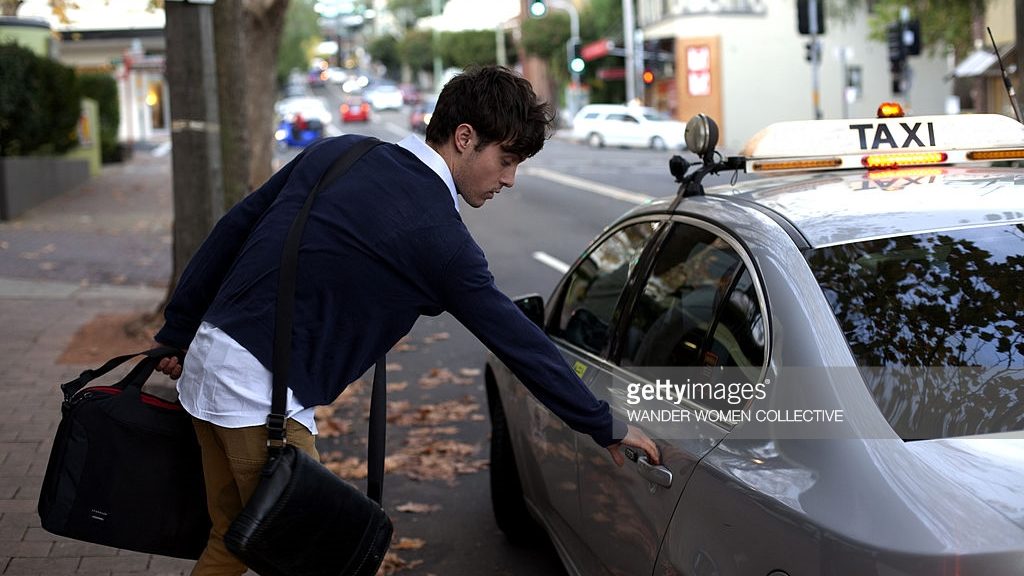
Don’t get us wrong. The L is great , and has become quite an institution around the Chicago area. However, taking it all the time has its own sets of pros and cons. Once you figure out what the downsides are the L instead of taking a Universal Taxi, you just might realize that the latter is the better choice.

1.It drops you off exactly where you’re supposed to go

One huge downside to the L is the fact that not every place you go to is found next to a train station. You would have to find the station nearest your destination . Og course , not every place around Chicago has a station near it, so you would end up having to do a lot of walking. Take a Cab and you get off right where you’re going.

2. It picks you up right where you are

It doesn’t matter where you are around the city. Just call a cab and you can expect to be picked up right where  you’re standing. You can even download the Universal Taxi app and book a cab straight from your phone without having to call the cab company . The app lets you send the driver all the information they need to find where you are, and just like that, your cab pick you up any minute.

3. It lets you have great conversations with a true-blue Chicago cabbie

One of the great things about Chicago cabs are the cabbies themselves! these cabbies know everything there is to know about the city, making them the perfect companions for those who are just visiting, or are still new to the area. They can also give you great recommendations on places to see and food to eat, and could serve an instant tour guides for those who are still unsure where they’re going.

4. It is rarely late.

Universal cabbies are known for their courtesy and proffessionalism, and are rarely late for appointments. Should you find yourself booking a cab in advance , expects the cab to be there at your doorstep at the exact time your asked it to be . Chicago cabbies know the flow of traffic quite well, so they know which routes to take to make sure they’re on time every time. As for the train, its ounctuality is something you can’t control. And if the train comes in late, then you have no other choice but to either wait it out, or find other options at the last minute.

5. It can be scheduled ahead

Through the help of the Universal Taxi app, you can book your cab ahead of time. This allows you to take care of all your other errands without having to worry about getting a ride at the last minute. This is such a huge convenience, especially for people who follow a strict schedule.

Without at doubt, taxis are better choice than the L  most of time. The L is a great way to expereince Chicago every now and then . But if you plan on getting around  the most efficient way possible, they best way to do it is by taking a cab.


Relocating to Chicago? The Best Ways Around the City

It may be a lot colder in Chicago compared to a lot of other cities around the country, but the art, architecture, and the culture that defines Chicago still acts as quite a powerful magnet for newcomers. Because of this, its not at all surprising that a lot of professionals still decide to move to Chicago and call it their home.

If youre new around the city or are just about to relocate, here are the best ways for you to get around:

Walking
Especially if you want to explore the sights before anything else, walking would be the best way for you to get around on your first few weeks. Its the best way for you to familiarize yourself with the city around you while catching a glimpse of the art and architecture at the same time.

Public Transport
Public transport around Chicago is quite efficient, and its also one of the cheapest ways to go. There are visitor passes available that would buy you an unlimited number of rides over a 1-day, 3-day, or 7-day period. Grab a guide that would help you become more familiar about bus and train schedules, as well as different stops that would take you to wherever youre going.

Biking
There are tons of biking trails all around Chicago, making it a great city for you to bike around in. Of course, one would have to consider the weather before grabbing your bike to roam around. If youre lucky enough to catch a clear day, then this is the best way for you to grow a new appreciation for the city as you look at it from a different perspective.

Taxis
Cab drivers around Chicago are known to be knowledgeable and gracious, making it a great choice to get around. Choose one of the more established cab companies like Universal Taxi and youre guaranteed to have a cabbie whos going to be willing to show you around your new home. Even better, you can make it more convenient by using the Universal Taxi app that allows you to book a taxi wherever you may be.

With so many options for you to get around, youll definitely feel right at home in no time. Chicago is, after all, a place that youd be proud to call your own.
Just a few parting tips to help you get settled:

  • Lake Michigan is Chicagos natural border to the east, so you can use it as a reference point.
  • Chicago is laid out vertically, so keep this in mind in trying to figure out directions from one place to another.
  • Chicago uses a numerical grid system, so you may want to familiarize yourself with that to make directions easier.
  • Taxis are your best bet if youre planning to go beyond downtown.

Enjoy Chicago and make the most out of this beautiful city. It may be a bit hard for you to find your way around on your first few days, but the more you explore your new city, the more you can embrace it as if youve been here your entire life.

Rediscovering Chicago through the Eyes of a Local

If there’s anyone who can truly explain what a wonderful city Chicago is, it has to be the locals. Chicago is not just about looking at travelogues and walking to wherever it leads you. It’s also about going right to the heart of the people who continue to make it the iconic city that it is.

If you’re in town for a few days, instead of burying your nose into a travel guide written by someone who’s probably not even from around these parts, get out there and start talking to people. A great place to start would be Chicago cabbies, so download the Universal Taxi app, book a ride, and experience a city tour that’s straight from the eyes of a true local.

Here are a few tips that locals would probably tell you:

  • Be ready to blow your diet.

Chicago has such a rich culture, and when we say culture, it’s not just about the art and the architecture. This includes food as well. Exhibit A: The Chicago deep dish pizza. Yes, it has more calories than you would dare take in on any normal day. But this is not a normal day, this is a day when you expect to experience what Chicago is all about, and pizza is one of the best ways to do just that.

  • Be ready to stay up late.

Yes, there are late night bars in Chicago that would serve you drinks until the wee hours of the morning. Where other bars around the country are already on their last call, the partygoers in Chicago are just starting to warm up. This is a special license though, so you can’t exactly demand the same kind of service in every bar. Ask your Universal Taxi cabbie and he’ll probably know every place that has this service.

  • Oak Park is where most dreams are made of.

Sure, taking a glimpse of the Magnificent Mile can give you a glimpse of some great architecture. But if you’re looking for something more personal, then consider yourself warned. Taking a walk through Oak Park will have you hoping that you lived here.

There are 25 structures in Oak Park designed by Frank Lloyd Wright, and if you have zero idea about who he is, then you’ll remember him from now on. The amazing architecture scattered all over a residential street can make you remember about childhood dreams you probably had about how life is going to be when you start building a family.

  • Navy Pier is overrated.

Yes, every single travel guide will tell you how cute the carousel and Ferris wheel is at the Navy Pier. But for locals, this is one place you should avoid by all means, unless you’re really itching to see the Shakespeare Theater. It’s overcrowded and there really isn’t much to see. Period.

These are things that you probably won’t hear from your usual travel guides, but then again, that’s the exact reason why locals are the best people who can show you around.