Category Archives: News

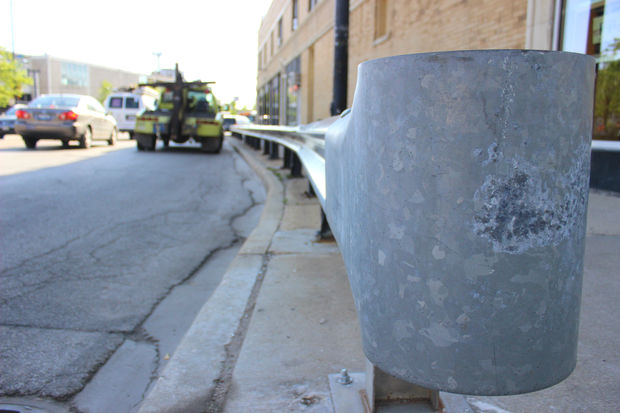
The Leland Curve In Lincoln Square Is Letting Down Its Guard(rail)

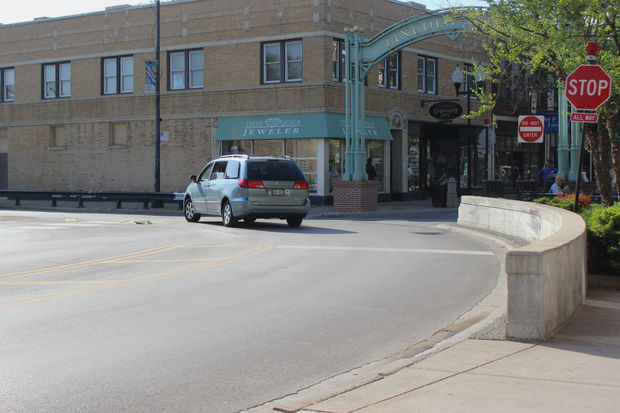
A makeover is in the works for the Leland Avenue curve, at the southern gateway to the square’s quaint shopping and dining hub.

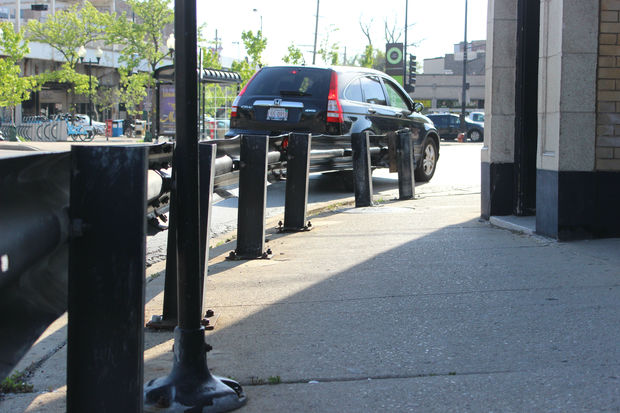
The interstate-style guardrail, which hugs the curve as Leland swoops toward Western Avenue, is set to be replaced with planters, and the sidewalk, which tapers to a choke point around the bend, will be widened to provide more room for pedestrians.

Ald. Ameya Pawar (47th) has earmarked $100,000 in aldermanic menu money to fund the project.

Work could start in the fall but more likely will get underway in spring 2018, according to Jim Poole, 47th Ward chief of staff.

The Chicago Department of Transportation has some engineering work to do first, including relocating drains and streetlights, he said.

“It’s going to look a lot better, but it’s not a drastic change,” Poole said.

Though the main purpose of the project is to improve the pedestrian experience, Poole said the planters may send a visual cue to motorists that Leland isn’t a highway.

“It probably calms traffic a little bit,” he said.

A more significant alteration to the curve, in the form of a pedestrian “island,” was considered and dropped, in large part because of concerns that trucks would have serious difficulties negotiating the island, he said.

extralarge

The guardrail is coming down, to be replaced with planters. [All photos DNAinfo/Patty Wetli]

SSS The sidewalk, which tapers to a choke point around the bend, will be widened to provide more room for pedestrians.

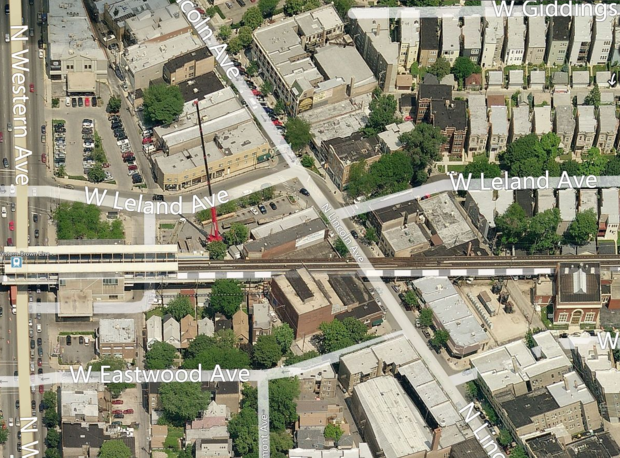
SSSSSSThe “Leland Curve,” where Leland Avenue links Lincoln Avenue drivers to Western, will be getting a makeover. [Bing]

Should Red Light Cameras At Irving Park & Kedzie Stay Or Go? Weigh In

Should Red Light Cameras At Irving Park & Kedzie Stay Or Go? Weigh In – Irving Park .

The city is asking for feedback on whether it should move forward with or put the brakes on plans to remove red light cameras at the intersection of Irving Park Road and Kedzie Avenue.
The Chicago Department of Transportation is hosting a community forum to discuss the issue from 6:30-7:30 p.m. Wednesday at Horner Park, 2741 W. Montrose Ave.
The meeting will be conducted open house-style, as opposed to a formal presentation. Neighbors can stop by at any time during the appointed hour to speak with city representatives.
As of March, there were 306 red-light cameras at 151 intersections across Chicago. Red light tickets cost drivers $100.

Earlier in 2017, the city relaxed ticketing standards, giving motorists three-tenths of a second, instead of one-tenth, to enter an intersection’s enforcement area after the light turns red.

By DNA info

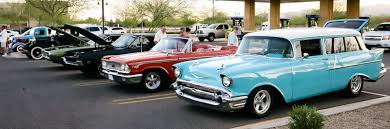
‘Cops And Cars Cruise-In’ Coming To Morgan Park Police Station This Summer

The Chicago Police Department will host a “Cops And Cars Cruise-In” on the first Thursday of the month throughout the summer from May 4-Sept. 7 in Morgan Park.

Classic cars will take over the east parking lot of the Morgan Park Police Station at 1900 W. Monterey Ave from 6-9 p.m. Participants in the free show are asked to enter at the corner of Pryor Avenue and Esmond Street.

Donald Trump Promised To Build Infrastructure, Delays Bay Area Railway Project Instead

Donald Trump promised Americans he would rebuild the country’s crumbling infrastructure, boasting on the campaign trail that he would put $1 trillion of public and private funds into rebuilding roads and bridges. He later drastically decreased that number to $550 billion.

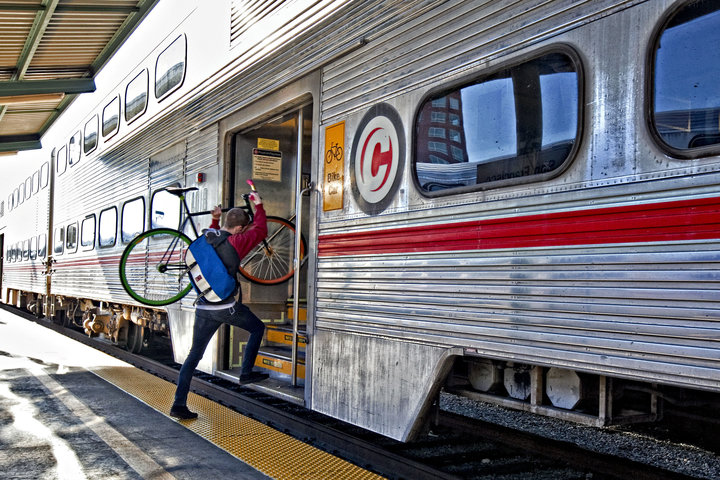
So where is that money going? Not to California, where plans to revitalize the Bay Area’s Caltrain transit system have just been delayed by his administration.

Trump’s newly appointed transportation secretary, Elaine Chao ― who oversees the Federal Transit Administration ― has slammed the brakes on the project, which would change the diesel-powered trains to electric and cost about $2 billion, according to SF Gate.

Last Friday, Chao halted the $647 million federal grant that helps cover the project until an audit can be completed. Caltrain has already selected contractors to get started on construction by March 1. If they aren’t able to get started by that date, the bidding process will begin all over again ― and likely at a much higher cost.

Caltrain, which connects riders from San Francisco to the Silicon Valley hub of San Jose, currently carries approximately 60,000 riders a day. Making the trains electric would increase ridership, save money on operating costs and help the environment, advocates for the change argue.

“For two years, Caltrain worked closely with Federal officials to complete a thorough evaluation of the project including intensive engineering assessments and financial vetting,” Murphy said in a statement.

But on Jan. 24, 14 Republican members of the California GOP sent a letter to Chao, saying the cost of the project was too high and would not attract private financing.

“I never imagined that the electrification of a train would be subjected to such brutal, partisan politics,” said Rep. Anna Eshoo (D-Calif.) in a statement. “This is not a Democratic project nor is it a Republican project. It is about the modernization of an outdated commuter system that is the spine of the transportation system of the Peninsula and the Silicon Valley region.”

Caltrain officials are asking Trump to intervene and direct the FTA to fund the electrification process of the existing Caltrain system. They say the project would create 9,600 jobs.

There’s little chance Caltrain can meet its deadline now that an audit is required, and the cost penalties could be “so severe that we might not be able to do the project,” Seamus Murphy, the rail system’s chief communications officer, told the Los Angeles Times.

The electrification of Caltrain would be just one element of an ambitious project to connect San Francisco to Los Angeles by high-speed train, reducing travel time between the two metropolises to three hours. California voters approved the entire project in 2008, but the original $40 billion cost is now closer to $64 billion (this sum includes the cost of the electrification of the current Caltrain system).

Senate Majority Leader Mitch McConnell (R-Ky.), who is married to Chao, previously panned Trump’s plan to spend a trillion dollars on infrastructure, saying such an infrastructure bill would not be a good use of the GOP’s time or resources.

Trump has already promised to waste more than $20 billion on a useless U.S.-Mexico border wall. And it seems unlikely that he would give federal funds for infrastructure to California, a state that limits local law enforcement agencies’ cooperation with deportation efforts and contains many so-called “sanctuary cities.”

The president has already threatened to withhold federal funds from sanctuary jurisdictions. “Certainly that would be a weapon,” Trump said of denying funding to states and cities that don’t fall into line with his federal immigration policies.

In a 4 a.m. tweet earlier this month, Trump also floated the idea of cutting off federal funding for the University of California, Berkeley, after violent student protests erupted ahead of a scheduled appearance by right-wing agitator Milo Yiannopoulos.

Part of Yiannopoulos’ “different point of view” was his apparent defense of pedophilia, as the world learned earlier this week. Maybe that will change Trump’s mind about blanket refusals of federal funds. Probably not.

by Sebastian Murdock Reporter, The Huffington Post

United Passenger Dragged Off Plane Hires Prominent Chicago Lawyer

The Louisville doctor dragged off a United Airlines flight  at O’Hare airport to make room for airline workers who wanted to board the plane has hired a high-profile Chicago attorney.

Tom Demetrio of the Corboy & Demetrio law firm that is routinely in the mix on high-profile personal injury and aviation cases, is part of Dr. David Dao’s new legal team.

Dao also is represented by Stephen L. Golan of Golan Christie Taglia, who issued a brief statement on Dao’s behalf Tuesday — not long after United’s CEO issued an apology for the infamous incident seen around the world.

According to the statement, Dao is undergoing treatment in a Chicago hospital for his injuries.

“The family of Dr. Dao wants the world to know that they are very appreciative of the outpouring of prayers, concern and support they have received. Currently, they are focused only on Dr. Dao’s medical care and treatment,” said Golan.

“Until Dr. Dao is released from the hospital, the family is asking for privacy and will not be making any statements to the media,” both attorneys said.

Demetrio is a partner at Corboy & Demetrio and is a former president of the Chicago Bar Association and the Illinois Trial Lawyers Association.

He’s won multimillion dollar settlements in wrongful death cases. According to his bio, Demetrio “has negotiated well over $1 billion in settlements and acquired the largest personal injury verdict ever upheld by the Illinois Supreme Court. He has never lost an appeal.”

Meanwhile, United Airlines’ CEO Oscar Munoz offered his “deepest apologies” to Dao.

Munoz came under fire for his initial responses to the Sunday evening incident, which was captured in several videos that went viral on social media.

Munoz had described the flight’s booted passengers as being “re-accommodate[d],” and in a letter to employees, called Dao “disruptive and belligerent” and said employees had “followed established procedures.”

But in a public apology shared by United on Tuesday, Munoz changed his tone, describing the incident as “truly horrific” and saying United took responsibility.

“The truly horrific event that occurred on this flight has elicited many responses from all of us: outrage, anger, disappointment. I share all of those sentiments, and one above all: my deepest apologies for what happened,” Munoz wrote in the statement. “Like you, I continue to be disturbed by what happened on this flight and I deeply apologize to the customer forcibly removed and to all the customers aboard.”

United CEO Oscar Munoz: I’m sorry. We will fix this. https://t.co/v8EPGsiDCipic.twitter.com/eOPiYcagvo

— United (@united) April 11, 2017

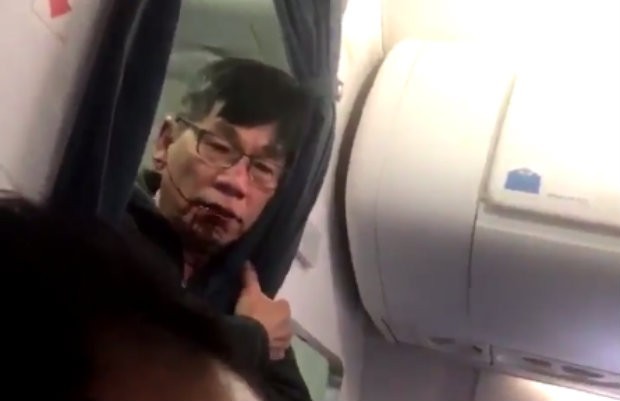
Videos of the incident show officers pulling Dao from his chair and dragging him out by his arms. His mouth, chin and cheek are smeared with blood.

The airline asked four passengers to leave the plane voluntarily because four nonworking crew members needed to fly to Louisville, said travelers who wrote about the incident online. When no one volunteered to give up a seat, the airline said a computer would randomly select four people to be removed, a passenger reported.

Dao was among those selected, but he told airline employees he was a doctor and needed to go home to see patients in the morning, according to passenger accounts.

That’s when he was dragged off the plane, according to the passengers.

Other videos show Dao returning and walking up the plane’s aisle, saying, “I have to go home. I have to go home.”

Two videos show Dao bleeding and clutching a curtain in the aisle while saying, “Just kill me. Kill me.”

RELATED: New Video Shows Bloodied United Airlines Passenger Saying ‘Please Kill Me’

A Chicago Aviation Department security officer who helped remove Dao from the plane has been suspended “pending a thorough review,” officials said. The security officer’s identity has not been released.

“The incident on United flight 3411 was not in accordance with our standard operating procedure, and the actions of the aviation security officer are obviously not condoned by the Department,” said Karen Pride, a spokeswoman for the Aviation Department.

According to United’s “Contract of Carriage,” or set of policies: “If a flight is oversold, no one may be denied boarding against his/her will until UA or other carrier personnel first ask for volunteers who will give up their reservations willingly in exchange for compensation as determined by UA. If there are not enough volunteers, other passengers may be denied boarding involuntarily in accordance with UA’s boarding priority.”

Those who are the least likely to be denied boarding or deplaned due to overbooking are children traveling alone and passengers with disabilities. Other factors considered by the airline when deciding whom to remove include: a “passenger’s fare class, itinerary, status of frequent flyer program membership, and the time in which the passenger presents him/herself for check-in without advanced seat assignment.

@united @CNN @FoxNews @WHAS11 Man forcibly removed from plane somehow gets back on still bloody from being removed pic.twitter.com/njS3nC0pDl

— Tyler Bridges (@Tyler_Bridges) April 10, 2017

#flythefriendlyskies @united no words. This poor man!! pic.twitter.com/rn0rbeckwT

— Kaylyn Davis (@kaylyn_davis) April 10, 2017

#flythefriendlyskies my husband was on that flight. Screw you United!! @unitedpic.twitter.com/4EcxrMy5jZ

— Kaylyn Davis (@kaylyn_davis) April 10, 2017

#flythefriendlyskies @united my husband had to deboard because of the blood pic.twitter.com/AMywCaPlnC

— Kaylyn Davis (@kaylyn_davis) April 10, 2017

United CEO response to United Express Flight 3411. pic.twitter.com/rF5gNIvVd0

— United (@united) April 10, 2017

@united @CNN @NBCNewspic.twitter.com/gk7oPOSmQe

— Emily Powell (@Powell_Emily) April 9, 2017

@WHAS11 Kids were crying people are disturbed. Also after being removed the bloodied man somehow ran back on the plane repeating-I have to get home

— Tyler Bridges (@Tyler_Bridges) April 10, 2017

@United overbook #flight3411 and decided to force random passengers off the plane. Here’s how they did it: pic.twitter.com/QfefM8X2cW

— Jayse D. Anspach (@JayseDavid) April 10, 2017

@USAnonymous Flight 3411 from Chicago to Louisville was overbooked. After our team looked for volunteers, one customer refused to leave ^MD

— United (@united) April 10, 2017
City Releasing Plan To Protect Pedestrians Amid Surge In Fatal Crashes

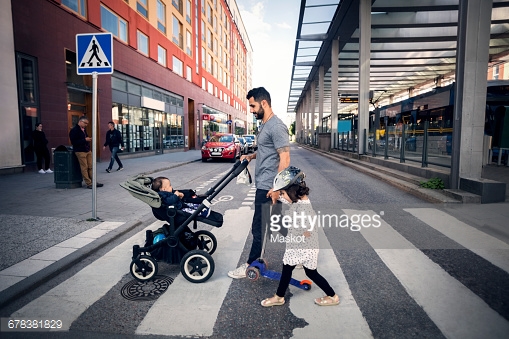
The city is expected to release a plan this month detailing how to better protect pedestrians, unveiled amid a nationwide surge in deadly crashes between pedestrians and cars.

A report from the Governors Highway Safety Association estimates pedestrian deaths rose 11 percent around the country between 2015 and 2016. Chicago itself saw 44 pedestrians killed in 2016, higher than the average of 38 annual deaths since 2010, and crashes have affected thousands of people walking, riding a bike or driving, according to a February report from the Mayor’s Pedestrian Advisory Council.

The city hopes to end crashes that cause death or serious injury by 2026 with its Vision Zero campaign. Various city departments and advocacy groups have been working together to create a three-year action plan in line with Vision Zero’s goals, said Kyle Whitehead, the government relations director at the Active Transportation Alliance, a bicyclist advocacy group that has worked with the city on the action plan.

We’re definitely concerned about [pedestrian fatalities],” Whitehead said. “When you’re looking at statistics like this, we always want to be careful to [not] read too much into a single change or fluctuation from year to year. What we try to pay attention more to is longer-term trends, and when you look longer-term our numbers have been going down in Chicago.

“We think every one of those crashes is preventable and every loss of life is tragic. We as advocates continue to work until those numbers are reduced to zero.”

Active Trans has pushed the city to reduce speed on streets, especially large “arterial” roads like North Avenue, Irving Park Road or 79th Street, as a lifesaving measure, Whitehead said. The group doesn’t have a “specific ask” on what the speed limits on those major roadways should be, but Whitehead said it wants to city to significantly reduce speed limits “across the board.”

Active Trans has also pushed for lanes to be removed or narrowed — which can be done by adding a bike lane or a pedestrian “refuge island” — so drivers have less space, which causes them to “naturally drive slower,” Whitehead said.

“Those are the types of projects that we would really like the city to pursue on some of these corridors,” Whitehead said.

Chicagoans should also be encouraged to use alternate means of transportation, like walking or riding a bike, instead of driving, to help prevent fatal crashes, Whitehead said.

“When more people are using those modes, not only is our city more healthy and sustainable, it’s also safer,” Whitehead said. “Within the city, if we can get more people walking and biking, you’re going to see fewer of these crashes, and we could have fewer people driving.”

A Department of Transportation spokeswoman said more information about what the city has done and what it intends to do is expected to be released this month, but details were not immediately available.

Kelly Bauer dnainfo

DUI Crackdown Coming To Far Southwest Side This Weekend

Chicago Police in the Morgan Park District will be on the lookout for drunken drivers this weekend.

The district will conduct a “DUI Saturation Patrol” from 7 p.m. Friday until 3 a.m. Saturday, police said.

Officers will saturate Beverly, Morgan Park, Mount Greenwood and Washington Heights looking for impaired drivers, speeders, those not wearing seatbelts and other scofflaws.

Taller Buildings — But No Major Park — Pushed In North Branch Guidelines

The Department of Planning and Development set tentative guidelines for future development along the North Branch Industrial Corridor over the weekend, but again declined to set aside any public land for a major new park as part of the corridor’s ongoing modernization plan.

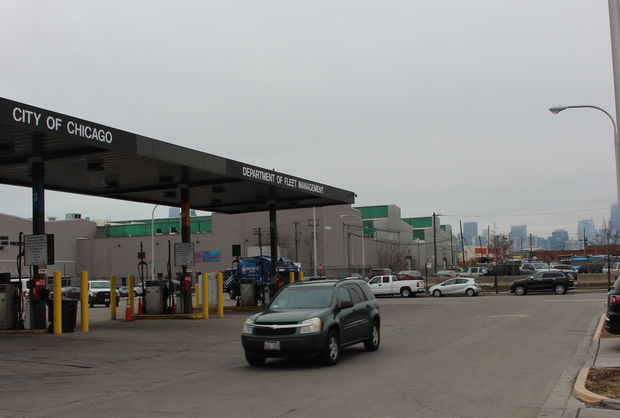
According to Ald. Brian Hopkins (2nd), the city has ruled out any notion of converting the Fleet Management lot at 1685 N. Throop St. into a park, even though it’s the only major piece of city-owned property in the 760 acres of the corridor, running on a diagonal over 3.7 miles between the Damen Avenue bridge to the northwest and Kinzie Avenue to the southeast.

Ald. Michele Smith (43rd) has said the city needs to create a major new park to serve residents from Lincoln Park to Wicker Park, and has seized on the North Branch Industrial Corridor Modernization Plan as a way of addressing that issue.

“The city has given us a flat-out ‘no’ to our request to put a park on the site of the old fleet center,” Hopkins said Monday.

“It’s the only opportunity we have for a large parcel of publicly owned land,” he added. “The Mayor’s Office and the Planning Department have said unequivocally that they’re not willing to move the fleet center unless the transaction itself can be self-supporting.”

The lot is being offered for development, contingent on the developer also building a replacement Fleet Management lot in Englewood. That would most likely dictate a highly commercial development on the old Throop lot, although Hopkins added, “If there’s anything left over from that transaction, it needs to go to the community benefit.”

That said, Hopkins added that he was pleased with new guidelines the Department of Planning and Development delivered online late Friday setting goals for the creation of public open spaces, even as he said they needed “more specificity.”

Hopkins said, “There’s some things in there that clearly show a response to the community’s request for more open and recreational space” and that he sensed “movement” on the part of city planners, although he quickly added, “It doesn’t go far enough.”

He specifically cited a proposal at the end of the guidelines stating the principle to “create publicly accessible open spaces within planned developments for recreational activities,” a concept that had been pushed at public meetings, but which Hopkins said was new being put down on paper as a set guideline.

“That’s something that we’ve added listening to the public at our meetings,” said Eleanor Gorski, deputy commissioner in Planning and Development, although she also pointed out how it was mentioned in the plan framework released to the public the week before.

The guidelines make it clear that building developments along the North Branch of the Chicago River would be allowed to grow higher if they set aside more open space on the ground level.

“Buildings should frame public open spaces and add vitality to the public realm,” the guidelines state. They set a goal to create “publicly available open spaces within planned developments.”

That figures to have a key impact on the Sterling Bay development at the old Finkl Steel site, as well as other projects to come in the decades ahead. “That is what we’re encouraging,” Gorski said.

“That wasn’t originally in there,” Hopkins said. “That was added because of pressure from the community.”

The guidelines set three basic goals: to maintain the North Branch Industrial corridor as an “economic engine,” especially in the growing information and technology industries, including mixed-use residential areas to house employees; to provide better transportation into and out of the corridor, including pedestrian bridges, bike lanes and perhaps light rail; and to “build upon the North Branch Industrial Corridor’s unique natural and built environment,” including a riverwalk on both sides of the North Branch, as well as preserving iconic “character buildings” like the Morton Salt sheds and the Prairie Materials silos.

Transportation improvements, including the renovation of several bridges, got much of the attention during the nine public meetings that have been held by the department on the corridor thus far, and they were widely covered in the guidelines released on Friday as well, although not in the detail Hopkins might have liked.

“This document is light on specifics when it comes to parks and infrastructure,” he said.

The Department of Planning and Development scheduled a final public meeting from 8 a.m.-1 p.m. April 7 at City Hall, in Room 1003-A, ahead of delivery of its final draft, to be presented to the Plan Commission April 20.

Community activist Allan Mellis, however, said that schedule was rushed, calling the April 7 event “not a public meeting but rather a drop-in.” He pointed out that, with the department accepting public input online through April 18, “they should delay [the] Plan Commission hearing to be able to incorporate community comments.”

Gorski said they were sticking to that schedule, “pending how many comments we get or any changes we have to make.”

by Ted Cox-dnainfo

West Loop Morning Parking Could Be Banned Soon For Outsiders

A new morning parking ban that aims to solve the West Loop’s parking woes could be implemented as soon as this summer, an influential West Loop alderman said Monday.

Aimed at discouraging suburban “day-trippers” from parking in the area and heading to work Downtown, 27th Ward Ald. Walter Burnett Jr. hopes a ban that would prohibit street parking from 7 to 9 a.m. weekdays — but make an exception for West Loop residents — can be approved by the City Council soon.

If all goes well, new parking signs could be installed by summer, Burnett told DNAinfo Monday.

Unlike a previous pilot program that banned parking from 1:30 to 3:30 p.m. on weekdays, residents would be able to obtain a permit to park on streets from 7 to 9 a.m. weekdays. The proposed ordinance aims to improve parking in an area bound by West Van Buren Street on the south, West Washington Street on the north, Green Street on the east and Ashland Avenue on the west.

Under the draft ordinance, signs prohibiting parking from 7 to 9 a.m. on weekdays would be installed on more than 20 blocks, including:

Northeast area

1-150 N. Morgan St., two blocks on the east side of the street between Randolph and Madison

100-150 N. Sangamon St., one block on the east side of the street between Randolph and Washington

1-100 N. Sangamon St., half-block on the west side of the street between Washington and Madison

1-150 N. Peoria St., two blocks on the east side of the street between Randolph and Madison

Central area

1-100 N. Elizabeth St., half-block on east side of the street between Washington and Madison

1-100 N. Racine Ave., half-block on west side of the street between Washington and Madison

1-100 S. Racine Ave., one block on east side of the street between Madison and Monroe

1-100 S. Throop St., one block on east side of the street between Madison and Monroe

1-100 S. Aberdeen St., one block on the east side of the street between Madison and Monroe

1300-1400 W. Monroe St., half-block on north side of the street between Loomis and Throop

Southeast area

300-400 S. Aberdeen St., one block on the east side of the street between Jackson and Van Buren

300-400 S. Morgan St., one block on the east side of the street between Jackson and Van Buren

300-400 S. Sangamon St., one block on the east side of the street between Jackson and Van Buren

400-426 S. Sangamon St., half-block on the east side of the street south of Van Buren

1000-1100 S. Tilden St., majority of block on north side of the street between Aberdeen and Morgan

Southwest area 

200-300 S. Laflin St., one block on west side of the street between Adams and Jackson

300-400 S. Laflin St., one block on east side of the street between Jackson and Van Buren

200-300 S. Loomis St., one block on east side of the street between Adams and Jackson

300-400 S. Loomis St., one block on the west side of the street between Jackson and Van Buren

200-400 S. Throop St., one block on the west side of the street between Adams and Van Buren

The ordinance, co-sponsored by West Loop aldermen Danny Solis (25th) and Jason Ervin (28th), was introduced to the city’s Committee on Pedestrian and Traffic Safety on January 21, 2015 — more than two years ago — but has been stuck in committee since.

With development booming and construction crews taking over large parts of the West Loop, aldermen now aim to pass the ordinance soon so the more than 100 new signs can be installed this summer, Burnett said, giving West Loop residents much-needed parking relief.

RELATED: McDonald’s Bringing 2,000 Jobs, ‘Iconic’ Brand Back To Chicago With New HQ

Because the area is ever-evolving, Burnett said some changes could be made regarding the specific streets that get signs before the plan is approved. Neighbors were requesting changes at a development meeting hosted by the West Loop Community Organization and Solis last week.

“We are trying to get this done before the interest and the concerns of the area change,” Burnett said.

Failed midday parking ban

The new morning parking ban comes after a midday parking ban in the West Loop was abandoned after neighborhood groups pushed to end the pilot program in 2014.

From July through December in 2013, drivers were prohibited from parking along select neighborhood streets from 1:30 to 3:30 p.m. on weekdays.

At the time, Armando Chacon, president of the West Central Association, said the restrictions were “not received overly well” and made “the parking situation even worse.”

Although the ban was able to reduce day-trippers, local residents didn’t like it because there was no exception for them, Chacon said. Businesses didn’t like it because customers couldn’t park on the street during the middle of the day.

dnainfo / By Stephanie Lulay

Water Taxis Return To Chicago River As Spring Arrives

It’s a sure sign of spring: water taxis are back on the Chicago River.

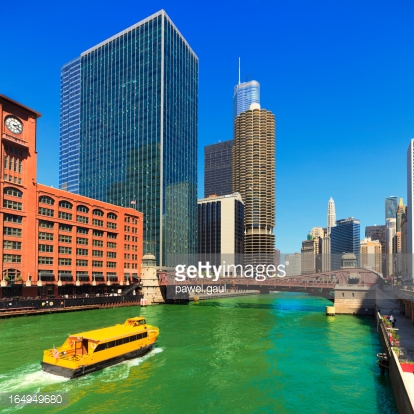
The distinctive yellow boats made their seasonal debut Monday at four stops Downtown. Stops along the north and south branches of the river will open later this spring, Andrew Sargis, chief of operations for Chicago Water Taxi, says.

One-way tickets cost $5, while all-day passes are $9. Ten-ride ($20) and 31-day ($60) passes are also available on the water taxi website.

For now the boats are stopping at the Wrigley Building, the north bank of the river at LaSalle Street, the south bank of the river at Clark Street and the northwest corner of the Madison Street Bridge.

The full route includes stops at Ping Tom Memorial Park in Chinatown, Chicago Avenue at the river, and where North and Sheffield avenues intersect near the northern tip of Goose Island.