Category Archives: Review

Closing Road To Skyway Through Jackson Park A ‘Bad Idea,’ Alderman Says

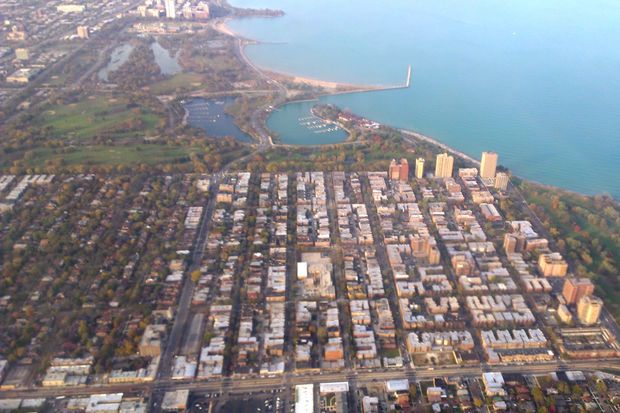
Fifth Ward Ald. Leslie Hairston is pushing back against plans to close major roads running through Jackson Park.

The Obama Foundation has floated plans to community leaders to close sections of Cornell Drive between 60th and 67th Street, and possibly Marquette Drive from Cornell to Lake Shore Drive.

Hairston said the only plan she’s been presented with is closing sections of Cornell Drive, and she’s not in favor of the idea from what she’s heard.

“This seems like a bad idea,” Hairston said.

She said she was struggling to see how traffic would get from Lake Shore Drive to Stony Island and onto the Chicago Skyway. She said the intersection at 59th Street that diverts cars south onto Stony Island Avenue and west to the Midway Plaisance is already problematic.

Obama Foundation officials were not available to comment.

Closing Cornell Drive would connect the future Barack Obama presidential library campus to the green spaces surrounding Wooded Island farther to the east and the Museum of Science and Industry. Eliminating portions of Cornell and Marquette drives also would open space for the redesign of the Jackson Park Golf Course and eliminate headaches for designers trying to figure out how to get golfers across several busy streets in the park.

Hairston said the problem for her was that the proposal does not account for the added traffic the redesigned golf course, the presidential library and a proposed visitors center would all bring to the park.

“Stony Island has to be a discussion,” Hairston said. “When you talk about closing a street, you have to be talking about everything.”

Hairston has expressed concerns in the past that the large number of projects planned for Jackson Park are too siloed and progressing without enough attention on how they will all interact with each other.

“I would like to look at the totality,” Hairston said.

A representative from the Chicago Park District referred questions to the Mayor’s Office.

“It is premature to talk about specific ideas related to site configuration, improvements, street and access matters and related issues,” said Shannon Breymaier, a spokeswoman for the Mayor’s Office. “Options will be fully vetted once additional details on the center have been developed. Any significant proposals will have to be approved through a process that will include the opportunity for community input.”

Park District Supt. Mike Kelly has said in the past, including at a recent 5th Ward meeting, that all plans being developed have been in the works since at least 1999, when a framework was developed with the community and park volunteers. The framework, though now about 18 years old, includes many of the projects now in the works, including an $8.1 million habitat restoration by the Army Corps of Engineers.

That plan calls for Cornell Drive to be narrowed from its current six lanes, reducing its role as a shortcut for commuters.

Experts on the park’s designer, Frederick Law Olmsted, have also renewed the call to reduce the size of Cornell Drive.

“At 12 feet wide, the Cornell lanes are highway lanes now,” said Patricia O’Donnell of Heritage Landscapes in November 2015 after completing a review of the park for the Park District.

No one has proposed closing streets.

Friends of the Parks has echoed some of Hairston’s concerns and called for a more comprehensive planning process.

“They really should have done a new framework plan in this decade ahead of this process of planning for a golf course,” said Juanita Irizarry, executive director of the parks advocacy group, after the Park District board voted to move forward with initial survey work for the golf course in January.

The Jackson Park Advisory Council has remained active in the discussions of all the projects, but has often, like with the golf course, been unable to vote on the projects until the ball is already rolling.

The council determined on Jan. 27 that redesigning the golf course would be an asset to the park.

The council’s decision came two weeks after a Jan. 11 vote by the Park District board to spend $1.1 million on a feasibility study on redesigning the golf course.
Midway Airport To Expand Concessions With $75 Million Project

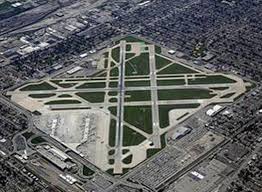
The city will soon expand concessions at Midway International Airport, according to Mayor Rahm Emanuel.

The mayor on Wednesday announced an ordinance that will allow the city to enter a 15-year agreement with Midway Partnership LLC in a joint venture to lease, develop, manage and operate concessions at the South Side airport.

The $75 million project will renovate and expand Midway’s concessions program, targeting food and beverage, news and gift, specialty retail, duty-free, personal services, concessions support facilities and other amenities.

“This agreement is an investment in Chicago: creating jobs, highlighting local businesses and improving the airport’s overall passenger experience,” Emanuel said in a statement. “It also marks an important step forward in our overall plan to modernize Midway and increase the airports competitive viability for the future.”

The new program could increase annual sales tax revenue for the city by $10 million once the project is complete, according to the mayor’s office.

The number of concessions jobs will double from 700 to 1,400, creating an additional 250 jobs for construction. The expansion will add 26,000 square feet of concessions space to the airport for a total of nearly 70,000 square feet.

Existing concession stops, stores and restaurants will be renovated. Shopping dining, amenities and services will be added.

The mayor’s office did not offer details on specific offerings the expansion will bring to Midway or when the project will begin.

Cubs End Print-At-Home Tickets To Slow Down Counterfeiters

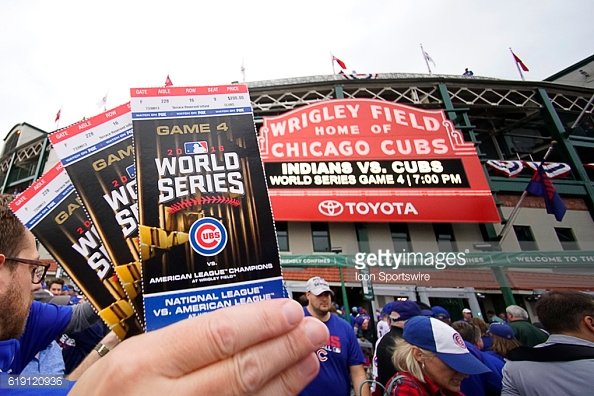
The Chicago Cubs are cracking down on counterfeiters, moving to phase out print-at-home tickets for single-game tickets at Wrigley Field.

The postseason proved lucrative not only for the Cubs, but also for scammers who passed off hundreds of fake tickets to unwitting fans who were subsequently turned away at the gates.

To lessen the risk, the club said it will stop offering tickets that can be printed at home for the 2017 season, leaving single-game customers with options like getting tickets mailed or printed at will call.

The only instant delivery option will be via the Major League Baseball Ballpark smartphone app.

It was not clear how fans will access tickets they buy through StubHub, a sanctioned venue for secondhand tickets. Currently, the resold tickets are delivered electronically to be downloaded and printed.

The Cubs said more information on mobile ticketing and StubHub resales will be available when single-game tickets go on sale Feb. 24.

Season ticket holders will still receive the commemorative tickets, but can also access tickets on the Ballpark app, the club said. The change will not affect tickets for concerts at Wrigley Field.

During the Cubs Convention, Colin Faulkner, vice president of sales and marketing, said the lucrative resale market created “an incentive for people to commit fraud,” something the team found “disheartening” in turning away fans with printed tickets that turned out to be phony.

Cubs Chairman Tom Ricketts said the team was working persistently to address scalpers and ticket brokers gobbling up seats, even as season ticket holders, primarily to sell them at a profit.

“It can be a problem at times,” he said. Ricketts said the team monitors its database of season ticket holders and “we try to weed those people out” by removing them.

“It’s really hard to control,” he added. “We try to keep real tickets in the hands of real fans, but it’s not as easy as it looks.”

In October, the Cubs went so far as to offer pointers on how to spot fake tickets, while still recommending that fans avoid the risk by using the affiliated StubHub website for secondhand buys.

Several examples of print-at-home tickets that turned out to be fakes had glaring errors like overlapping blocks of text, blurry barcodes or ticket receipts passed off as actual tickets.

But no matter how convincing a counterfeit ticket might appear, its barcode will be invalid, Cubs spokesman Julian Green said during the postseason.

“They’re working very hard to try to beat the system,” Green said of scammers. Tickets reselling for up to $14,500 “suggests to criminals that there is tremendous value to be made,” he added.

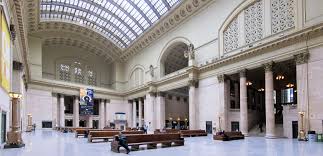
Union Station Could Be Test of Chicago’s Future During Trump Administration

If President Donald Trump is serious about his promise to rebuild the nation’s infrastructure, Chicago officials have a plan ready to go that would modernize and expand Union Station.

Trump — who campaigned on a pledge to spend $1 trillion on repairing the nation’s roads, airports and bridges — reaffirmed that vow during his Inaugural Address, no doubt boosting Chicago officials’ hope that their bid for a $1 billion low-interest federal loan won’t fall on deaf ears.

“America’s infrastructure has fallen into disrepair and decay,” Trump said after taking the oath of office.

While Chicago Mayor Rahm Emanuel — who urged the new president Monday to focus on issues that matter rather than the size of the crowd at his inauguration — and Trump don’t agree on much, Emanuel has said he hopes to work with the White House on issues like the need to renovate the 14-acre train station at 225 S. Canal St.

You can’t have a 21st century economy on a 20th century foundation, and that’s what we have here,” Emanuel said Jan. 12 at an event where he announced that the city had moved one step closer to securing the loan during the final days of the Obama Administration.

The master plan for the station includes expanded platforms, bigger entryways and an upgraded heating and air conditioning system designed to improve the air quality in the station, officials said. In addition, plans call for pedestrian tunnels to be built to the nearby Ogilvie Transportation Center and CTA Blue Line stop at Clinton.

More than 300 trains arrive and depart from Union Station five days a week, moving 120,000 passengers past the grand staircase immortalized by the movie “The Untouchables.” That is roughly the same amount of people who travel through Midway Airport every week, officials said.

Emanuel said he talked about the ways a Trump administration could help the city with transportation and infrastructure projects during his meeting with Republican businessman turned reality television star turned politician at Trump Tower during the presidential transition.

A list of 50 infrastructure projects obtained by the Kansas City Star under consideration by Trump’s team includes the Union Station project as well as the $2.1 billion effort to modernize the Red and Purple CTA train lines, which was approved Jan. 8 by the Obama Administration.

If the city does get the loan from the federal government, it would be paired with an effort by Amtrak — the station’s owner — to attract a private developer to the project that could include the construction of a skyscraper next to the station.

Trump has endorsed those sort of public-private partnerships, which could also win support from the Republican-controlled House and Senate, where members are leering about big-ticket spending programs.

“Union Station has a very rich history and it will have a remarkable future,” Emanuel said, acknowledging that there is “no guarantee” that Trump or his appointees will keep the long-in-the-works project moving forward.

But, Emanuel said, if Trump does what he has said he wants to do, it is “ideal.”

Touhy Will Be Torn Up From Western To Clark Until May For New Water Main

A busy stretch of Touhy Avenue through West Ridge and Rogers Park will be under construction until May as the city replaces a 125-year-old water main, officials warned residents Thursday.

Work is already underway in the 50th Ward and heading east from Western to Oakley avenues on the north side of the street.

The entire width of Touhy Avenue will then be resurfaced, with the project expected to wrap up by the end of May, Ald. Joe Moore (49th) said in an email to residents.

After that, the city will focus its efforts on another span of Touhy from Clark Street to Sheridan Road.

That leg of the project should begin in the summer and wrap up in the fall, also with a newly finished road surface, Moore said.

While the water main and resurfacing is active, Moore said parking on the street would be limited to early morning, evening and overnight hours with a restriction from 7 a.m.-4 p.m. Vehicles would need to be moved by the start of the work day.

Touhy residents will also experience temporary disruptions in water service, sometimes with notice and potentially without, Moore said.

“However, the contractor will try to avoid that if at all possible,” Moore added.

Lead exposure in water pipes has been a concern in the city in recent months, causing a number of city-owned facilities like schools and parks to get tested for lead.

In December, Woodlawn-based journalism group City Bureau dubbed Chicago “ground zero” for lead water pipes.

Their use was mandated by city code until 1986, when Congress banned them, said Nissa Rhee, lead reporter for City Bureau’s project.

The nonprofit media organization launched a service that will give residents neighborhood-level data on exposure to lead poisoning, which can be used by texting 312-697-1791 with the word “lead.”

Other major cities started to phase out lead pipes in the 1950s, she said.

“Chicago is really an outlier here,” Rhee said. “We’ve been Flint for years.”

Adjacent neighborhoods like Edgewater have also been undergoing extensive water main replacement work over the last few years, including North Broadway Street and Ridge Avenue.

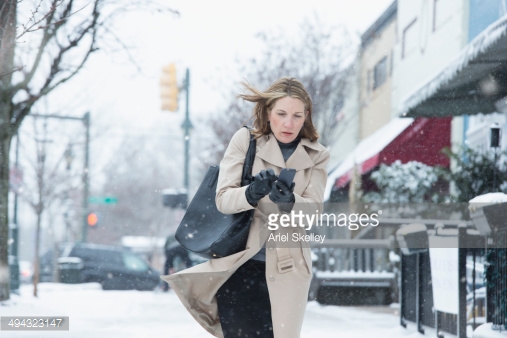
Too Windy To Walk? High Winds Close Roads, Cancel Flights In Chicago

Tropical storm-like gusts of wind are scattering travel plans for the thousands of spectators descending on McCormick Place for President Barack Obama’s farewell address Tuesday.

Cermak Road was closed between Michigan Avenue and King Drive, officials announced Tuesday afternoon. Event organizers will instead shepherd pedestrians from the CTA directly into the convention center through its west building, they said.

Metra trains departing from Millennium Station between 5 p.m. and 8 p.m. will also stop at McCormick Place, officials said.

Wind speeds, intensifying as the day goes on, are expected to reach as high as 40 mph by day’s end, according to Stephen Rodriguez, a meteorologist with the National Weather Service. Gusts may be as powerful as 60 mph, he said.

“To put that into perspective, those are the kinds of wind speeds you see when we issue a severe thunderstorm warning,” Rodriguez said.

A high wind warning is in effect for the city until 10 p.m. Tuesday.

The wind is also wreaking havoc on the city’s airports, leading to widespread delays and the cancelation of nearly 200 flights out of O’Hare Airport, officials said.

Air Force One is scheduled to touch down at O’Hare at 5:25 p.m.

The president is expected to take a motorcade down the Kennedy Expressway to McCormick Place instead of a helicopter because of the weather.

Commuters should take extra precautions and limit their travel plans Tuesday, Rodriguez said.

“These kinds of winds are going to make any kind of travel difficult, and they’re likely to blow around loose objects, which could lead to property damage,” he said.

Alex Nitkin /dnainfo

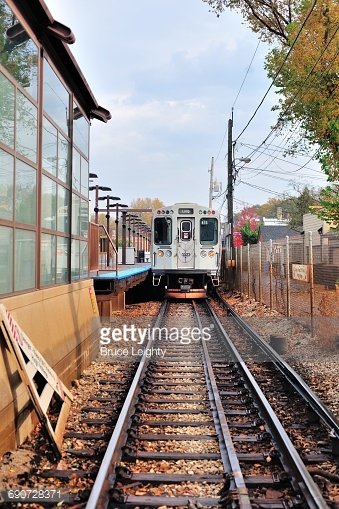
Chicago Locks Down $1.1 Billion For CTA Just Before Obama Leaves Office

Federal officials announced late Sunday they would give the city a $1 billion grant to cover half the cost of renovating the Red and Purple CTA train lines, in what will likely be President Barack Obama’s farewell gift to his adopted hometown.

In a statement, Mayor Rahm Emanuel billed the $2.1 billion project — expected to start in 2018 and take four or five years to complete — as the largest capital project in CTA history.

“This type of investment in transit is an investment in Chicago’s residents and neighborhoods, connecting them to jobs, education and more,” Emanuel said.

The news of the decision — to be formally announced Monday — came after weeks of scrambling by city officials determined to finalize the grant before Obama’s time in the White House ends. There was no assurance the money would have been available after Jan. 20, when President-elect Donald Trump takes the oath of office.

Before the council approved a new tax increment financing district designed to cover the remaining cost of the project, Ald. Edward Burke (14th) said the project may well shape “the future of Chicago public transportation for the next 50 to 80 years.”

The project is expected to create 5,700 construction jobs, and several aldermen have said they hope it employs Chicagoans struggling to find jobs.

TIF districts capture all growth in the property tax base in a designated area for a set period of time, usually 20 years or more, and divert it into a special fund for projects designed to spur redevelopment and eradicate blight.

The first such district is set to be created between North and Devon avenues along the Red and Purple Line tracks. It is expected to generate $622 million. Those funds — plus $428 million in other CTA money — will be used to match the federal grant and fund the project, officials said.

The project includes plans to rebuild the 100-year-old embankment that supports the track between Lawrence and Bryn Mawr avenues, making it possible for six to eight more trains per hour to travel from Howard to 95th streets on the Red Line.

That should prevent riders from having to wait as packed trains pass by, officials said.

The project also includes plans to build a Belmont flyover that have been met with fierce opposition from some Lakeview residents.

The flyover requires the CTA to acquire and demolish 16 buildings to have enough space to separate Brown Line tracks from Red and Purple line ones and speed train cars through what is now a bottleneck.

To blunt criticism that TIF districts hurt Chicago Public Schools, the school district will not see its share of property tax revenues lowered by the new transit TIF.

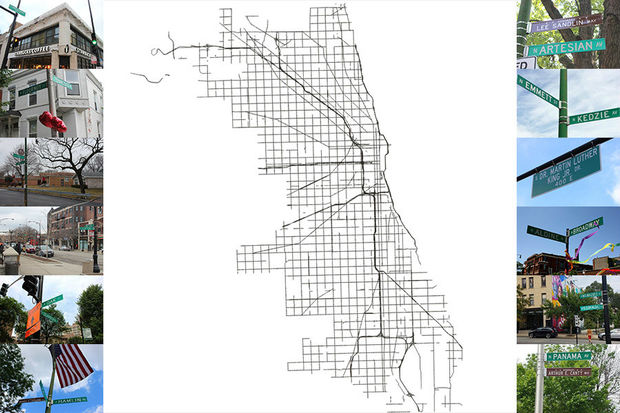
How Many Blocks Are In The City Of Chicago?

How many blocks are in Chicago?

It’s a simple question, but an answer that’s not so easy to find. When asked on Chicago-based Facebook pages, including Windy City Historians and Forgotten Chicago, responses included 12,000, 18,000, 25,600 and 32,200, among several others guesses.

Asked by DNAinfo to reveal an authentic answer, Peter Strazzabosco, the Deputy Commissioner for the Chicago Department of Planning and Development, provided one.

The city’s mapping system identifies about 20,800 unique blocks in the city, Strazzabosco said.

“These are blocks surrounded typically by four streets in a rectangular pattern, but also possibly having different shapes and sizes depending on the development pattern of a given area,” Strazzabosco said.

Strazzabosco said Chicago’s arterial streets — for example Irving Park Road and Belmont Avenue — are generally a mile apart. Since most rectangular blocks are about 660 feet long, there are typically eight blocks between major arterials, though more are possible depending on how the blocks are oriented within the grid pattern. The short side of most rectangular blocks are about 330 feet, he said. The distances generally correspond to the center of the surrounding streets, not curb to curb.

Strazzabosco noted a number of diagonal streets sometimes change the shape of blocks into more of a triangle shape. Other manmade and natural features that can change block sizes and boundaries include highways, waterways like the Chicago River and railroad tracks.

“Of the 20,800 blocks, most are typically bordered by four streets in a grid pattern across the city,” Strazzabosco said.

Justin Breen  Reporter/Producer writes in dnainfo.com/

images: dnainfo

Do You Like Chicago’s New Brighter Streetlights? The City Wants To Know

Have you seen Chicago’s new LED streetlights, being tested in seven neighborhoods?

Whether you love them or hate them, the city wants to hear from you before making its final decision on replacing more than 270,000 lights.

A feedback survey on the Smart Lighting Project is open until Jan. 9 — click here to weigh in. Questions include how the bright white LED lights affect visibility and how they compare with existing orange-hued high-pressure sodium bulbs.

Here’s where to view the test bulbs:

• Touhy Avenue: Paulina Street to Ashland Avenue. Paulina Street: Touhy Avenue to Chase Avenue. Alley from Ashland Avenue to Paulina Street between Touhy Avenue and Chase Avenue.

• Jersey Avenue: Bryn Mawr Avenue to Hollywood Avenue. Hollywood Avenue: Jersey Avenue to Spaulding Avenue. Alley from Bryn Mawr Avenue to Hollywood Avenue between Jersey Avenue and Spaulding Avenue.

• Hamlin Avenue: Augusta Boulevard to Iowa Street. Augusta Boulevard: Hamlin Avenue to Lawndale Avenue. Alley from Augusta Boulevard to Iowa Street 
between Hamlin Avenue and Ridgeway Avenue.

• Wood Street: 46th Street to 47th Street. 46th Street: Wood Street to Wolcott Avenue. Alley running south from 46th Street between Wood Street and Honore Street.

• 73rd Street: Bennett Avenue to Euclid Avenue.
 Bennett Avenue: 73rd Street to 74th Street.
 Alley from 73rd Street to 74th Street between Bennett Avenue and Euclid Avenue.

• State Street: 107th Street to 108th Street.
 107th Street: State Street to Michigan Avenue.
 Alley from 107th Street to 108th Street between State Street and Lafayette Avenue.

• Longwood Drive: 115th Street to 116th Street. 115th Street: Longwood Drive to railroad tracks. Alley from 115th Street to 116th Street between Longwood Drive and Hale Avenue.

15 Things Coming To Chicago In 2017

Here are some of the new restaurants, stores and transit stations coming to the city in 2017.

New 95th/Dan Ryan Red Line station (South Terminal)

What: The station at the south end of the Red Line has remained open as it undergoes a $240 million renovation that will expand the station north and south of 95th Street, increase the number of retail spots and make it easier to transfer to a bus. The new south building is expected to open this year. The building north of 95th is expected to open in 2018.

Where: Roseland

When: This year

Amazon Books

What: The online retailer is opening its second brick-and-mortar bookstore on the Southport corridor. In 2015, the brand opened its first one in Seattle. The plan has brought criticism from the city’s independent booksellers.

Where: 3443 N. Southport Ave.

When: This year

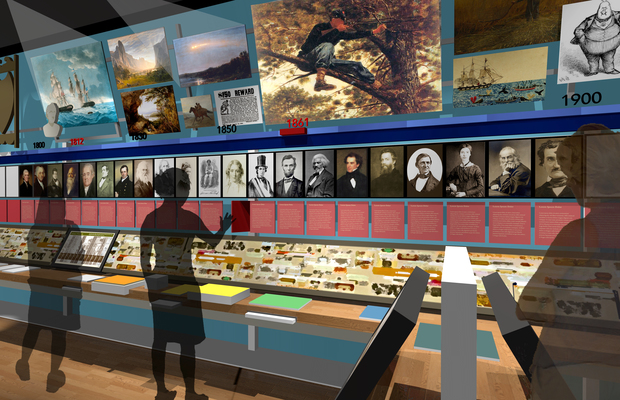
American Writers Museum

What: The museum will honor American authors as varied as Mark Twain and Dr. Seuss. Chicago authors will get their own dedicated hall.

Where: 180 N. Michigan Ave.

When: Early this year.

Culver’s

What: The Wisconsin-based fast food chain known for ButterBurgers and frozen custard is expected to open its first restaurant in Chicago this year. The question is which neighborhood will get the first one. The owner of the Bronzeville franchise has said his could open as early as February.

Where: Near 35th Street and King Drive, 4901 W. Irving Park Road and 3500 N. Clark St.

When: As early as February

Growling Rabbit

What: The popular Far North Side eatery is closing its original Rogers Park digs and reopening with an expanded food and drink menu that includes tea-infused cheesecake, fish tacos and homemade beer caramel.

Where: 5938 N. Broadway

When:  January

H Mart

What: H Mart is a popular Asian grocery store chain with more than 50 locations in the United States. Chicagoans will no longer have to trek to suburbs like Niles and Naperville to stock up on international goods. The West Loop location will be H Mart’s first store in Chicago.

Where: 722 W. Jackson Blvd.

When: This year

Jolly Pumpkin Brewery’s Fourth Restaurant

What: Jolly Pumpkin Brewery plans to open its fourth restaurant, and its first outside Michigan, in Hyde Park. The restaurant said it will be sure to have its golden ale Oro de Calabaza on tap, as well as 30 other beers and ciders, plus wines and craft cocktails. Hamburgers, truffle fries, pizzas and a “perfect chicken sandwich” will likely be on the menu.

Where: 1504 E. Harper Court

When: Late spring to summer.

Kitsune

What: It’s a Japanese-inspired restaurant featuring ramen from Iliana Regan, who already has made her name with Michelin-starred Elizabeth Restaurant in Lincoln Square.

Where: 4229 N. Lincoln Ave.

When:  End of January

SafeHouse

What: The spy-themed restaurant from Milwaukee is opening its second location in Chicago sometime this year. If it’s anything like the original, customers (or “agents”) can only enter by going through a secret door or knowing the right password.

Where: AC Hotel, 60 E. Ontario St.

When:  This year.

Unnamed restaurant at the Museum of Contemporary Art

What: Part of a $16 million renovation at the museum, the new restaurant will be helmed by Jason Hammel, the man behind Logan Square’s Lula Cafe.

Where: 220 E. Chicago Ave.

When: This year

Washington/Wabash “L” station

What: The massive $75 million station is expected to become the fifth-busiest weekday “L” stop.

Where: The Loop

When: Spring

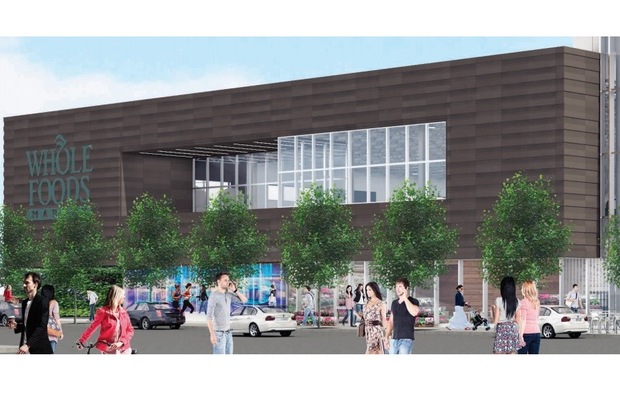
Whole Foods Market

What: At 75,000 square feet, this will be Chicago’s second-largest Whole Foods Market and will replace one up the street from it in Lakeview.

Where: Northeast corner of Ashland, Lincoln and Belmont avenues

When: Spring

New Wilson Red Line station

What: The $203 million overhaul of the Wilson Red Line station began in 2014 and is expected to be complete this fall. The station has remained open throughout the project. The final version will feature a new station house and new entrances.

Where: Uptown

When: Fall

Wintrust Arena

What: A rather controversial project due to the partial use of public funds for it, the 10,000-seat, $173 million arena will be the new home of DePaul University’s basketball teams.

Where: Indiana Avenue and Cermak Road

When: Fall, In time for the 2017-18 DePaul basketball season.