Using a Taxi Service is Better than Driving Your Own Car

A lot of people think that driving their own car is far better than riding a taxi. For them, the former is more economical and more convenient. While in some cases this is true, often, hiring a taxi has more advantages. Below are the reasons why hiring a service like Universal Taxi is better than driving your own car.

You get to be the passenger.

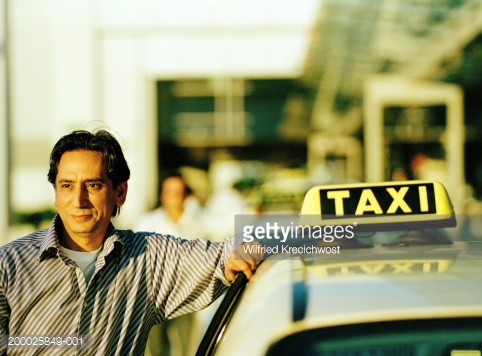
Yes, driving is fun, but just on certain roads. There are times when you drive only because you don’t have any other choice. If you hire a taxi service, you don’t have to worry about manning the wheel. You can just relax as a passenger – and possibly do other things like make a list, or listen to a podcast while you’re at it. It’s basically like hiring a personal chauffeur.

You free yourself from additional expenses.

When you hire a taxi, you can stop stressing about additional expenses for your car. With taxis, all you need to do is pay the cabbie for his service. You don’t have to think about regular car maintenance costs and the fluctuating gas prices.

You can ride a cab any time.

Taxi services are available every minute of every day. This is especially an advantage if you’re in Chicago – or any other city – for the first time. You can get a cab at whatever point you need one. If there’s something wrong with your own car, you can still go to wherever you’re going, thanks to the option of taking a convenient taxi ride.

You’re not liable in the event of an accident.

Regardless of what vehicle you’re riding, road accidents happen. But if you’re in an accident driving your own car, you’re bound to pay something – probably for damages and/or injuries. If you’re at fault, you’re liable to pay for either or both for the other party as well. When you ride a cab and get into an accident, the taxi company takes care of the problem.

You get a free roadmap education.

Most cabbies are knowledgeable drivers. They’re supposed to know their city and have insider tips, like what road to take to avoid the rush hour traffic. This is also an advantage if you’re a new driver or driving in a new city. Taxi drivers know all the shortcuts. You can educate yourself about directions by hiring a taxi service like Universal Taxi.

You can enjoy being a tourist.

Hiring a taxi is great when you’re in huge cities like Chicago. You don’t have to worry about going from one attraction to another the safest and fastest way. You can let the cabbie do that for you.

You free yourself from parking nightmares.

One of the top benefits of hiring a taxi service is worrying no more about finding a parking space. Cabs offer a quicker and more convenient traveling solution when it comes to parking – and that leaves you not stressing about it. You ride a cab, reach your destination, pay the cabbie, get out of the car, and worry no more.

While having your own car also has a lot of advantages, hiring a taxi service from time to time is a smart choice.

Helpful Apps When Traveling to Chicago

Chicago keeps you on your feet, with so many things to do and so many sights to see. It’s soaked in history and culture that it’s hard to find extra time to do everything there is to do in a single visit. It’s that kind of place you would want to come back to over and over again.

One great way to maximize your visit to Chicago is to download apps that would make it easier for you to get around and stay updated about what’s going on around the city. Here are a few apps we’ve picked out for you to get you started:

  • Chicago Travel Guide by Triposo

This app is the perfect place to get almost everything you need around Chicago. It has a list of great restaurants you can try, as well as places you’d probably want to see. It even allows you to book your hotels straight from the app. The offline map is also a huge help as you try to lay out your entire itinerary.

  • NightOwl

If you’re a night person and are looking for great places to hang out once the sun sets, then NightOwl is the perfect place for you. It lets you find bars, clubs, lounges, and just about any place people go to around the city at night. It even has recommendations from users about where the best cocktails are made or which places have clean bathrooms. Searching for the things you want in an ideal location is also easy, as you can use tags to find anything.

  • Is Metra Late

Trains are a great way to go around the city, but convenient as it is, it does have its own set of flaws as well. For example, different circumstances could cause some trains to be late. This could spell disaster for you, especially if you already have a carefully planned itinerary that you would like to follow to the last second. To make sure the train you want to catch won’t cause you any delay, download the Is Metra Late app. It shows you which trains might be late so that you can adjust your plans as early as possible.

  • The 50% Off Chicago Events, Shows and Sports Guide

The perfect way to see everything you want to see without using up your entire travel budget, this app gives you great deal on notable events and shows. And it’s not just any discount – it actually takes HALF off the regular price!

  • Universal Taxi App

Going from point A to point B around Chicago is still easiest when you take a cab. Through the Universal Taxi app, you can have a cab driver pick you up wherever you are and drop you off no matter where you’re going. Even better, you can schedule trips to make it easier for you to plan your schedule. The cabbies are also extremely friendly and knowledgeable around the city, so you may even have the chance to get yourself your own tour guide around the city. That’s hitting quite a few birds with one stone!

Start downloading these apps and make your Chicago trip the best one ever.

Metra Tells Cubs Fans To ‘Enjoy’ Downtown As Riders Wait Hours For Trains

If you’re trying to get out of the Loop on public transportation, you might want to grab dinner before heading to Union or Ogilvie stations.

Cubs fans leaving the Downtown rally and parade quickly headed toward Union and Ogilvie stations, causing massive overcrowding, according to commuters and Metra.  An estimated five million people packed the city Friday for the World Series victory celebration.

The overcrowding was so bad that Metra encouraged commuters to stick around the Loop before heading for trains. Crowding will hopefully die down by the rush hour, said Michael Gillis, Metra spokesman.

Downtown stations are very crowded. Please consider spending some time downtown enjoying all of what Chicago has to offer. Update to follow.

— Metra (@Metra) November 4, 2016

Crowds packed into platforms, with some bursting into chants of, “Bullshit, bullshit, bullshit.” Frantic riders complained of feeling claustrophobic, and an ambulance was parked outside Union Station.

There were no reports of injuries however as of 4:40 p.m.

There was no word on how long it would take to board a train, Gillis said. Train schedules were not necessarily being adhered to as the rail line was operating at a “load and go procedure,” Gillis said.

A “load and go” is when trains arrive to the station and leave as soon as they’re at capacity, regardless of the train schedule, Gillis said.

He said Metra is working as hard as possible to keep the system running smoothly.

“There are very large crowds,” Gillis said. “We’re managing it the best we can. We are using every piece of equipment we have.”

At Union Station, a conductor said many people entered the station unsure of where they needed to go.

“A lot of these people have no idea what train they want,” he said.

Both Metra and CTA said they were expecting Friday to be one of the busiest days in their history, though no official rider tallies were released as of Friday afternoon.

A Floating Bike Trail On The Chicago River? Here’s What It Could Look Like

The push is on to create a continuous bike trail along the Chicago River, but one of the biggest obstacles to developing such a path is the lack of available land along various stretches of the waterway.

Other cities — most notably Portland and Philadelphia — have solved similar problems by building floating trails. What would this look like in Chicago?

Entrepreneur James Chuck of the company Second Shore is pitching an option he’s dubbed RiverRide.

Picture plug-and-play, steel-reinforced concrete pontoon segments that could be strung together — and taken apart and reconfigured — in much the same way as toy railroad tracks.

Chuck said solar panels would power basic features such as lights, as well as bells and whistles that sound like something straight out of science fiction, including a precipitation-activated awning — all of which would make the trail usable 24/7, he said.

By completely separating bikes from cars on a riverfront trail, “there’s an opportunity to leverage the river for modern transportation,” Chuck said, as he presented an overview of the RiverRide concept at a recent meeting of the 33rd Ward Transportation Action Committee.

Developed by Marinetek, a company that specializes in marinas and breakwaters, each of the floating pontoon segments would measure 82 feet long and 6-12 feet wide, Chuck said.

They could be manufactured in Chicago, floated into place and secured with pilings, he said.

The intent is not to build a 27-mile floating trail but rather to use pontoon segments to connect parks and pathways on the river’s north and south branches, Chuck said.

“The goal is to enhance what’s there,” he said.

He estimated a cost of $5 million to $10 million per mile of floating trail, which could be funded with public dollars or private investment.

Some members of the Transportation Action Committee questioned the feasibility of certain elements of Chuck’s proposal, including the awning and the segments’ narrow width.

Chuck conceded he’s still working to gain support for RiverRide pilot segments that, if approved, could be installed by summer 2018.

“It’s really an important time to start connecting the city, not dividing it,” he said.

The infrastructure, Chuck said, is designed to be adaptable, particularly should some yet-to-be-invented technology render the segments or the need for a riverfront trail obsolete.

“It’s a temporary yet solid structure,” he said. “Who knows what the city will look like in 50 years?”

In addition to a precipitation-activated awning, trail segments would also include embedded conduit to heat the path and prevent icing. [All images courtesy of Second Shore]

Tips on Traveling to Chicago on a Budget

Traveling to Chicago doesn’t have to break the bank. With this budget travel guide, you’ll be able to save time and money while enjoying the Windy City. As with most tourist destinations, Chicago has loads of spots and features that won’t require you to pay top dollar. You just need a bit of research and a great sense of adventure and you’re all set.

 When to Visit

Winter season in Chicago can be intense. So if you’re here during winter, make sure to pack accordingly. The latter part of the year, just weeks before Christmas, is popular for both local and tourist shoppers. Research about the city’s numerous festivals and celebrations so you can book accommodations beforehand at a cheaper price. Early booking saves you a lot. This doesn’t just apply to hotel rooms or alternate lodging, but to transportation, too. Look for options that offer discounts like Universal Taxi Dispatch.

Where and What to Eat

Chicago has great restaurants all over the city, but some of them don’t exactly offer a budget range. Instead, look for local restaurants that offer the unique Chicago food experience. This way, even if you splurge a little, you get the real thing. Also, don’t miss the Chicago-style deep-dish pizza. Keep in mind that a slice or two can be very filling so just order a size smaller than what you’re used to.

Where to Stay

If you want to be in the middle of the action, book a room near Michigan Avenue. This is where shopping malls, dining places, and world-class museums are located. There are free shuttle buses that transport tourists between attractions. Keep in mind that hotels near the avenue can be expensive, BUT if you don’t mind staying a block or two from it, you can book a room for a cheaper price. Check travel websites with discounted services. Often, good deals turn up. If you really want to save a lot, accommodations near the O’Hare Airport are typically easy on the pocket. Just remember that the commute to the center of the city can take more than an hour.

How to Get Around

The Windy City offers one of the best mass-transit systems in the US, not to mention the abundance of other forms of transportation like buses and cabs. You can ride the L within the city. Bus lines serve both the O’Hare and Midway airports. Shuttle buses in the Michigan Avenue area are free. You can also hire a cab from Universal Taxi Dispatch if you’re traveling in the suburbs. It’s relatively cheaper than renting a car.

What to Do

Chicago CityPass provides entry to six attractions for both children (3 to 11 years old) and adults. For its first use, the pass is valid for nine days. Before traveling to the city, check out the local listings for events within the days you’re visiting. Chicago is known for its theater community so you can check out the shows in town.

But more than any other attractions, Chicago is famous for its parks. The Millennium Park is one of America’s best city playgrounds. Festivals and concerts are often held in this park – and every other park in the city, for that matter.

To enjoy Chicago on a budget, all you need is to plan ahead and explore once you’re in the city.

Long live the 1990s Bulls

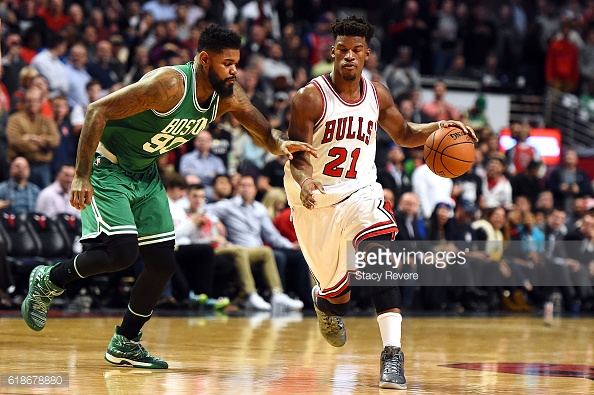
I was sitting in a bar in Los Angeles last year, watching the NBA finals, and the bartender said to me: “So you’re a Bulls fan, eh?”

“How did you know?” I asked.

I mean, I hadn’t said one word about the Bulls.

“Oh, I don’t know,” he said. “Maybe it’s your Bulls hat. Or your Jimmy Butler T-shirt. Or the Bulls case you got on your phone.”

That’s when it hit me—I’ve turned myself into a walking billboard for the franchise.

It’s Michael Jordan‘s fault. He was so unbelievably great, it made me feel damn near invincible just to know I was rooting for him.

So when I wear my Bulls stuff it’s like I’m saying: I wanna be invincible again!

Occasionally I scrape together enough money to actually attend a Bulls game. And I have this irrational feeling when I enter the United Center that I’m walking through a portal that takes me back in time. Suddenly it’s 1974 and I’m sitting on the rocks at the lake, smoking a joint and listening to Tower of Power on my boom box.

Wait! Wrong portal.

No, it’s more like 1991 and I’m in the second balcony at Chicago Stadium, screaming my lungs out as Jordan blows by Joe Dumars for a dunk and the Bulls finally get past the Pistons. You know, that portal.

I realize it’s crazy to think this current team of dysfunctional misfits has anything in common with Jordan’s Bulls other than the jersey.

But give me one regular-season win over Cleveland and the Jordan memories return.

If all else fails, I’ve got tapes of almost every playoff victory from the championship run, as well as the ensuing Grant Park celebrations.

Three of my favorite moments are . . .

Game six at Phoenix, 1993. Down two, a handful of seconds left. Jordan passes to Pippen, who passes to Grant, who passes to Paxson, who shoots for three. Bulls win!

Game five at New York, 1993. Up one, seconds left, Charles Smith under the basket. As he went up for the easy layup, the Doberman defenders swarmed.

Horace blocked a shot. Michael blocked a shot. Pippen blocked two shots. Horace scooped up the loose ball and tossed it to Michael, who threw it to BJ, who went in for a layup as the game ended and Marv Albert proclaimed: “And the Bulls have defeated the Knicks!”

Finally, the last Grant Park celebration. Six championship trophies onstage. The crowd pleading with Jerry Reinsdorf to bring the team back for another run.

Unfortunately, Reinsdorf let Phil Jackson go and hired Tim Floyd—one of the worst personnel moves in the history of sports. Jordan left, and the whole thing fell apart.

Just thinking about it’s got me so bummed out I think I’ll watch the closing seconds of that 1993 Knicks game for like the 500th time.

Cabbies have an unlikely ally in their fight against Uber: Uber drivers

“You Uber?”

The cop’s gruff tone was not curious but accusatory. He looked both pissed and eager to take care of business, his squad car’s gumball lights a-spinnin’.

“Yes, sir,” I replied.

“Pull into that spot and turn off your car!” he barked.

I stayed, outwardly a mellow fellow. I was in suburban North Chicago at the Great Lakes Naval Station, as summoned by Uber app. I was there to pick up three uniformed guys at the same spot I’d been the night before, dropping off another navy man.

But this time the city of North Chicago was ready. Apparently, the city had a new law requiring Uber drivers to get $450 permits before they could drive.

Awkwardly, my three passengers were in the car with me. Now one of them gestured to a handful of cabbies parked on the other side of the pickup area.

“Those guys over there pointed you out,” he said.

“Oh yeah?” I said, striking a tone of nonchalance.

It wasn’t easy. Up until that moment, I’d had only sympathy for traditional cabdrivers, even though I was an Uber.

That’s because I’ve also been a cabbie; I leased a cab during my student days 35 years ago. Its owner made the rules: I could drive 4 AM to 4 PM (only one rush hour) six days a week, for which I paid him $20 a day. Gas was on me. In those days, I wished for my own cab, to drive whenever I wanted without having to buy a medallion or pay someone else rent.

Uber finally made that possible. No overhead for leasing a cab means there’s no driving too little to “make up your nut,” as we used to say. The advantages don’t end there. While a cabbie, I was robbed at gunpoint, but with Uber everything is done by preregistered credit card, so its drivers don’t need to carry cash.

There are other pluses too. But whether they add up enough to make it worth it depends on your expectations—and whether they’re low enough.

Uber knows (or seems to believe) that every time an Uber driver drops out there are ten more to take his place, happy with the way things are because it’s all they’ve ever known. People are lining up to drive Uber, and cabbies are panicking.

United Taxidrivers Community Council has called for a citywide taxi strike Thursday to protest Mayor Emanuel’s plan to allow Uber and other rideshare services to pick up at the last bastions of sacred cabbie ground: the airports and McCormick Place. The advocacy group says that cabs have already lost 30 to 40 percent of their business to rideshare. Of course they hate Uber.

Ironically, so do plenty of Ubers.

Chicago ranks low in Uber earnings potential compared to other U.S. cities. One recent survey by the Benenson Strategy Group found that Chicago Uber drivers pulled in around $16 an hour, while New Yorkers made almost $30. That only added fuel to the inferno lit when Uber announced that new drivers would be coughing up 25 percent of their gross fares to Uber—a 5 percent increase—on top of the $1.30 per ride in taxes and other fees the company already collects. Veterans remember when Uber took less and the take-home was, according to them, much better. But few drivers coming on since Uber increased its cut will even be aware of the change.

North Chicago’s ordinance was another change we Ubers didn’t know about.

Back at the naval station, more squad cars pulled into the lot—six, seven, and an eighth before they were adequately prepared to move me into a squad car to be transported to the police station. I was lucky; I had enough cash (via the courthouse ATM) to retrieve my car and get home by evening. But it was not a good day as earnings go. And that’s not saying much.

Many potential drivers are lured by Uber’s ads. In one absurd standout, a jovial Uber driver remarks how, if he wants to make $200 in a day, that’s what he does. Or $500 in a day? “Sure,” he says enthusiastically. “It’s all up to you!”

That is pure fantasy, and if cabbies want to be effective in their fight against rideshare, they should counterattack with a few realities.

I’m far from a great Uber driver, but not terrible. Here’s how I did: In just over six weeks, I drove a total of 21 days. My longest day was 11 hours, my shortest two hours. I bought 20 tanks of gas at $2.50 a gallon, costing me approximately $800. (This is huge: it helps to have a hybrid instead of a car that gets, as mine does, 25 miles per gallon.) I washed the car each week, including light detailing, for a total of $120.

So my total gross from driving was $2,089.88, from which Uber took $531.81. (That will be more for a driver starting now with the new 25 percent cut). My take: $1,558.07. Subtracting for gas and washes, that leaves a depressing $638.07 net profit.

Hourly, that’s only $5.83.

I figured that out while sitting in the North Chicago police station as my car and I were processed after my Sunday-morning bust. That, by the way, cost me $760.

Uber did reimburse me for that charge, since North Chicago has made a habit of creating anti-Uber ordinances but, oops, “forgetting” to let the public know.

Still, I’m not optimistic about my Uber future. It is hard to imagine the money improving, considering the company’s aggressive—and clearly successful—efforts to recruit new drivers, combined with Uber’s willingness to squeeze drivers by taking bigger and bigger slices of their earnings pie. Uber offers cash rewards to drivers when they recruit other drivers, but it’s a mixed blessing. You might get a couple hundred bucks (at the moment anyway—this amount has decreased over time), but then there’s another driver out there competing with you.

The other morning I stood at Wacker and Washington, as I made my way from Union Station to my “real” job as director of the Cook County court system’s divorce mediation programs. I’ve developed a habit of counting how many Ubers go by, as identified by the big black “U” in the window, and how many have passengers. I do the same with cabs.

On that day, it was nine total. Four were taxis, two with fares. Five were Ubers, three with fares. Winner: Uber.

It’s not exactly a scientific study, but it’s not an unusual ratio for that corner at that hour on a weekday. If anything, it has tilted a bit more to Uber’s advantage since summer, and it is hard to imagine the pendulum swinging back. The market isn’t speaking, it’s screaming.

Whether Uber wins, or a similar rideshare service such as Lyft rises to the top, or another new and innovative model comes along that trumps them all, it’s hard to imagine the taxi industry surviving in its present form.

But the war is far from over, and the battles will be raging for a while.

With or without me.
Chicago Drivers Face Long Lines For Emissions Tests, Will Soon Be Stranded

Chicago drivers trying to get their car emissions checked are facing long lines as the two remaining Chicago testing facilities prepare to shut down.

And that means drivers will soon have to travel to the suburbs if they want to pass the state’s emissions test.

After Nov. 1, the emissions facility at 1850 W. Webster Ave. and another at 6959 W. Forest Preserve Drive Dunning will be closed. The Illinois Environmental Protection Agency plans to also close facilities in suburban Tinley Park and Elk Grove Village.

The changes will require North Side drivers to travel to the testing facility near McCormick Boulevard and Touhy Avenue in Skokie.

State law requires a testing facility to be located no more than 12 miles from a registered Illinois vehicle, according to agency officials, a rule the state says it will adhere to.

A spokeswoman for the state EPA said the closings are part of a new contract that will “streamline” the way the state monitors emissions from older cars and save taxpayers $8 million. The existing emission centers will add capacity in an effort to make the process less time-consuming for drivers, the state says.

North Siders and other Chicagoans who loved the proximity of the Bucktown facility are not happy about the closure.

“Chicago is a big city and it was convenient for people to come here since the facility is near the expressway,” Portage Park resident Gabriel Jauridez said Monday. “I guess no one considered that part. I’ve always come to this one.”

Kristen Klus, a Roscoe Village resident, says she will miss how convenient the Webster Avenue facility was to her home.

“I’m off on Mondays and the place was only a five-minute drive for me,” Klus said. “Driving out to Skokie would take at least an hour.”

If You Sell Your Wrigleyville Parking Permit, You Might Never Get One Again

Residents hoping to cash in on a World Series at Wrigley Field are selling their residential parking passes online, but if they’re caught it will cost them.

A Craigslist post that was put up on Tuesday morning offered six parking permits for Wrigleyville. They’re going for $200 for all six or $60 individually, and the seller said the parking is just “blocks away” from the park.

“Parking will be super expensive now,” the poster wrote on Craigslist.

The only issue? It’s illegal to resell residential daily parking permits, and fines range from $200-$500, according to the city’s municipal code.

Pat Corcoran, a spokesman for the City Clerk’s Office, said the office has ticketed people who resell permits and it can revoke people’s ability to buy permits from the city. He couldn’t comment on if anyone has been ticketed for reselling permits during this Cubs postseason, but he said people have been ticketed during past Cubs postseasons.

“We check Craigslist, we do occasionally do stings in conjunction with the Police Department,” Corcoran said.

But once those permits go from a reseller to a customer, there’s little the office can do, Corcoran said. Officials could use numbers on the permits to track if the right people are using them, but that wouldn’t be a good use of time, Corcoran said.

The Craigslist post on Tuesday afternoon had been “flagged for removal.”

Tesla’s Vision for the Future of Autonomous Cars Should Scare Us

The range of potential outcomes is enormous. In the best-case scenario, private car ownership gives way to shared fleets of autonomous cars, freeing up vast amounts of land that used to be devoted to vehicle storage.

Then there’s the scenario promoted by Tesla, in which everyone owns their personal autonomous vehicle. The consequences would be frightening, says Yonah Freemark at the Transport Politic:

Robin Chase, the founder of Zipcar, has laid out an intuitive way of understanding this issue using a binary “heaven or hell” construction (note: I’ve interviewed her in the past on how autonomous cars will impact the transit system). According to this formulation, we could have “heaven” if we had fleets of shared, electric, driverless cars powered by renewable energy, plus a redistributive economy that ensures that people who once had jobs in the transportation sector have access to a minimum income. On the other hand, we could have “hell” if everyone owns his or her own driverless car that does our errands, parks our cars, and circles the neighborhood waiting for us to need it again.

Tesla seems to be resolving this issue for us.

In the video the company released announcing its new technology, a man enters a car outside of his bucolic suburban home, from which it whisks him away — without him touching the steering wheel –to the (also suburban) Tesla factory. Once there, he gets out of the car, at which point it goes off to find a parking space, where it will presumably sit all day until he’s ready to go back home.

One promotional video is hardly enough to make an assessment about the future, but the imagery Tesla is projecting, which is of an anti-urban, individualized nature, certainly aligns closely with Chase’s “hell” scenario. After all, multiplied across the millions of people living in a metropolitan area, Tesla’s independently owned self-driving cars would simply replicate much of the existing transportation system, except this time, unlike for current drivers, they’ll have no incentive to minimize driving time — since automated cars can go driving off, circling the block or finding some distant parking space, without inconveniencing the driver.

Freemark says we shouldn’t accept that. Public policy should shape the driverless car future:

It isn’t a random coincidence that people commute in very different ways in New York and Dallas. We do not have to accept the “hell” scenario of Tesla’s creation — but working to produce “heaven” requires more than resting our hopes on the economic benefits of sharing vehicles versus owning our own. Advancing positive change for our cities means recognizing the trouble with simply accepting whatever is most appealing on the market, or whatever the market leaders are promoting.

In the course of my work developing Transport Databook (which, if you haven’t checked it out yet, is a resource for up-to-date transportation data), I pulled together information on changes in transportation mode shares in U.S. cities over time. I was sadly unsurprised to find that the share of people commuting by car in the country’s ten biggest cities is little changed from what it was in 1970. The level of car reliance is a fact of life, one might say. Given public interest in autonomous vehicles, cities should give up on bus lanes, abandon pedestrianized streets — just give people what they want.

Yet examining similar data for Paris and London suggests that, in fact, policy can matter. In those wealthy cities, the level of automobile travel has declined quite substantially since the early 1990s. That decline is not an accident. It is the product of clear-headed policies that implemented a vision of the city where travel by walk, bike, and transit is prioritized; the recent pedestrianization of the Seine highwayand the plans for new cross-Thames pedestrian bridges, for example, reinforce those policies.

Elsewhere on the Network today: Mobility Lab reports that Arlington, Virginia, is beginning the process of reforming its residential parking policies. Systemic Failure says that changes to the boarding platforms for California High Speed Rail will effectively cut capacity in half. And Seattle Transit Blog fact checks the recent Seattle Times non-endorsement of the $54 billion light rail expansion plan on the November ballot.