CTA Red, Purple Lines Moving Forward With Renovation Project

The $2.1 billion renovation of the Red and Purple CTA train lines on the North Side is one step closer to breaking ground, as CTA officials asked firms to submit proposals for the massive project.

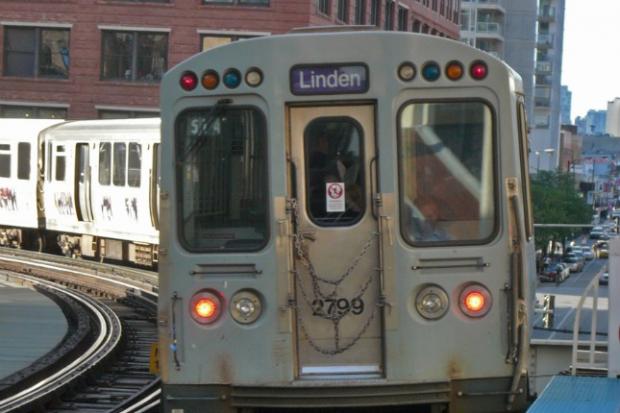
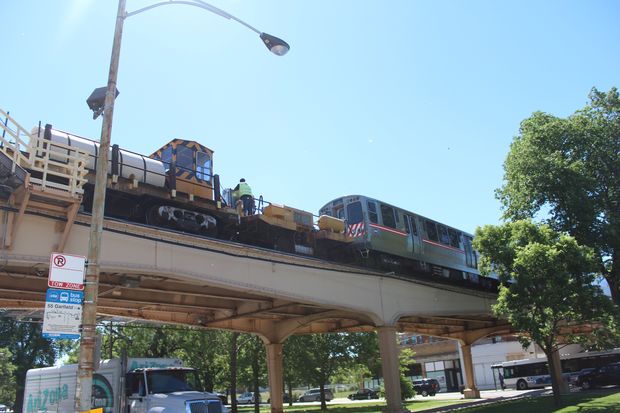
The first phase of the project will rebuild four of the oldest Red Line stations on the North Side while rebuilding the structure that supports the track as well as the Belmont flyover, which officials promise will unclog the bottleneck created by the intersection of the Red, Purple and Brown lines.
“In Chicago, the strategic and extensive investments we are making in our city’s infrastructure are investments in our residents, our neighborhoods and in our economic future,” Mayor Rahm Emanuel said in a statement. “As the CTA ‘L’ turns 125 years old this week, we’re always looking to the future by modernizing to create a world-class transit system that will better serve Chicagoans today and for decades to come.”

The project includes plans to rebuild the 100-year-old embankment that supports the track between Lawrence and Bryn Mawr avenues, making it possible for six to eight more trains per hour to travel from Howard to 95th streets on the Red Line.

That should prevent riders from having to wait as packed trains pass by, officials said.

The project will be created by the first Tax Increment Financing District designed to finance a transit project. The district, between North and Devon avenues is expected to generate $622 million. Those funds — plus $428 million in other CTA money — will be used to match the $1.1 billion federal grant the city secured in the final days of the Obama administration.
By Heather Cherone DNAinfo Chicago

The ‘L’ Is Turning 125 — And You Could Get A Present

Trains began running on the city’s first elevated railway on June 6, 1892 — and to celebrate, the Chicago Transit Authority will send vintage “L” cars around the Loop and hand out commemorative posters at the Clark and Lake station.

The Chicago & South Side Rapid Transit Railroad Co. built the first elevated tracks from Congress and State to 39th, with trains of wooden passenger cars pulled by small, coal-burning, steam locomotives.
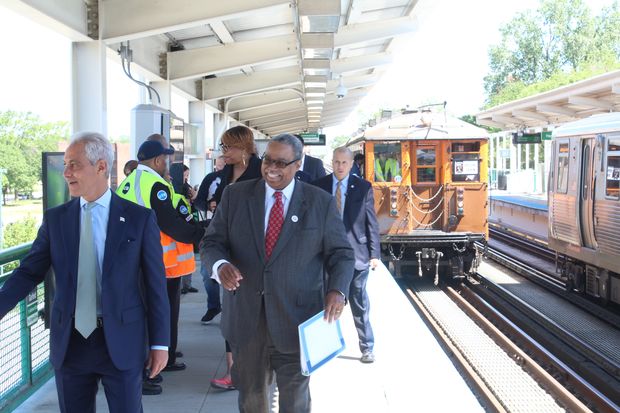
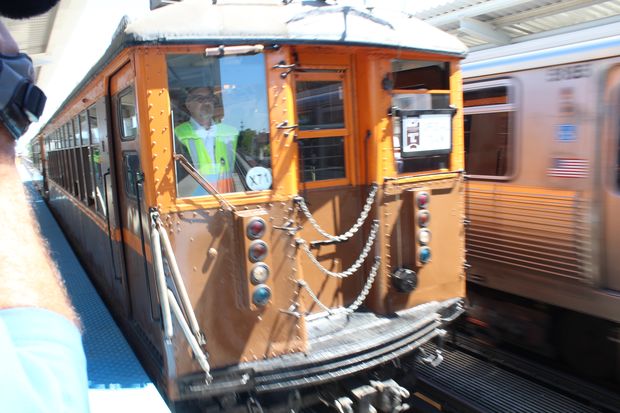
Mayor Rahm Emanuel hopped aboard a 94-year-old train car this morning to ride down that initial stretch of track to the city’s oldest station still standing at Garfield Boulevard.

“The investments we’re making today will reinforce that it will be around for the next 125 years,” said Emanuel, who himself takes the train to work twice a week.

CTA President Dorval Carter said the “L” has come a long way since it was first known as the “Alley L.”

“CTA has been working hard to make sure we’re still meeting the needs of 21st century riders,” Carter said.

Tim Samuelson, the city’s cultural historian, was among those on the train with the mayor and he said it was a thrilling experience. He described how much heavier the old cars felt as they swayed and moved slowly down the tracks.

Samuelson was among those who hopped on the old train car back Downtown as rides opened up to the public.

CTA aficionados can nab a vintage poster starting at noon on the Inner Loop platform, which is closest to the Thompson Center and where Orange and Pink line trains stop. The posters will be handed out on a first-come, first-served basis.

In addition, train enthusiasts can hop a ride on the CTA Heritage Fleet around the Loop. The schedule is:

• Noon-1:45 p.m. — 4000-series cars built in 1923 will operate continuously around the Inner Loop

• 1:45 -3:15 p.m. – 2400-series cars built in 1976 in their original red-white-and-blue bicentennial livery, will operate continuously around the Inner Loop.

For more information, go to transitchicago.com.


777

 The 2400-series cars built in 1976 are also out today for history buffs to ride on.

extralarge

Mayor Rahm Emanuel and CTA President Dorval Carter were among the first riders Tuesday on a 94-year-old train car going down the first stretch of the “L.”


By Heather Cherone and Sam Cholke DNA-info

Thousands Of Cab Owners Will Go Bankrupt In Fight With Uber, Lyft: Report

Hundreds of taxi medallions have been foreclosed on this year and the city’s taxi drivers union says “thousands more” may be coming as the industry struggles to compete with services like Uber and Lyft.

The Cab Drivers United AFSCME Council 31 released a report showing that 774 taxi medallions — required to operate a cab — have been given back to the city as owners have been unable to pay the taxes and license fees associated with it.

“Thousands more foreclosures are likely,” said Tracey Abman, associate director of the union.

“For many purchasing a medallion was an investment in their future,” Abman said. “Many are now facing a possibility of a lien being put on their home.”

Some 370 taxi medallions changed ownership at an average price of $348,466 in 2013. This year, one was sold for $35,000.

The report examines city data and interviews Chicago’s owners and taxi drivers who have seen revenue in their industry dry up because of competition from ride-hailing companies Uber and Lyft.

Among the findings in the report:

• The number of rides in January 2017 (1.1 million) dropped 52 percent from the number of rides in January 2014 (2.29 million). A DNAinfo analysis of city data in 2016 found a 23 percent drop in rides from the previous year.

• As of March, 42 percent of Chicago’s nearly 7,000 taxis have been inactive, not being used for a single fare. In March 2014, only 16 percent of taxis were out of service.

• People who own and operate their own taxis spend an average of $44,000 in loans, city fees and other expenses like gas. In 2013, such drivers made $19,000 in profit per year. In 2016, they lost on average $4,000.

The union is seeking new measures from the city that will help taxi cab owners and operators that include amending the owner code such that owners do not need to buy new vehicles if older vehicles pass inspections, allow taxi drivers to pay their ground transportation tax in installments rather than lump sums and remove vehicle license renewal fees.

“There’s forces closing in on these small business owners and they don’t know where to turn,” Abman said.

  Thousands Of Cab Owners Will Go Bankrupt In Fight With Uber, Lyft: Report – West Ridge – DNAinfo Chicago

By Tanveer Ali DNA-Info

Renting In A Transit-Oriented Development? No Permit Parking For You!

Planning to rent in a transit-oriented development?

Be sure to read the fine print in your lease.

Transit-oriented developments, constructed near CTA and Metra rail stations, are given major zoning relief in terms of the number of parking spaces that need to be provided on site — up to a 100 percent reduction in certain cases.

They’re also allowed to be taller and denser than non-transit-oriented buildings, which tends to raise concerns from neighbors about parking and traffic.

In pitching these projects at community meetings — often planned for congested areas like Wicker Park and Lakeview — developers typically paint a portrait of tenants who will bike, walk, ride the train, or use car-sharing or ride-hailing services to get around the city.

And if they do own cars?

Leases are being written to discourage that behavior.

Several aldermen are approving transit-oriented developments with the contingency that lessees are ineligible for zoned parking permits.

Ald. Ameya Pawar (47th) said he has made it a standard requirement of transit-oriented developments in his ward, including a pair of proposals on the table for Lawrence Avenue.

Of the two transit-oriented developments that have come through Ald. Tom Tunney’s 44th Ward office — one on Southport and one on Belmont — similar restrictions are likely.

Though no formal policy is in place and the process is still developing, “the consensus is to deny permanent zone permits,” said Chris Jessup, 44th Ward director of public safety and community affairs.

Parking is at a premium in Lakeview, he said, and transit-oriented developments are supposed to be targeting a different market.

Limits on guest passes, or outright denial, are also being negotiated. “Some of that is still being worked out,” Jessup said.

The onus is on the developer or building’s management company to convey the parking permit information to tenants.

The owner of the transit-oriented development at 1611 W. Division St. has done a good job of informing potential renters up front that if they have a car, they won’t receive exception letters allowing them to park on adjacent residential permit parking streets, according to Raymond Valadez, chief of staff for Ald. Joe Moreno (1st).

The handful of requests received by the office from the property’s tenants have been denied, he said.

“I believe this has discouraged those with cars to rent in a TOD building with no available parking,” Valadez said.

“As a result, we have not had any complaints from neighbors indicating that they cannot park on their street due to the influx of residents of the 1611 West Division building,” he said.

Divvy Valet Service Returns, Making It Easier To Dock Your Bike

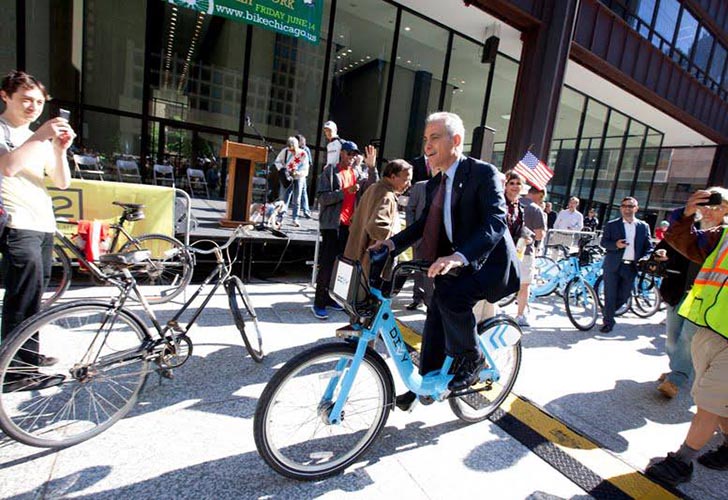
Bicyclists can hop on a sky-blue Divvy bicycle this summer without fear of not being able to dock it, officials said Friday.

The bike-sharing service will offer a free valet service at busy locations through the end of August, officials said.
“This summer, we’re committed to making the experience of docking just as easy and fun as the ride itself,” Divvy General Manager Elliot Greenberger said in a statement. “We want to help Chicagoans and visitors navigate the city in a fun, healthy way.”

The valet service will also be offered at the city’s Fourth of July celebration, the Air and Water Show and other summer events, officials said.

The stations will be staffed with a Divvy staff member who will be able to accept more bikes than a station would typically allow, so riders are guaranteed a spot to drop off their bike even if all of the docks are full.

The bike-sharing service will also offer $2 discounts during Memorial Day weekend, officials said.

Valet service will be offered Monday at these locations:

• From noon to 8 p.m. at Streeter Drive and Grand Avenue, Navy Pier

• From noon to 6 p.m. Lake Shore Drive and Fullerton Parkway, Theater on the Lake

Valet service will be offered on Saturdays and Sundays in June, July and August at these locations:

• From noon to 8 p.m. at Streeter Drive and Grand Avenue, Navy Pier

• From noon to 6 p.m. at Lake Shore Drive and North Avenue

• From noon to 6 p.m. at Lake Shore Drive and Fullerton Parkway, Theater on the Lake

During the week, valet service is available from 7:30 a.m. to 6:30 p.m. at:

• LaSalle and Adams streets

• Daley Plaza

• Orleans Street and Merchandise Mart

• Franklin and Monroe streets

• Michigan Avenue and Washington Street.

From 7:30 to 10:30 a.m. weekdays valet service is available at:

• St. Clair and Erie streets

• Rush and Hubbard streets

From 3:30 to 6:30 p.m. weekdays valet service is available at:

• Canal and Adams streets at Union Station

From 3:30 to 6 p.m. weekdays valet service is available at:

• Clinton and Madison streets at the Ogilvie Transportation Center

From 5 to 8:30 p.m. weekdays valet service is available at:

• Larabee Street and Webster Avenue

• Hampden Court and Diversey Parkway

• Broadway and Cornelia avenues

From 5 to 9 p.m. weekdays valet service is available at:

• Lake Shore Drive and North Avenue divvybikes.com/valet.

Metra Trains Would Stop In Hyde Park Every 20 Minutes Under New Plan

Metra on Wednesday proposed increasing trains to every 20 minutes for Hyde Park stops on the Electric Line throughout much of the day.

The proposal would bring train service closer to the wait times of CTA buses and trains, which south lakefront residents have wanted for at least 10 years.
Metra will do a round of community meetings in late June to get feedback on the compromises that will need to be made to increase train service for Hyde Park.

Among those trade offs would be the elimination of nine train runs on the Blue Island Branch and nine on the South Chicago Branch of the line

“Many of these trains carry only one to two customers per day,” the Wednesday announcement said. “Taken together, these trains carry an average of fewer than 10 passengers per day.”

Those cuts would allow Metra to more than double the number of trains serving the three Metra stations in Hyde Park. The number of inbound trains would increase to 18 from nine and outbound trains would increase to 18 from seven between 9:30 a.m. and 3:30 p.m. on weekdays.

To facilitate that increase, stops between 63rd and Kensington would see midday waits for a train drop to an hour from two hours currently. Stops between 75th Street and 111th Street would also see three new inbound and three new outbound trains on weekdays.

Metra Executive Director Don Orseno said the change is to try to halt a 14 percent drop in ridership on the Electric Line over the past six years.

“We need to do something to stem the loss of ridership on the Metra Electric Line, which has been declining for years despite the fact that the line has the newest cars and most scheduled trains on our system,” Orseno said. “This new schedule is an effort to make the best use of our existing resources by scheduling our trains in a more efficient way and enhancing service without impacting our budget.”

The majority of the train system’s lost ridership is happening on the Electric Line, with 1.4 million fewer rides on the line in the past six years, according to Metra.

Hyde Park is the area with the most growtn on the Electric Line, with ridership at the 51st/53rd Street, 55th/56th/57th Street and 59th Street stops increasing by 7.6 percent over the past three years as more housing is built nearby.

Metra will host four community meetings from 4-7 p.m. along the Electric Line before the changes go into effect.

The meetings include:

• June 19, South Shore Cultural Center, 7059 S. South Shore Drive

• June 20, Flossmoor Village Hall, 2800 Flossmoor Rd., Flossmoor

• June 21, Blue Island City Hall, 2434 Vermont St., Blue Island

• June 22, Polsky Exchange, University of Chicago, 1452 E. 53rd St., 2nd floor

By Sam Cholke DNAinfo Chicago

Pop-Up Bookstore to Open in Block 37 to Support Chicago Public Schools

Book worms rejoice! Carpe Librum, a new pop-up bookstore, is coming to Block 37 this summer. Thousands of gently used books, CDS, and DVDs all priced at $1- $4 will be available in the pedway level of Block 37 at 108 N. State Street starting May 30. Proceeds will provide educational programing in Chicago Public Schools through non-profit, Turning the Page.

Turning the Page is a 501 (c)3 education non-profit, engaging parents to be more active and effective participants in their children’s education. TTP is currently partnered with 6 public schools in Chicago’s west side neighborhood of North Lawndale. TTP’s programming can be divided into three main categories: Community Nights, Parent Leadership Initiatives, and Summer Learning Trips.

  • Community Nights consist of educational parent workshops, literacy-based child mentoring activities, book giveaways for families’ home libraries, and a free, healthy family dinner.
  • Parent leadership initiatives help parents identify their strengths, build social capital within their school communities, and take action. During conferences, parents are able to learn from one another and collaborate on ideas to improve their schools and serve their neighborhoods.
  • Summer Learning trips are hosted by TTP to sustain learning during the summer months. TTP partners with local museums and other local institutions to host a series of innovative field trips to connect families with their communities’ resources.

“[Community Nights] provide information and resources to parents and families on how parents can get more involved in their children’s academic lives by building home libraries, reading to children, developing strong parent-teacher relationships, and learning about science and math.” — President & CEO, Jason King

“We filled an important need in the system, which has so many challenges in engaging parents effectively. We provide something that the system is not and fill a gap in ensuring that parents can be more active in their children’s lives, both at home and at school. And as students get older, we enable parents to help students make decisions around what classes the students should take, to start thinking about higher education.” — President & CEO, Jason King, speaking to the impact of TTP in public school system

To raise funds for its programs, TTP collects used books from our community and opens pop –up used bookstores, called Carpe Librum, by activating vacant retail space. All books are donated through local book drives in area businesses, apartment buildings, and universities, or donated by individuals. Get first pick at the Carpe Librum Pop-Up Grand Opening on May 30 from 8:00am to 6:00pm. For more information on Turning the Page visit: http://turningthepage.org.

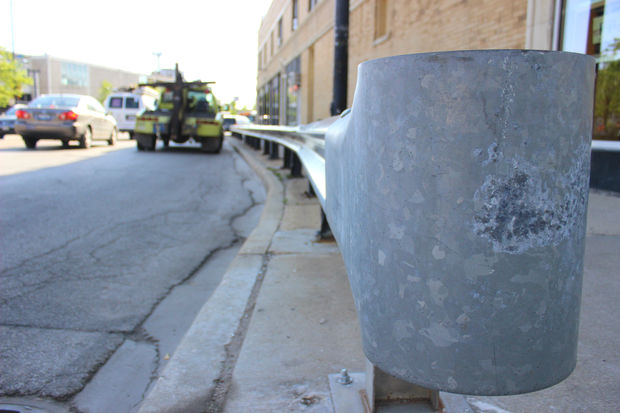
The Leland Curve In Lincoln Square Is Letting Down Its Guard(rail)

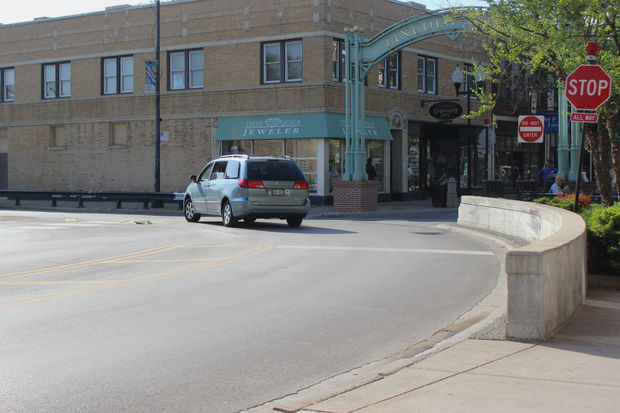
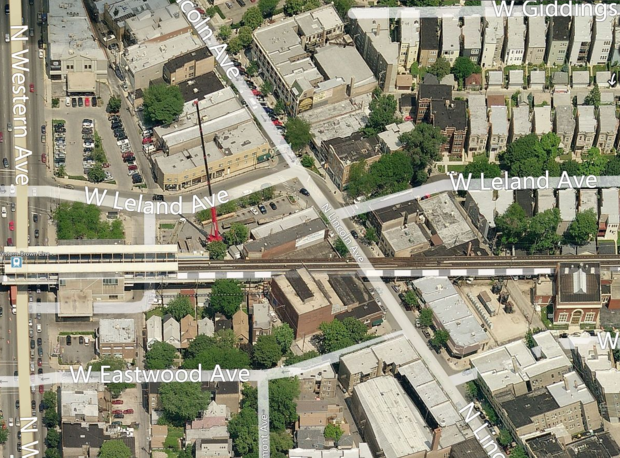
A makeover is in the works for the Leland Avenue curve, at the southern gateway to the square’s quaint shopping and dining hub.

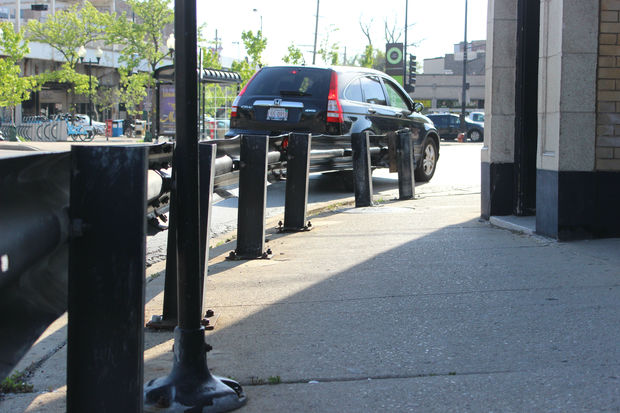
The interstate-style guardrail, which hugs the curve as Leland swoops toward Western Avenue, is set to be replaced with planters, and the sidewalk, which tapers to a choke point around the bend, will be widened to provide more room for pedestrians.

Ald. Ameya Pawar (47th) has earmarked $100,000 in aldermanic menu money to fund the project.

Work could start in the fall but more likely will get underway in spring 2018, according to Jim Poole, 47th Ward chief of staff.

The Chicago Department of Transportation has some engineering work to do first, including relocating drains and streetlights, he said.

“It’s going to look a lot better, but it’s not a drastic change,” Poole said.

Though the main purpose of the project is to improve the pedestrian experience, Poole said the planters may send a visual cue to motorists that Leland isn’t a highway.

“It probably calms traffic a little bit,” he said.

A more significant alteration to the curve, in the form of a pedestrian “island,” was considered and dropped, in large part because of concerns that trucks would have serious difficulties negotiating the island, he said.

extralarge

The guardrail is coming down, to be replaced with planters. [All photos DNAinfo/Patty Wetli]

SSS The sidewalk, which tapers to a choke point around the bend, will be widened to provide more room for pedestrians.

SSSSSSThe “Leland Curve,” where Leland Avenue links Lincoln Avenue drivers to Western, will be getting a makeover. [Bing]

Should Red Light Cameras At Irving Park & Kedzie Stay Or Go? Weigh In

Should Red Light Cameras At Irving Park & Kedzie Stay Or Go? Weigh In – Irving Park .

The city is asking for feedback on whether it should move forward with or put the brakes on plans to remove red light cameras at the intersection of Irving Park Road and Kedzie Avenue.
The Chicago Department of Transportation is hosting a community forum to discuss the issue from 6:30-7:30 p.m. Wednesday at Horner Park, 2741 W. Montrose Ave.
The meeting will be conducted open house-style, as opposed to a formal presentation. Neighbors can stop by at any time during the appointed hour to speak with city representatives.
As of March, there were 306 red-light cameras at 151 intersections across Chicago. Red light tickets cost drivers $100.

Earlier in 2017, the city relaxed ticketing standards, giving motorists three-tenths of a second, instead of one-tenth, to enter an intersection’s enforcement area after the light turns red.

By DNA info

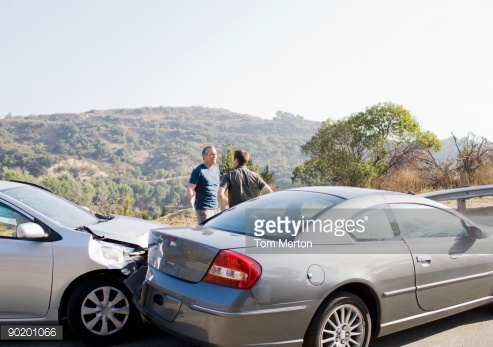
Deadly Car Crashes Up 79 Percent In Chicago, 25 Killed Since January

Deadly Car Crashes Up 79 Percent In Chicago, 25 Killed Since January – North Center – DNAinfo Chicago

The number of drivers and passengers killed in car crashes in Chicago jumped 79 percent this year, according to data presented to the Mayor’s Pedestrian Advisory Commission by Chicago Transportation Commissioner Rebekah Scheinfeld.
Twenty-five people have died in cars as the result of crashes since Jan. 1, as compared with 14 in the same period in 2016, Scheinfeld said.

A car and CTA bus crash left four people dead Sunday morning on the Near West Side, police said.

Deadly Car Crashes Up 79 Percent In Chicago, 25 Killed Since January – North Center – DNAinfo Chicago

The spike “underscores the importance of working to address these issues,” Scheinfeld said Wednesday at the advisory commission meeting.
Fourteen pedestrians were killed between Jan. 1 and April 30, two deaths fewer than in 2016, Scheinfeld said.

Deadly Car Crashes Up 79 Percent In Chicago, 25 Killed Since January – North Center – DNAinfo Chicago

Despite the decrease, the number of pedestrians killed by cars is “still unacceptable,” Scheinfeld said.
Since 2011, the number of pedestrian fatalities has risen 8 percent, which mirrors a nationwide trend, Scheinfeld said.

Deadly Car Crashes Up 79 Percent In Chicago, 25 Killed Since January – North Center – DNAinfo Chicago

Scheinfeld has pledged that city officials will step up their efforts to achieve the city’s goal of eliminating death and serious injuries from traffic crashes by 2026 as part of the mayor’s Vision Zero campaign.
With a $185,000 grant from Road to Zero Coalition, which includes several federal agencies, the Vision Zero effort will launch in Austin, Lawndale, Garfield Park and the Near West Side.

From 2010-14, 915 people were killed in crashes in those areas, according to data from the Chicago Department of Transportation.

People in those neighborhoods — which the U.S. Census found has a high level of economic hardship — are much more likely to be injured or killed in car crashes, according to city data.

“This is where we are going to start,” Deputy Department of Transportation Commissioner Luann Hamilton said.

Four community organizers will be hired to develop an action plan based on the pattern of traffic crashes and in consultation with local groups and residents. The plan is expected to include an education plan and could propose street redesigns to make areas safer, Hamilton said

Deadly Car Crashes Up 79 Percent In Chicago, 25 Killed Since January – North Center – DNAinfo Chicago

In addition, the streets around 10 schools are set to be improved this summer and fall with pedestrian refuge islands, new sidewalks, walk countdown timers, speed feedback signs, bicycle racks, speed humps, raised crosswalks and new signs, city traffic engineers said.

Those 10 schools are:

• Amundsen High School in Lincoln Square

• Roosevelt High School in Albany Park

• Lane Tech High School in North Center

• Clemente High School in Humboldt Park

• Faraday Elementary School in East Garfield Park

• Marshall High School in East Garfield Park

• St. Agatha Catholic Academy in North Lawndale

• Kanoon Elementary School in Little Village

• Kelly High School in Brighton Park

• Harlan High School in Roseland

.