C.H. Robinson Headquarters Now Under Construction At Webster And River

Construction is underway for a new four-story corporate headquarters at Webster Avenue and the North Branch of the Chicago River.

C.H. Robinson, a global transportation and logistics firm, is moving its Chicago headquarters to the site, at 1515 W. Webster Ave., after the project cleared the Plan Commission and the City Council last year. A construction permit was granted on the $36 million project late last month.

The 200,000-square-foot building will sit on 4.3 acres and have room for almost 200 car parking spaces and 200 spots for bicycles. It’s expected to be the new corporate home for 1,000 C.H. Robinson employees by the end of next year, as they move over from its previous Chicago headquarters at 1840 N. Marcey St.

It’s the location of the former Gutmann Leather Tannery. Although it’s not part of the Finkl Steel development, it’s being handled by Sterling Bay, which is also developing the former Finkl Steel site. The design of the new building is by Skidmore, Owings & Merrill.

Annoying Metra Rider Habits: Uncovered Coughing, Grooming, Stinky Food

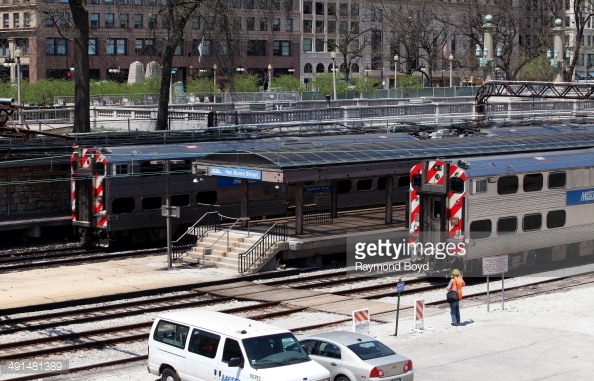
Smelly food, uncovered coughing and sneezing, saving seats for imaginary friends and being part of a rowdy group are among the top gripes of Metra riders in a recent survey.

The commuter rail agency unveiled the list of complaints Monday as it announced the return of its “Ride Nice” courtesy campaign. The effort aims to promote good manners among riders and follows an effort in July by the same name.

Then, riders complained of fellow passengers putting their feet on seats, talking loudly on cellphones, “manspreading” and even trimming nails and beards while on board.

The latest grievances will be included in a series of onboard posters that will be featured this summer. Other complaints from the survey taken last month include commuters pretending to be asleep to avoid moving bags and other belongings, snoring loudly, littering, clogging the aisles and kneeing the seats in front of them.

The humorous posters are designed to remind customers of how their behavior might affect fellow passengers, according to Metra.

“We hope our customers will enjoy the new posters as much as the previous ones,” said Don Orseno, Metra’s chief executive officer.

Metra provides service to and from Downtown Chicago with 241 stations over 11 routes totaling nearly 500 route miles and about 1,200 miles of track. The rail service operates more than 700 weekday trains, providing about 300,000 passenger trips each weekday.

Grand Avenue Reconstruction Moves To Stretch Between Chicago And Pulaski

Mayor Rahm Emanuel and local leaders broke ground over the weekend on the latest phase of the Grand Avenue reconstruction project, which aims to transform the road between Des Plaines Street and Fullerton Avenue.

The mayor was joined by Ald. Roberto Maldonado (26th), Ald. Walter Burnett Jr. (27th) and representatives from the Chicago Department of Transportation at the Saturday ceremony, which marked the start of the fifth phase of the $13.6 million project. There are eight phases total.

In this phase, which is expected to be completed by the end of the year, crews will reconstruct a 1.5-mile stretch of Grand Avenue from Chicago Avenue to Pulaski Street.

Plans include widening the roadway, constructing new sidewalks and installing accessible ramps and traffic signals. The signals will be installed along Division Street, Monticello Avenue and Grand Avenue.

“Grand Avenue is a major artery that carries thousands of cars and trucks through our community each day,” Burnett said in a prepared statement.

“This project gives us the opportunity to reinvigorate the neighborhood and improve the climate for businesses and also enhance quality of life for residents.”

During construction, traffic will be reduced to one lane in each direction.

The city is planning to close the railroad viaduct at Grand Avenue and Homan Street next summer to accommodate for construction. There will be a detour via Division Street and Kedzie Avenue.

In addition to roadway work, crews will also be planting 149 new trees along Grand Avenue, as well as installing energy-efficient LED street lamps and permeable sidewalks along 20 percent of the project area.

The project is being paid for through federal dollars and TIF (Tax Increment Finance) funds.

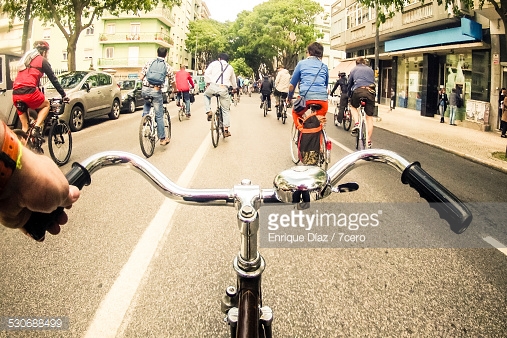
Wheels In Motion For New Cyclist, Pedestrian Group In Edgewater

The 48th Ward is rolling out a new transportation group aimed at creating a sustainable future for cyclists and pedestrians in Edgewater.

Ald. Harry Osterman’s office is holding a meeting from 10-11:30 a.m. Saturday at the Broadway Armory, 5917 N. Broadway, with the city’s Department of Transportation to discuss the creation of a working group that will help advise the alderman on how to best implement travel by bike and foot.

The group will ultimately work with Osterman’s office to help communicate issues regarding transportation safety in the neighborhood, oversee planning of community bike rides and walks and provide feedback on ways to implement transportation-related changes throughout the ward.

In the fall, Osterman confirmed a southbound ”contra-flow” bike lane on Glenwood Avenue would be coming in 2017.

The idea was first pitched in the summer of 2015 by Osterman and transportation department officials, saying many people, mostly families and kids, already biked on Glenwood, but often going in the opposite direction of car traffic, because they felt safer than on main roadways like Clark or Broadway.

Another “greenway” bike lane was proposed at Edgewater’s northern end, this one set to jut through Rogers Park all the way to Evanston.

In 2015, the “Go Edgewater” campaign also launched in the lakefront neighborhood — a collaboration between the Department of Transportation and the Active Transportation Alliance that encouraged residents to drive less and walk and bike more.

This year, the Edgewater Historical Society and Edgewater Environmental Sustainability Project will take over ownership of the group, including the popular neighborhood tours and bike rides.

‘Chicago P.D.’ Filming Means No Parking On Some University Village Streets

Film crews will be shooting scenes for an episode of NBC’s “Chicago P.D.” in the area Friday.

That means there will be “No Parking” signs posted throughout the neighborhood to make room for film trucks and equipment, according to a notice issued by Universal Television, the production company behind the show.

From noon Friday to 2 a.m. Saturday there will be No Parking/Tow Zone signs posted on the following streets:

• East side of Morgan Street, stretching from Maxwell Street and to a half-block north of Maxwell

• East side of Morgan, stretching from Maxwell south to 15th Street

• Both sides of Maxwell from Morgan to one block east of Morgan

Cortland Bridge Partially Closed Due To ComEd Repair Work

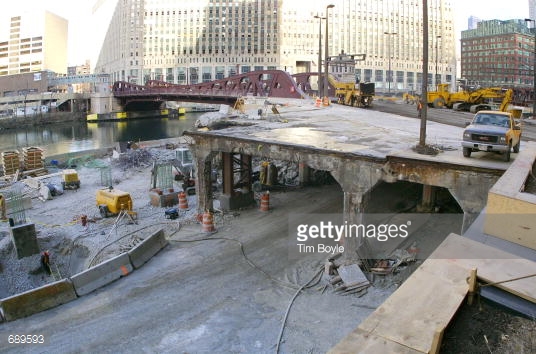
The westbound lanes of the Cortland Street Bridge are closed, but it has nothing to do with the Finkl Steel development.

According to the Chicago Department of Transportation, the westbound lanes are closed due to a Commonwealth Edison emergency project making tunnel repair work below. Although originally projected to be reopened Wednesday, updated information is that they’ll be closed until Feb. 24.

Westbound traffic is advised to use Fullerton Avenue instead.

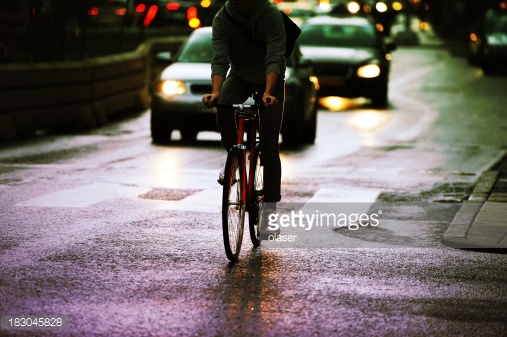
The north sidewalk is also closed, and westbound cyclists are asked to dismount and walk their bikes across the bridge on the south sidewalk, which also serves pedestrians.

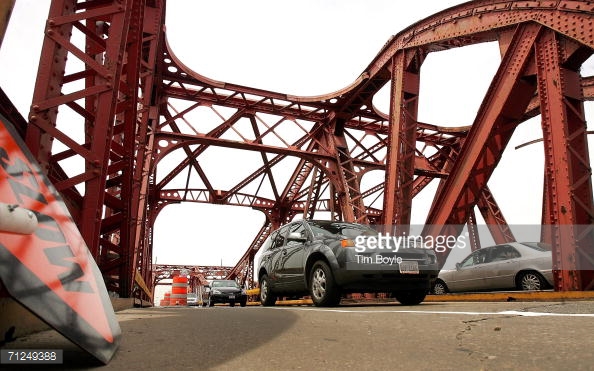
The bridge came under fire recently at a community meeting on the North Branch Industrial Corridor Plan, where it was called old and unsightly. Members of the public suggested it be replaced with a wider bridge to ease traffic bottlenecks.

Yet officials with the Department of Planning and Development pointed out the 1902 structure is actually protected as a Chicago Landmark as the first leaf-lift (trunnion bascule) bridge built not only in Chicago, but in the United States. The basic design was later replicated and enlarged in bridges across the city.

Montrose-To-Lawrence Riverfront Bike Path Connector Targeted For Late 2017

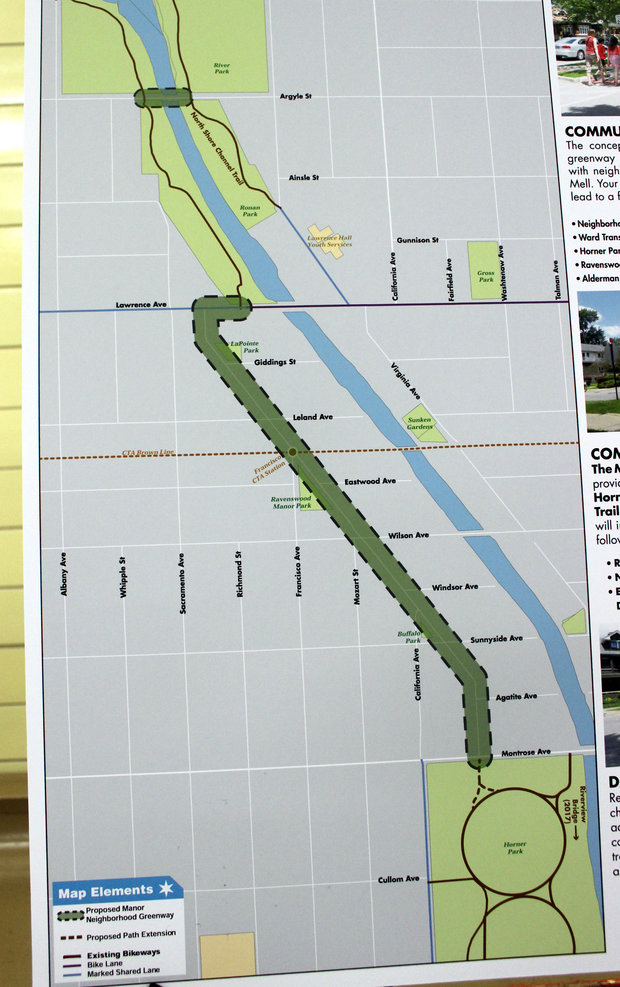
Construction on the Manor Greenway, a key connector in creating a continuous riverfront bike path, could begin by the end of 2017, officials said.

The greenway would solve a puzzle that’s long plagued transportation planners: How to work around the lack of public riverfront land in Ravenswood Manor?

The greenway would use Manor Avenue to link existing paths in Horner Park to the south and Ronan Park to the north. A number of “traffic calming” measures would be installed to make Manor Avenue more comfortable for pedestrians and cyclists to share with motorists, and create safer crossings at Montrose and Lawrence avenues.

Not to be confused with the controversial Manor diverter pilot, which was killed by Ald. Deb Mell (33rd), the greenway is moving forward. An updated timeline for the greenway was presented at a recent meeting of the 33rd Ward’s Transportation Action Committee.

The construction’s start date will depend on the completion of pending People’s Gas and water main projects, Mell said.

The greenway’s cost is pegged at $400,000-$450,000, the majority of which will be paid for with federal grant dollars, along with $70,000 from the alderman’s infrastructure budget.

The grant won’t be affected by the recent change in presidential administrations in Washington, said Luann Hamilton, deputy commissioner with the Chicago Department of Transportation.

“The funds are secured,” Hamilton said. “CDOT has the funds.”

The greenway will not create a separate bike lane on Manor, officials stressed.

Rather, shared bike lane markings will be painted to “formalize the route” and “alert motorists” to the presence of cyclists, said Dave Smith, a project manager consulting with the city on the greenway.

The most significant infrastructure alterations will be made on Montrose and Lawrence avenues, where “refuge islands” will be built to create a midway point for cyclists and pedestrians as they cross in and out of Ravenswood Manor. Raised crosswalks will be added as a signal to motorists that they’re entering or exiting the greenway.

At Montrose, the bike path in Horner Park will be configured to align with Manor Avenue.

At Lawrence, the link between the greenway and Ronan Park will require the creation of a short stretch of parkway east of Manor.

Engineering of the greenway is still being finalized. Attendees at the transportation committee meeting provided feedback regarding the need for additional raised crosswalks and concerns about a proposed curb extension at Eastwood and Francisco, which is a common drop-off point for students of a nearby ballet studio.

The greenway builds on previously announced projects that extend the riverfront bike path from Belmont Avenue to Horner Park, including the Riverview Bridge, which will soar above the Chicago River as it connects Clark Park to California Park; and an underbridge at Irving Park Road that will link California Park and Horner Park.

The greenway would connect Horner Park to the south with Ronan Park to the north. [All photos DNAinfo/Patty Wetli]

Closing Road To Skyway Through Jackson Park A ‘Bad Idea,’ Alderman Says

Fifth Ward Ald. Leslie Hairston is pushing back against plans to close major roads running through Jackson Park.

The Obama Foundation has floated plans to community leaders to close sections of Cornell Drive between 60th and 67th Street, and possibly Marquette Drive from Cornell to Lake Shore Drive.

Hairston said the only plan she’s been presented with is closing sections of Cornell Drive, and she’s not in favor of the idea from what she’s heard.

“This seems like a bad idea,” Hairston said.

She said she was struggling to see how traffic would get from Lake Shore Drive to Stony Island and onto the Chicago Skyway. She said the intersection at 59th Street that diverts cars south onto Stony Island Avenue and west to the Midway Plaisance is already problematic.

Obama Foundation officials were not available to comment.

Closing Cornell Drive would connect the future Barack Obama presidential library campus to the green spaces surrounding Wooded Island farther to the east and the Museum of Science and Industry. Eliminating portions of Cornell and Marquette drives also would open space for the redesign of the Jackson Park Golf Course and eliminate headaches for designers trying to figure out how to get golfers across several busy streets in the park.

Hairston said the problem for her was that the proposal does not account for the added traffic the redesigned golf course, the presidential library and a proposed visitors center would all bring to the park.

“Stony Island has to be a discussion,” Hairston said. “When you talk about closing a street, you have to be talking about everything.”

Hairston has expressed concerns in the past that the large number of projects planned for Jackson Park are too siloed and progressing without enough attention on how they will all interact with each other.

“I would like to look at the totality,” Hairston said.

A representative from the Chicago Park District referred questions to the Mayor’s Office.

“It is premature to talk about specific ideas related to site configuration, improvements, street and access matters and related issues,” said Shannon Breymaier, a spokeswoman for the Mayor’s Office. “Options will be fully vetted once additional details on the center have been developed. Any significant proposals will have to be approved through a process that will include the opportunity for community input.”

Park District Supt. Mike Kelly has said in the past, including at a recent 5th Ward meeting, that all plans being developed have been in the works since at least 1999, when a framework was developed with the community and park volunteers. The framework, though now about 18 years old, includes many of the projects now in the works, including an $8.1 million habitat restoration by the Army Corps of Engineers.

That plan calls for Cornell Drive to be narrowed from its current six lanes, reducing its role as a shortcut for commuters.

Experts on the park’s designer, Frederick Law Olmsted, have also renewed the call to reduce the size of Cornell Drive.

“At 12 feet wide, the Cornell lanes are highway lanes now,” said Patricia O’Donnell of Heritage Landscapes in November 2015 after completing a review of the park for the Park District.

No one has proposed closing streets.

Friends of the Parks has echoed some of Hairston’s concerns and called for a more comprehensive planning process.

“They really should have done a new framework plan in this decade ahead of this process of planning for a golf course,” said Juanita Irizarry, executive director of the parks advocacy group, after the Park District board voted to move forward with initial survey work for the golf course in January.

The Jackson Park Advisory Council has remained active in the discussions of all the projects, but has often, like with the golf course, been unable to vote on the projects until the ball is already rolling.

The council determined on Jan. 27 that redesigning the golf course would be an asset to the park.

The council’s decision came two weeks after a Jan. 11 vote by the Park District board to spend $1.1 million on a feasibility study on redesigning the golf course.

Metra Fare Increases Kick In Today

It gets more expensive to ride Metra starting Wednesday as new fare hikes kick in.

One-way tickets go up by 25 cents as across-the-board fare increases begin in an effort by Metra to pay for $16.1 million in overdue capital projects.

Ten-ride tickets will go up by $2.75 and monthly passes will cost $11.75 more per month.

Reduced-fare tickets will also go up by 25 cents for one-way tickets, $1.50 for 10-ride tickets and $7.50 for a monthly pass.

“We understand raising fares will affect our riders, but this increase will be strictly allocated as an investment in our trains and our system,” Metra Executive Director and CEO Don Orseno said in a statement. “Metra is committed to improving the quality of service and creating a better passenger experience, while addressing a serious capital funding shortfall.”

Metra will devote all of the new revenue to capital projects.

The agency said it needs $11.7 billion over the next 10 years, or approximately $1.2 billion annually, to cover the backlog of needed repairs but brings in only $300 million a year to cover the costs.

This is the third year in a row Metra has raised fares in an effort to close its funding gap for capital projects.

This New Year, Cross Learning To Cook Off Your List Of Resolutions

You could go out to eat. You could order in. Or, you could get together with a table full of your friends – or strangers — to make a meal, learn something new along the way and share the joys of prepping, cooking and dining together.

This is where The Social Table, located in Lincoln Park, comes in: why not try something new for the new year?

This North Side culinary space offers public classes for intimate groups of eight to 12 as well as private events for up to 24 people per kitchen.  The chef-instructors are knowledgeable, fun, and they have a passion for teaching groups how to expand their culinary repertoire and bring people together in the process. With three to five days a week set aside for public classes and a flexible private event schedule, bonding with new people while making homemade pasta can certainly help you make good on that New Year’s resolution to cook more and expand your social circle.

“In this day and age, people are setting more personal life goals, like learning a skill and spending more time with friends,” says Rebecca Goldfarb, creator and owner of The Social Table. “We are really trying to tap into this.”

The Social Table’s classes are unique because they build camaraderie in the kitchen. And, private parties – bachelorette brunches, couples nights, office outings, and family dinners – are fast becoming popular and booking up weeks in advance.

Menu options span a range of cuisines, introducing groups to fun and new ingredients, and recipes that offer learning experiences for both the novice and the seasoned home cook.  The Winter Italian menu, featuring Italian stuffed flank steaks and handmade gnudi, and the Taste of Spain menu, featuring a chicken, chorizo & mussel paella, are favorites this time of year.  With expanding menu options that rotate every five to six weeks, The Social Table team offers guests the opportunity to come back regularly and experience something new every time. Because the student-to-instructor ratio is kept small, participants can really get their hands dirty, bond with their classmates and walk away with a meaningful experience.

“Many people are often surprised by how amazing the dinner was, even though they made it,” Goldfarb says. “The whole experience shows that an impressive dinner isn’t out of their reach.”

Goldfarb adds that The Social Table experience is about more than just cooking. It’s about connecting with other people through food.

“We try to bridge that gap between people who say, ‘I can’t cook. I can’t ever have people over, I have to go out and eat,’ to this idea that cooking is something you can do,” she says. “It’s fun and something you can do with other people to challenge yourself and to socialize with your friends.”

Interested in joining a class or scheduling a private event  at The Social Table? Visit the website for more information.

By Adrienne Samuels Gibbs, DNAinfo Creative