Category Archives: Review

City Trucks Will Install Guards To Protect Bicyclists, Pedestrians:

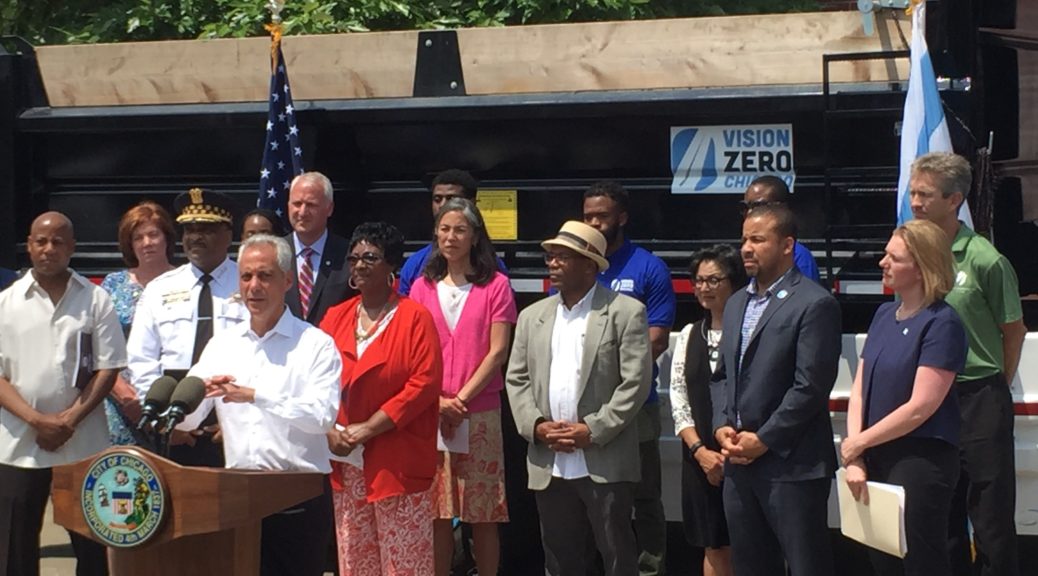
Large trucks working on big projects for the city would have to have side guards installed to prevent pedestrians and bicyclists from being run over by the truck’s rear wheels under a measure backed by Mayor Rahm Emanuel.

Trucks weighing more than 10,000 pounds working on projects worth more than $2 million would have to start installing side guards and convex mirrors in January and finish within three years, Emanuel announced.

“Chicago is using a data-driven approach to improve traffic safety, and the data shows we can save lives and prevent serious injuries by installing this type of safety equipment,” Emanuel said in a statement that noted that after officials in the United Kingdom required the guards, the number of pedestrians killed in side-impact collisions with trucks dropped 20 percent while the number of fatal bicycle accidents dropped 61 percent.

Chicago Department of Transportation Commissioner Rebekah Scheinfeld said the safety measures would lower the risk of crashes and make the impact of the crashes that do occur less severe.

“Side guards greatly mitigate the severity of side impact crashes, especially those involving pedestrians and bicycles,” Scheinfeld said. “And convex and crossover mirrors reduce blind spots for large vehicles.”

The measure, which is expected to be considered by the City Council next month, will also direct Fleet and Facilities Management Commissioner David Reynolds to begin installing the safety measures on city trucks.

In September, the Active Transportation Alliance told city officials there was “an urgent need to address the disproportionate threat these large vehicles pose to people biking and walking” after six bicyclists died after being struck by commercial vehicles.

Kyle Whitehead, the alliance’s government relations director, said Thursday he was pleased with the ordinance, although it won’t fully be in place until January 2021.

“Changes like these tend to take longer than anyone would like,” Whitehead said, adding that the group would continue to work with city officials to encourage private firms to install the guards and convex mirrors.

City officials have vowed to eliminate death and serious injuries from traffic crashes by 2026 as part of the mayor’s Vision Zero campaign.

Dee Palagi, 27, said she was relieved the city will require its trucks to have side guards — even though that wouldn’t have prevented her from suffering serious injuries when she was struck by a semi-truck while riding her bicycle near Roosevelt Road and Wood Street in September 2016.

Palagi, whose leg was amputated after her foot was pinned under the truck, said she hoped that the effort would prevent others from being injured or killed.

“This should have already been in place,” Palagi said. “But it is a good thing moving forward.”
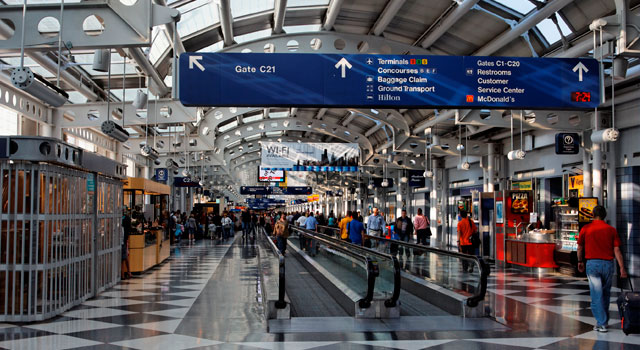
High-Speed Train Between O’Hare, Downtown Has Elon Musk’s Interest: Rahm

Mayor Rahm Emanuel’s plan for a high-speed rail line between Downtown and O’Hare Airport got a jolt of electricity Monday with the news that Tesla founder Elon Musk may be interested in the project that the mayor has called “essential for the city’s future.”

Musk, who also founded SpaceX — which hopes to transport astronauts to the International Space Station — met with a team from the mayor’s office in Los Angeles recently about Musk’s drilling firm, the Boring Co., which may bid to build a nonstop underground rail line, Emanuel said Monday afternoon.

“[Musk] has expressed an interest in what Chicago is doing,” Emanuel said. “It would be a tremendous investment and job creator, an economic engine for the city that would pay dividends for decades ahead.”

Emanuel said he had invited Musk’s team to visit Chicago to see whether a tunnel makes sense for the O’Hare express train.

“The opportunity for the City of Chicago is endless and boundless,” Emanuel said, adding that it would benefit the Loop and airports. “I’m very excited about their interest.”

In 2016, Emanuel announced plans to pay $2 million to the Parsons Brinckerhoff design firm to come up with ideas for where Downtown and O’Hare stations might be located and the best and quickest route through the city.

Results of that effort have not been announced. It is unclear how much the project would cost, or how it would be paid for.

Several aldermen and transportation experts have been critical of the push for an express train to the airport, which already is connected to the Loop by the CTA Blue Line, which is itself in the midst of a $492 million renovation.

Musk’s interest in the O’Hare high-speed rail line was first reported by Crain’s Chicago Business.

Musk’s firm has developed a tunnel-drilling technology designed to cut construction costs by at least 90 percent by using drilling technology it invented to bore narrow tunnels.

Musk’s ability to drill narrow tunnels may be crucial to avoid disrupting the Blue Line tracks, the Metra tracks or the Kennedy Expy. — not to mention city neighborhoods.

Tickets on an express train — which would zoom from O’Hare to Downtown in 20 to 25 minutes — could cost $25 to $40, according to estimates, while a one-way fare on the Blue Line from O’Hare now costs $5.

Koch told Crain’s that Musk discussed a train featuring passenger cars smaller than CTA “L” cars that would leave as they fill up and travel at 125 mph. Musk also has touted a near-supersonic Hyperloop transport concept that could send passenger cars hurtling at 600 mph using vacuum pressure.

The Boring Co. is digging a tunnel from Los Angeles International Airport to Santa Monica, one of the worst stretches of Los Angeles’ always-clogged 405 freeway.

The city could ask firms — including Musk’s company — to bid on the project by the end of the year, officials said.

Uber Adds In-App Tipping For Chicago Drivers

You’ll soon be able to tip your Uber driver in Chicago.

Uber, which allows people to hail rides through an app, is rolling out an update that will allow people to tip their drivers after a trip. Drivers were not able to accept tips through the app previously.

Riders will be able to give drivers preset tips of $1, $2 or $5, or they can enter a custom amount through the app. Users will have up to 30 days after a ride to tip their driver.

Tipping will be optional “but always appreciated,” according to Uber’s website, and no service fees will be added on to the tip.

The service is already available in Seattle, Minneapolis and Houston, but Uber hopes to have it in every city — including Chicago — by the end of July.

Tipping will also be available for those who use UberEats, a food-delivery service with Uber drivers.

Vision Zero Action Plan focuses on reducing vehicle speeds

Today’s release of a Vision Zero Action Plan lays a strong foundation for the city to achieve its goal of eliminating traffic fatalities and serious injuries by 2026.

The three-year plan shows the city is serious about preventing crashes and making our streets safer for everyone, especially the most vulnerable people who are walking and biking. Now we need to make sure our elected officials at every level of government provide appropriate funding support for the city to meet its ambitious goals.

We’re advocating at the local, state, and federal levels for more safe streets funding, especially for infrastructure projects on streets that have long been identified as high-crash corridors. Redesigning these streets will be pivotal to bringing down our unacceptably high numbers of fatal and serious injury crashes.

Last week we released a regional crash report breaking down the most recent traffic crash, fatality, and serious injury statistics. In 2015 the City of Chicago saw 119 traffic fatalities and 21,668 injuries from traffic crashes.

The plan identifies driver speed as the most important factor in determining crash risk and severity. The city can manage speed by redesigning streets to calm traffic and enforcing appropriate speed limits.

In policy recommendations to the city, Active Trans called for the city to evaluate speed limits on different types of streets and consider reducing the default speed limit, especially in corridors that have been prioritized for people walking, biking, and riding transit.

In the plan the city commits to evaluating city speeds and making recommendations on changes within the three-year timeframe.

The plan also includes a goal to pass an ordinance requiring trucks to install side guards and safety mirrors to prevent serious injury or death resulting from collisions with people biking and walking. The regulation would apply to the city’s own fleet in addition to city contractors, while encouraging compliance from private companies.

Commercial vehicle regulation became a priority in the advocacy community after several tragic crash fatalities in recent years.

Active Trans worked with crash victim Dee Palagi, who was who was struck by a semi-truck while bicycling in West Town and had to have her leg amputated. Dee says new regulations could help prevent serious injury and save lives in crashes like hers.

Vision Zero has been one of Active Trans’ top priorities for several years. In 2015 Active Trans was joined by physicians, traffic safety experts and victims of traffic crashes in calling on the city to develop a Vision Zero Action Plan that brings all city agencies to the table. Last year the city established a task force and began work on the plan.


CTA Red, Purple Lines Moving Forward With Renovation Project

The $2.1 billion renovation of the Red and Purple CTA train lines on the North Side is one step closer to breaking ground, as CTA officials asked firms to submit proposals for the massive project.

The first phase of the project will rebuild four of the oldest Red Line stations on the North Side while rebuilding the structure that supports the track as well as the Belmont flyover, which officials promise will unclog the bottleneck created by the intersection of the Red, Purple and Brown lines.
“In Chicago, the strategic and extensive investments we are making in our city’s infrastructure are investments in our residents, our neighborhoods and in our economic future,” Mayor Rahm Emanuel said in a statement. “As the CTA ‘L’ turns 125 years old this week, we’re always looking to the future by modernizing to create a world-class transit system that will better serve Chicagoans today and for decades to come.”

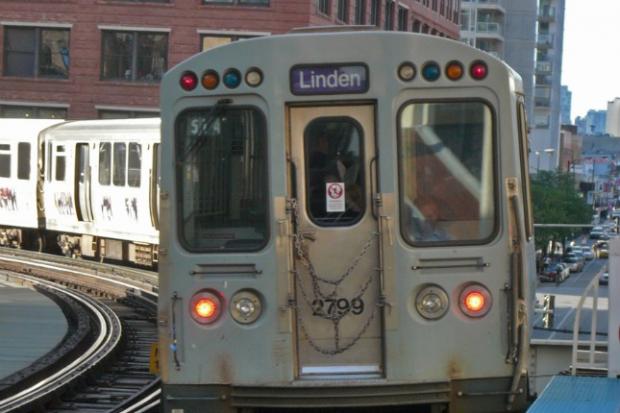
The project includes plans to rebuild the 100-year-old embankment that supports the track between Lawrence and Bryn Mawr avenues, making it possible for six to eight more trains per hour to travel from Howard to 95th streets on the Red Line.

That should prevent riders from having to wait as packed trains pass by, officials said.

The project will be created by the first Tax Increment Financing District designed to finance a transit project. The district, between North and Devon avenues is expected to generate $622 million. Those funds — plus $428 million in other CTA money — will be used to match the $1.1 billion federal grant the city secured in the final days of the Obama administration.

By Heather Cherone DNAinfo Chicago

The ‘L’ Is Turning 125 — And You Could Get A Present

Trains began running on the city’s first elevated railway on June 6, 1892 — and to celebrate, the Chicago Transit Authority will send vintage “L” cars around the Loop and hand out commemorative posters at the Clark and Lake station.

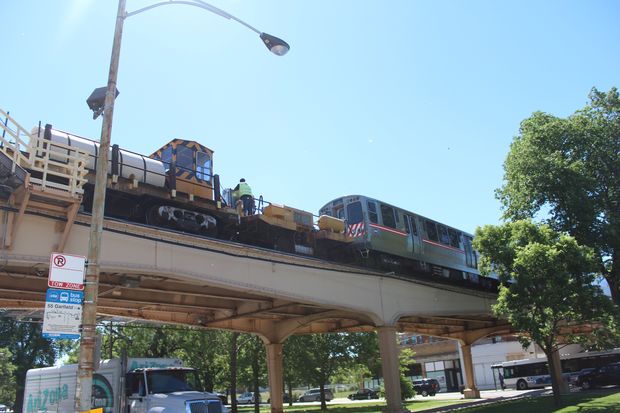
The Chicago & South Side Rapid Transit Railroad Co. built the first elevated tracks from Congress and State to 39th, with trains of wooden passenger cars pulled by small, coal-burning, steam locomotives.
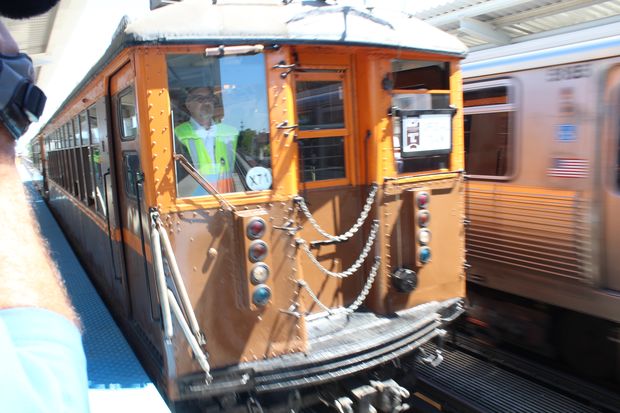
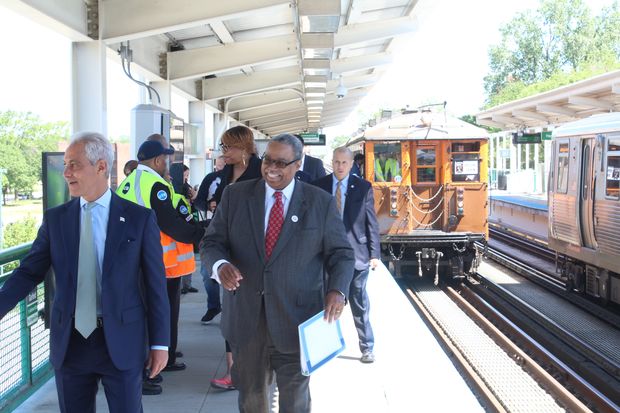
Mayor Rahm Emanuel hopped aboard a 94-year-old train car this morning to ride down that initial stretch of track to the city’s oldest station still standing at Garfield Boulevard.

“The investments we’re making today will reinforce that it will be around for the next 125 years,” said Emanuel, who himself takes the train to work twice a week.

CTA President Dorval Carter said the “L” has come a long way since it was first known as the “Alley L.”

“CTA has been working hard to make sure we’re still meeting the needs of 21st century riders,” Carter said.

Tim Samuelson, the city’s cultural historian, was among those on the train with the mayor and he said it was a thrilling experience. He described how much heavier the old cars felt as they swayed and moved slowly down the tracks.

Samuelson was among those who hopped on the old train car back Downtown as rides opened up to the public.

CTA aficionados can nab a vintage poster starting at noon on the Inner Loop platform, which is closest to the Thompson Center and where Orange and Pink line trains stop. The posters will be handed out on a first-come, first-served basis.

In addition, train enthusiasts can hop a ride on the CTA Heritage Fleet around the Loop. The schedule is:

• Noon-1:45 p.m. — 4000-series cars built in 1923 will operate continuously around the Inner Loop

• 1:45 -3:15 p.m. – 2400-series cars built in 1976 in their original red-white-and-blue bicentennial livery, will operate continuously around the Inner Loop.

For more information, go to transitchicago.com.


777

 The 2400-series cars built in 1976 are also out today for history buffs to ride on.

extralarge

Mayor Rahm Emanuel and CTA President Dorval Carter were among the first riders Tuesday on a 94-year-old train car going down the first stretch of the “L.”


By Heather Cherone and Sam Cholke DNA-info

Thousands Of Cab Owners Will Go Bankrupt In Fight With Uber, Lyft: Report

Hundreds of taxi medallions have been foreclosed on this year and the city’s taxi drivers union says “thousands more” may be coming as the industry struggles to compete with services like Uber and Lyft.

The Cab Drivers United AFSCME Council 31 released a report showing that 774 taxi medallions — required to operate a cab — have been given back to the city as owners have been unable to pay the taxes and license fees associated with it.

“Thousands more foreclosures are likely,” said Tracey Abman, associate director of the union.

“For many purchasing a medallion was an investment in their future,” Abman said. “Many are now facing a possibility of a lien being put on their home.”

Some 370 taxi medallions changed ownership at an average price of $348,466 in 2013. This year, one was sold for $35,000.

The report examines city data and interviews Chicago’s owners and taxi drivers who have seen revenue in their industry dry up because of competition from ride-hailing companies Uber and Lyft.

Among the findings in the report:

• The number of rides in January 2017 (1.1 million) dropped 52 percent from the number of rides in January 2014 (2.29 million). A DNAinfo analysis of city data in 2016 found a 23 percent drop in rides from the previous year.

• As of March, 42 percent of Chicago’s nearly 7,000 taxis have been inactive, not being used for a single fare. In March 2014, only 16 percent of taxis were out of service.

• People who own and operate their own taxis spend an average of $44,000 in loans, city fees and other expenses like gas. In 2013, such drivers made $19,000 in profit per year. In 2016, they lost on average $4,000.

The union is seeking new measures from the city that will help taxi cab owners and operators that include amending the owner code such that owners do not need to buy new vehicles if older vehicles pass inspections, allow taxi drivers to pay their ground transportation tax in installments rather than lump sums and remove vehicle license renewal fees.

“There’s forces closing in on these small business owners and they don’t know where to turn,” Abman said.

  Thousands Of Cab Owners Will Go Bankrupt In Fight With Uber, Lyft: Report – West Ridge – DNAinfo Chicago

By Tanveer Ali DNA-Info

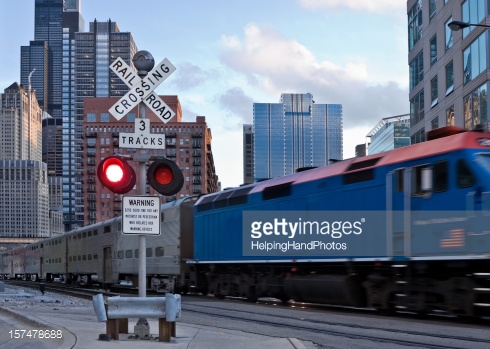
Metra Trains Would Stop In Hyde Park Every 20 Minutes Under New Plan

Metra on Wednesday proposed increasing trains to every 20 minutes for Hyde Park stops on the Electric Line throughout much of the day.

The proposal would bring train service closer to the wait times of CTA buses and trains, which south lakefront residents have wanted for at least 10 years.
Metra will do a round of community meetings in late June to get feedback on the compromises that will need to be made to increase train service for Hyde Park.

Among those trade offs would be the elimination of nine train runs on the Blue Island Branch and nine on the South Chicago Branch of the line

“Many of these trains carry only one to two customers per day,” the Wednesday announcement said. “Taken together, these trains carry an average of fewer than 10 passengers per day.”

Those cuts would allow Metra to more than double the number of trains serving the three Metra stations in Hyde Park. The number of inbound trains would increase to 18 from nine and outbound trains would increase to 18 from seven between 9:30 a.m. and 3:30 p.m. on weekdays.

To facilitate that increase, stops between 63rd and Kensington would see midday waits for a train drop to an hour from two hours currently. Stops between 75th Street and 111th Street would also see three new inbound and three new outbound trains on weekdays.

Metra Executive Director Don Orseno said the change is to try to halt a 14 percent drop in ridership on the Electric Line over the past six years.

“We need to do something to stem the loss of ridership on the Metra Electric Line, which has been declining for years despite the fact that the line has the newest cars and most scheduled trains on our system,” Orseno said. “This new schedule is an effort to make the best use of our existing resources by scheduling our trains in a more efficient way and enhancing service without impacting our budget.”

The majority of the train system’s lost ridership is happening on the Electric Line, with 1.4 million fewer rides on the line in the past six years, according to Metra.

Hyde Park is the area with the most growtn on the Electric Line, with ridership at the 51st/53rd Street, 55th/56th/57th Street and 59th Street stops increasing by 7.6 percent over the past three years as more housing is built nearby.

Metra will host four community meetings from 4-7 p.m. along the Electric Line before the changes go into effect.

The meetings include:

• June 19, South Shore Cultural Center, 7059 S. South Shore Drive

• June 20, Flossmoor Village Hall, 2800 Flossmoor Rd., Flossmoor

• June 21, Blue Island City Hall, 2434 Vermont St., Blue Island

• June 22, Polsky Exchange, University of Chicago, 1452 E. 53rd St., 2nd floor

By Sam Cholke DNAinfo Chicago

Pop-Up Bookstore to Open in Block 37 to Support Chicago Public Schools

Book worms rejoice! Carpe Librum, a new pop-up bookstore, is coming to Block 37 this summer. Thousands of gently used books, CDS, and DVDs all priced at $1- $4 will be available in the pedway level of Block 37 at 108 N. State Street starting May 30. Proceeds will provide educational programing in Chicago Public Schools through non-profit, Turning the Page.

Turning the Page is a 501 (c)3 education non-profit, engaging parents to be more active and effective participants in their children’s education. TTP is currently partnered with 6 public schools in Chicago’s west side neighborhood of North Lawndale. TTP’s programming can be divided into three main categories: Community Nights, Parent Leadership Initiatives, and Summer Learning Trips.

  • Community Nights consist of educational parent workshops, literacy-based child mentoring activities, book giveaways for families’ home libraries, and a free, healthy family dinner.
  • Parent leadership initiatives help parents identify their strengths, build social capital within their school communities, and take action. During conferences, parents are able to learn from one another and collaborate on ideas to improve their schools and serve their neighborhoods.
  • Summer Learning trips are hosted by TTP to sustain learning during the summer months. TTP partners with local museums and other local institutions to host a series of innovative field trips to connect families with their communities’ resources.

“[Community Nights] provide information and resources to parents and families on how parents can get more involved in their children’s academic lives by building home libraries, reading to children, developing strong parent-teacher relationships, and learning about science and math.” — President & CEO, Jason King

“We filled an important need in the system, which has so many challenges in engaging parents effectively. We provide something that the system is not and fill a gap in ensuring that parents can be more active in their children’s lives, both at home and at school. And as students get older, we enable parents to help students make decisions around what classes the students should take, to start thinking about higher education.” — President & CEO, Jason King, speaking to the impact of TTP in public school system

To raise funds for its programs, TTP collects used books from our community and opens pop –up used bookstores, called Carpe Librum, by activating vacant retail space. All books are donated through local book drives in area businesses, apartment buildings, and universities, or donated by individuals. Get first pick at the Carpe Librum Pop-Up Grand Opening on May 30 from 8:00am to 6:00pm. For more information on Turning the Page visit: http://turningthepage.org.

The Leland Curve In Lincoln Square Is Letting Down Its Guard(rail)

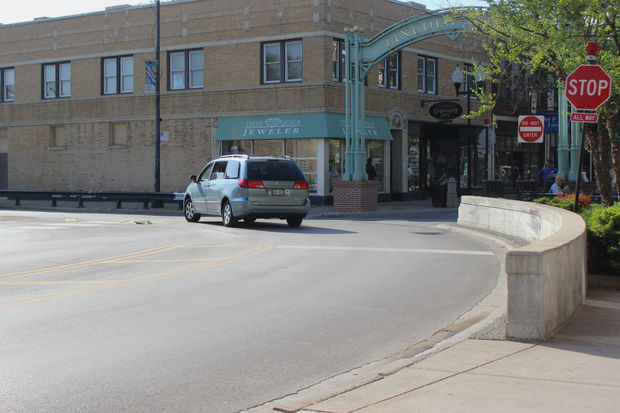
A makeover is in the works for the Leland Avenue curve, at the southern gateway to the square’s quaint shopping and dining hub.

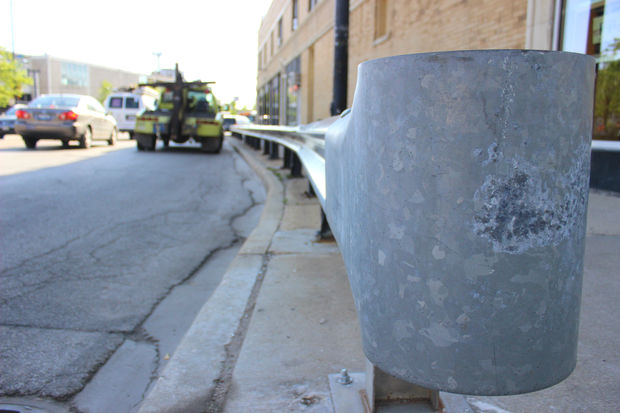
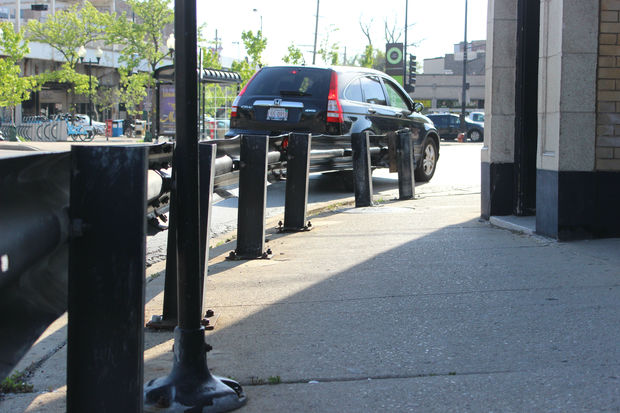
The interstate-style guardrail, which hugs the curve as Leland swoops toward Western Avenue, is set to be replaced with planters, and the sidewalk, which tapers to a choke point around the bend, will be widened to provide more room for pedestrians.

Ald. Ameya Pawar (47th) has earmarked $100,000 in aldermanic menu money to fund the project.

Work could start in the fall but more likely will get underway in spring 2018, according to Jim Poole, 47th Ward chief of staff.

The Chicago Department of Transportation has some engineering work to do first, including relocating drains and streetlights, he said.

“It’s going to look a lot better, but it’s not a drastic change,” Poole said.

Though the main purpose of the project is to improve the pedestrian experience, Poole said the planters may send a visual cue to motorists that Leland isn’t a highway.

“It probably calms traffic a little bit,” he said.

A more significant alteration to the curve, in the form of a pedestrian “island,” was considered and dropped, in large part because of concerns that trucks would have serious difficulties negotiating the island, he said.

extralarge

The guardrail is coming down, to be replaced with planters. [All photos DNAinfo/Patty Wetli]

SSS The sidewalk, which tapers to a choke point around the bend, will be widened to provide more room for pedestrians.

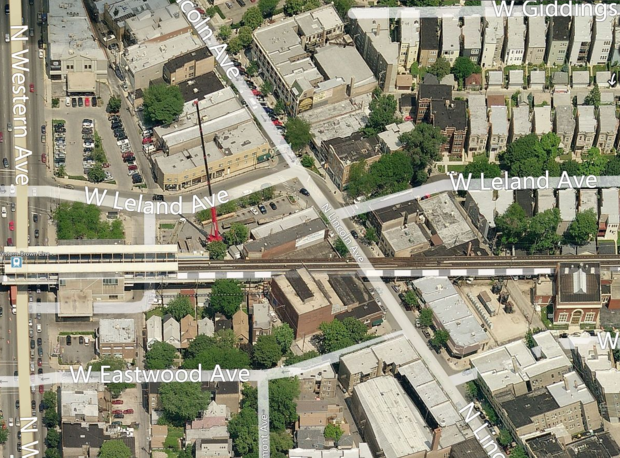
SSSSSSThe “Leland Curve,” where Leland Avenue links Lincoln Avenue drivers to Western, will be getting a makeover. [Bing]